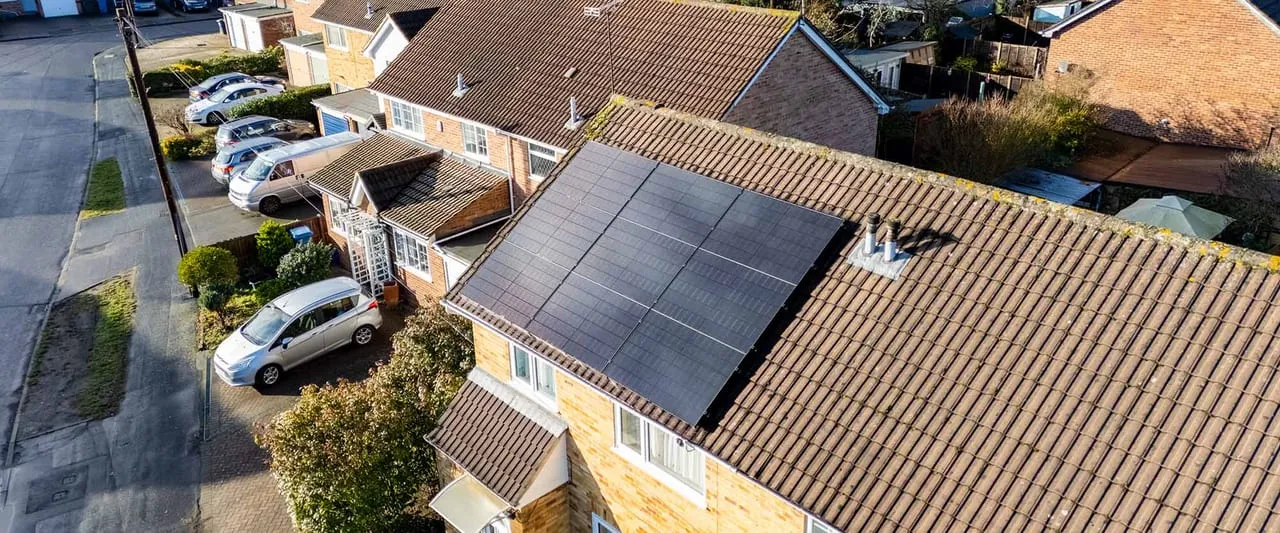
A church roof is often the largest uninterrupted south-facing surface in a parish — and one of the hardest to put solar panels on. Between faculty jurisdiction, listed-building status, and a PCC’s understandable caution about touching a 200-year-old roof, church solar projects move at a different pace to a domestic install. This piece sets out what it actually costs, why the approval process takes longer than the wiring, and where the funding realistically comes from.
Why church solar is a different job
Roughly 45% of England’s 16,000 Church of England churches are listed, and a large share of the rest sit inside a conservation area even if the building itself isn’t designated. That changes the entire project sequence. On a house, you get quotes, pick an installer, and you’re generating power within a few weeks. On a church, the faculty (or listed building consent, for other denominations) has to be settled before any contractor can be booked with confidence — and that alone can take three to twelve months.
It doesn’t make solar a bad idea for churches. Heating a large stone building is expensive and carbon-heavy, congregations increasingly want to see environmental action rather than just hear about it, and a church roof rarely shades itself. It just means the cost conversation has two halves: the physical install, and the process cost of getting there.
What a church solar install actually costs
Panel and inverter pricing for a church system isn’t fundamentally different from a large commercial or agricultural roof — it’s priced by system size (kWp), not by the fact that it’s a place of worship. Using current UK 2026 supply-and-install rates:
| System size | Typical installed cost | Roughly suits |
|---|---|---|
| 4 kWp | £6,000–£8,000 | Small chapel, vestry supply |
| 10 kWp | £13,000–£17,000 | Medium parish church |
| 20–30 kWp | £18,000–£33,000 (at ~£900–£1,200/kWp commercial-scale pricing) | Larger church, hall + heating load |
| 40 kWp+ | £36,000–£48,000+ | Cathedral-scale or church + community centre combined roof |
Battery storage adds a further £4,000–£8,000 for a typical 5–10 kWh domestic-scale unit, or considerably more for a commercial-scale battery sized to a church hall’s daytime and evening use. A Tesla Powerwall 3 (13.5 kWh), for reference, runs about £8,500–£10,500 fitted. Whether storage is worth it depends heavily on when the building is actually occupied — a church used mainly for Sunday services and occasional evening events has a very different consumption profile to a domestic home, so get a proper load assessment before assuming a battery pays back.
On top of hardware, budget for costs that are specific to heritage buildings and don’t apply to a standard commercial roof:
- Structural survey for older roof timbers and slate/lead coverings — often £500–£1,500
- Heritage-sensitive mounting (in-roof or low-profile systems, sometimes on a less-visible elevation to satisfy the DAC) — can add 10–20% versus a standard on-roof rack
- Faculty/consent application fees and any specialist heritage consultant — variable, sometimes nominal, sometimes several hundred pounds for a contested case
- Scaffolding or cherry-picker access for steep, high, or otherwise awkward church roofs — often more expensive than a typical two-storey house
One genuine piece of good news: the 0% VAT rate on residential solar and battery installations (in place across Great Britain until 31 March 2027, reverting to 5% after) applies to installations on buildings used for a “relevant residential purpose” — this generally covers vicarages and church halls used residentially, but a place of worship itself is usually zero-rated for VAT under separate, longer-standing rules for approved alterations to listed buildings — always confirm treatment with your installer and, if the sums are material, an accountant, because VAT treatment on ecclesiastical buildings is genuinely more nuanced than a standard home install.
Faculty approval: the part that actually determines your timeline
For Church of England buildings, almost any physical change — including solar panels — requires a faculty, granted through the diocesan faculty system rather than local authority planning permission (though listed building consent may also be needed in parallel, and always check with your local planning authority). The process runs through the Diocesan Advisory Committee (DAC), which will look at:
- Visual impact from public viewpoints and within the churchyard
- Which roof slope the array sits on (south-facing rear slopes are usually far easier to approve than a street-facing front elevation)
- Panel type and colour — all-black, low-glare panels are increasingly accepted; older, more reflective panels can be a sticking point
- Fixing method — some DACs prefer in-roof integration or non-penetrative mounting systems that don’t require drilling into historic timbers
- Cabling routes and where the inverter and any battery cabinet will be sited, so they don’t intrude on the interior
The Church of England has published national guidance actively encouraging solar as part of its net zero 2030 target, which has made DACs noticeably more supportive over the past few years than they were a decade ago — but each diocese and each case is still assessed on its own facts. Expect a site meeting with the DAC secretary or archdeacon, a written application with product specifications and photomontages showing the array in situ, and a formal faculty decision. For non-Anglican churches — Catholic, Methodist, Baptist, URC and others — the equivalent process usually runs through the relevant diocesan or connexional property body plus standard listed building consent if applicable, so check your denomination’s own property procedures early rather than assuming the Anglican faculty rules apply.
Build faculty timescales into your budget as a real cost, not just a delay: PCCs sometimes need to commission the heritage-sensitive photomontages, structural reports, or acoustic/bat surveys the DAC asks for before a decision is even made, and those all carry a fee regardless of the outcome.
Funding: what’s realistic for a church roof
Church solar rarely gets paid for out of a single grant — most successful projects stack two or three funding sources.
Diocesan environment funds. A growing number of dioceses run small grant pots specifically for net-zero church projects, often a few thousand pounds per building, aimed at feasibility studies or match-funding rather than covering a full install.
National Church of England funding streams. Support has periodically been available for net-zero-related capital works through Church Commissioners and central church funding programmes; availability and criteria change year to year, so check current terms with your diocesan environment officer rather than relying on a figure that may have moved.
Community/crowdfunding. Many parish solar projects have been part-funded through local fundraising, congregation giving, and platforms such as Crowdfunder’s community energy category — genuinely effective where the church has an engaged congregation and can tell a clear story about lower heating bills freeing up money for mission and outreach rather than energy costs.
National Lottery Heritage Fund and similar heritage grant bodies sometimes support environmental resilience works to listed places of worship as part of wider repair or community-use projects, though pure solar-only applications are less commonly funded than combined heritage-repair-plus-sustainability schemes.
Smart Export Guarantee (SEG). Once live, an MCS-certified church installation is eligible to sell surplus generation back to the grid — rates vary by supplier, typically in the roughly 12–20p/kWh range at the top end, so it’s worth shopping the SEG market rather than defaulting to your installer’s own tariff.
What doesn’t apply. It’s worth being clear on this because it trips people up: the Boiler Upgrade Scheme (£7,500) is specifically for air source or ground source heat pumps and does not cover solar PV in any form. And England’s farm-focused Improving Farm Productivity grant (roughly 25% of eligible costs, not the older 40% FETF figure some sites still quote) is an agricultural scheme — it isn’t available to a parish church even if the churchyard borders farmland. There is no dedicated national church solar grant equivalent to the domestic schemes; funding is genuinely a patchwork that has to be assembled project by project.
For churches attached to charitable structures more broadly — a church hall run as a separate registered charity, for instance — it’s worth reviewing funding routes aimed specifically at the charity sector, where eligibility criteria and available grant programmes can differ from those for the church building itself.
Picking an installer for a heritage roof
Not every MCS-certified installer has handled a faculty application before, and that experience matters more than it would on a standard house. Ask prospective installers directly: have they worked on listed or heritage buildings, can they produce the photomontages and technical drawings a DAC will want to see, and do they understand in-roof or low-profile mounting for slate and lead roofs. A firm that routinely quotes for commercial and community buildings — rather than purely domestic rooftops — tends to be better placed for the structural and planning side of a church project; several regional installers such as Green Linc Renewables in Lincolnshire and Ecoaim in Central Scotland work across mixed commercial, community and agricultural roofs and can speak to the practicalities of heritage-adjacent mounting even where the building itself isn’t listed.
Get at least three quotes, and ask each installer to break the cost down separately: hardware and labour, any heritage-specific mounting premium, and scaffolding/access. That makes it much easier to compare like-for-like and to spot where one quote has bundled in survey or consultancy costs that another hasn’t.
Realistic payback
Church electricity use doesn’t map neatly onto typical domestic payback calculators, because usage is concentrated (services, events, hall lettings) rather than spread evenly through the day. As a rough guide, a well-sized system on a south-facing UK roof will generate around 850 kWh per kWp per year (more in the sunnier south, up to roughly 1,050+ kWp/yr), and at a typical import price around 25p/kWh, self-consumed generation is worth considerably more than exported units even at a strong SEG rate. If your church’s actual daytime usage is genuinely low, don’t be talked into oversizing the array purely to fill the roof — model against actual hall bookings, service times and heating patterns first.
For churches also weighing solar against heating upgrades, it’s worth reading up separately on where solar PV and heat pump funding genuinely differ, since the two are frequently and incorrectly assumed to draw from the same grant pot — a useful primer on realistic UK system pricing more broadly is available at thecostofsolar’s guide to solar panel costs, and the payback period breakdown is a reasonable starting model to adapt to a church’s actual usage pattern.
The practical starting point
Before requesting quotes, get a structural assessment of the roof, establish with your DAC secretary or diocesan environment officer what kind of installation is likely to be approved, and only then bring installers in — quoting against an unapproved concept wastes everyone’s time. For the funding and process detail specific to places of worship, Solar Panels for Churches is a dedicated resource covering faculty routes in more depth, and where the project sits under a wider charitable structure, Solar Panels for Charities covers grant and funding routes that apply more broadly across the charity sector. Treat the faculty process as the first cost centre on the project plan, not an afterthought once the quote is signed — it’s what actually determines whether the panels go up this year or in three.