How much does solar battery storage cost?
Priced June 2026
A typical 10kWh home battery costs £4,200–£6,500 installed — about £400–£700 per kWh. Premium units run higher.
Below: installed prices by brand, £/kWh, and an honest take on whether a battery is worth it.
Battery cost by brand
Installed prices include the battery, the hybrid or battery inverter, and fitting, at 0% VAT. £/kWh is a guide for comparing capacity:
| System | Low | Typical | High |
|---|---|---|---|
| GivEnergy | £4,500 | £5,250 | £6,000 |
| Fox | £4,800 | £5,500 | £6,200 |
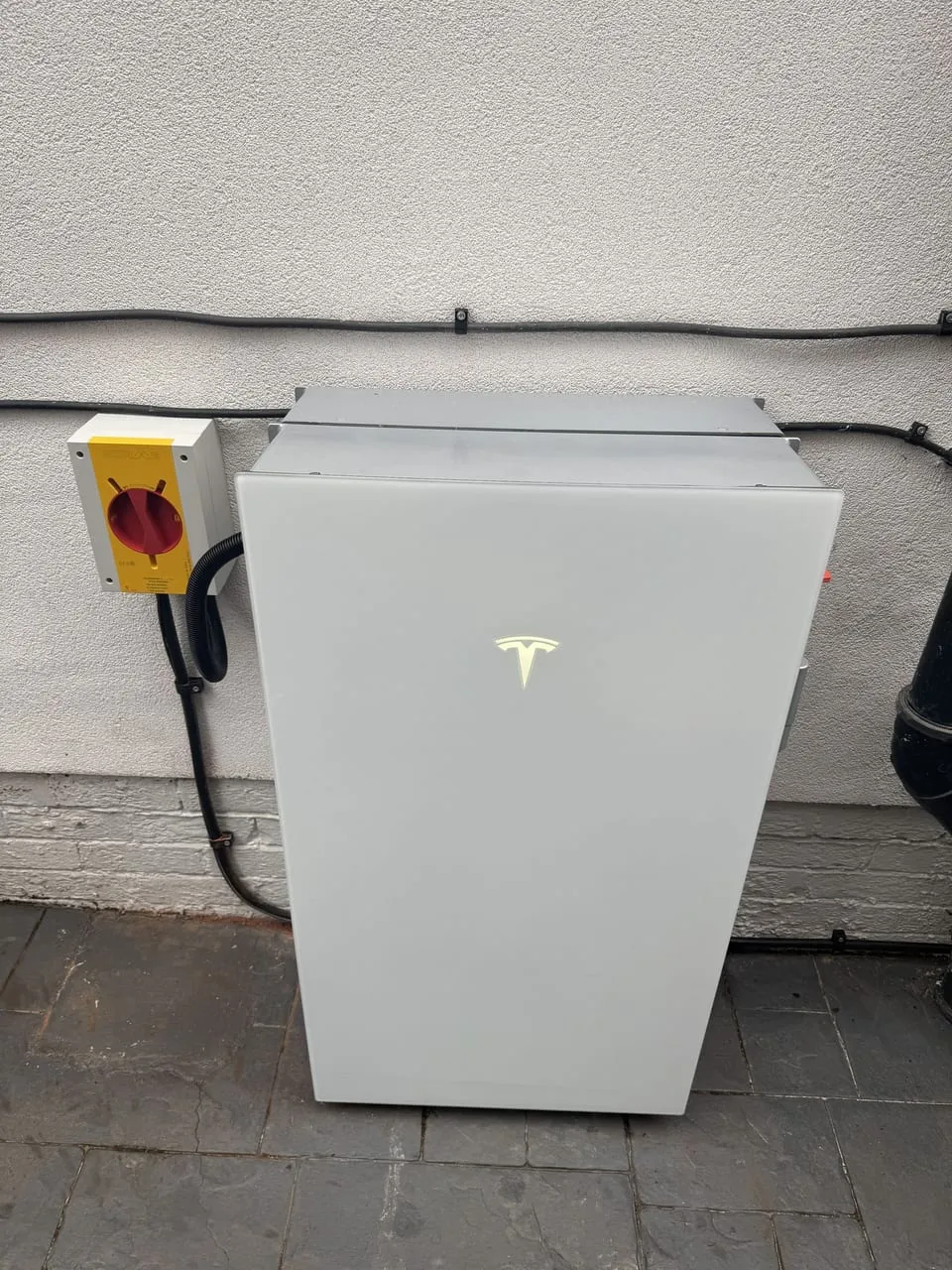
| Tesla | £7,400 | £8,950 | £10,500 |
| Sunsynk | £4,900 | £5,650 | £6,400 |
| Pylontech | £4,200 | £4,900 | £5,600 |
| Battery | Capacity | Installed cost | Per kWh |
|---|---|---|---|
| GivEnergy 9.5kWh | 9.5 kWh | £4,500–£6,000 | £553 |
| Fox ESS ECS 10.4kWh | 10.4 kWh | £4,800–£6,200 | £529 |
| Tesla Powerwall 3 (13.5kWh) | 13.5 kWh | £7,400–£10,500 | £663 |
| Sunsynk 10.65kWh | 10.65 kWh | £4,900–£6,400 | £531 |
| Pylontech 10.65kWh | 10.65 kWh | £4,200–£5,600 | £460 |
Battery cost per kWh by size band
Per-kWh cost falls as capacity rises — fixed install and inverter work spread across more storage. Priced July 2026:
| Size band | Typical installed cost | Installed per kWh |
|---|---|---|
| ~5kWh | £4,000–£5,500 | £800–£1,100 |
| ~10kWh | £6,500–£9,500 | £650–£950 |
| 13.5–15kWh | £8,500–£11,500 | £630–£850 |
| ~20kWh (stacked) | £11,000–£15,000 | £550–£750 |
The number that actually matters over a battery's life: each stored-then-used kWh works out at roughly 10–15p over a warranted 10-year life (purchase price divided by warranted throughput), against a grid price of ~25–26p/kWh at the July 2026 cap — that gap is the entire economic case, and it only pays if you cycle the battery hard. Run your own scenario in the free battery payback calculator.
Is a battery worth the extra cost?
On its own, a battery rarely pays for itself purely on stored solar. Its value comes from two things: using more of your own generation in the evening (self-consumption rises from ~35% to ~70%), and — the bigger lever — charging cheaply on a time-of-use tariff and avoiding peak-price imports. Done well, that's what brings a full system's payback down to 5–7 years. For the panel side of the bill, see solar panel costs.
Installed prices vary by region and installer; for residents on the south coast, Southampton solar battery installation quotes are a useful benchmark against the ranges above.
Frequently asked questions
How much does a solar battery cost in the UK?
A typical 10kWh home battery costs £4,200–£6,500 installed in 2026, or roughly £400–£700 per kWh. Premium units like the Tesla Powerwall 3 (13.5kWh) run £8,500–£10,500.
Is a solar battery worth it?
A battery rarely pays for itself on its own, but it lifts self-consumption from ~35% to ~70% and, paired with a time-of-use tariff, can cut bills enough to make the whole system pay back in 5–7 years for high-usage homes.
How much does a 10kW solar battery cost in the UK?
A ~10kWh battery typically costs £6,500–£9,500 installed in 2026 (£650–£950 per kWh), depending on brand, whether the inverter is hybrid or AC-coupled, and installer overheads.
Can I add a battery to existing solar panels?
Yes. A retrofit AC-coupled battery works with most existing solar installs and typically costs a little more than a battery fitted at the same time as panels, because it needs its own inverter.