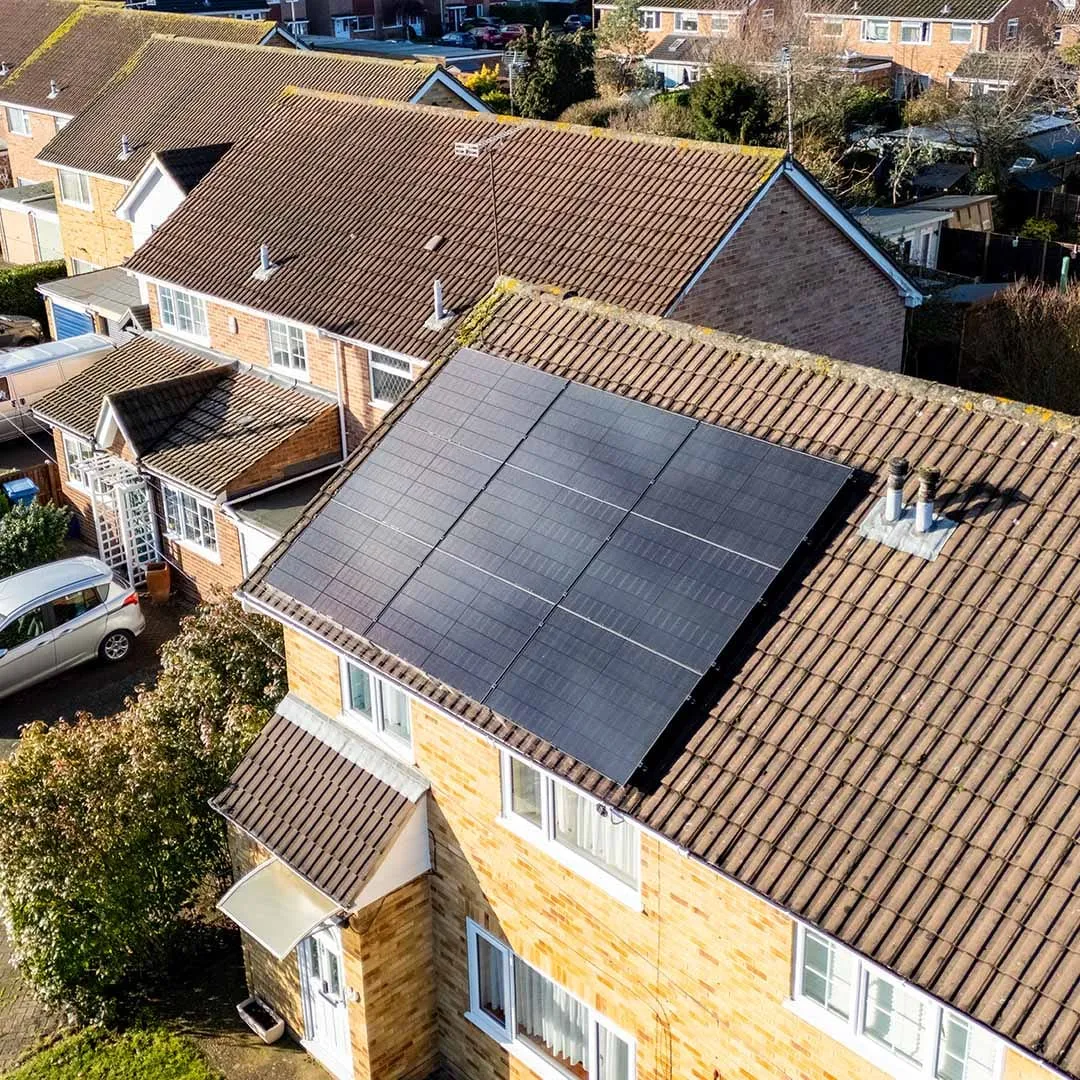
If you’re a commercial landlord or business owner staring down an EPC renewal, the first question is almost always “how much is this going to cost?” — and the honest answer is that it depends heavily on building size, complexity and what you actually need doing with the certificate. This guide sets out realistic 2026 price bands for commercial EPC assessments, explains why MEES compliance is forcing the issue for thousands of landlords, and covers why solar is one of the few upgrades that reliably moves the rating rather than just tinkering at the margins.
What a commercial EPC actually assesses
A commercial (non-domestic) EPC is different from the two-page residential version most people are used to. It’s produced using SBEM (Simplified Building Energy Model) software rather than RdSAP, and it requires an accredited Non-Domestic Energy Assessor to survey the building, model its construction, glazing, HVAC, lighting and controls, and generate a rating from A to G. For anything genuinely complex — large mixed-use buildings, or those with unusual plant like chillers, air handling units or process equipment — the assessor may need to use dynamic simulation modelling instead of the simplified method, which costs more and takes longer.
The certificate is valid for 10 years, but in practice most landlords end up commissioning a new one sooner — either because the building has been altered, because a sale or new lease triggers the requirement, or because MEES compliance means the old rating (often a D, E or worse) needs bringing up to standard before it can legally be re-let.
Commercial EPC price bands by building size (2026)
Prices vary by assessor, region and building complexity, but the following bands reflect what’s typically charged across the UK market:
| Building type / size | Typical assessment cost |
|---|---|
| Small unit (under 500 m², simple shell) | £150–£350 |
| Small-to-medium retail/office (500–1,000 m²) | £350–£600 |
| Medium commercial (1,000–2,500 m², straightforward services) | £600–£1,200 |
| Large or complex building (>2,500 m², multiple zones/plant) | £1,200–£3,000+ |
| Dynamic simulation modelling (complex HVAC, mixed-use, listed considerations) | £2,000–£5,000+ |
| Portfolio discount (multiple units, same landlord/agent) | Often 10–30% off per-unit rate |
A single small industrial unit or high-street shop is usually a same-day job with a quick turnaround on the certificate. A multi-let office block with air conditioning, multiple tenancies and varied floor plates takes considerably longer to survey and model, and that’s reflected in the fee. If you’re managing a portfolio, it’s almost always worth asking assessors for a bulk rate — most will discount meaningfully once you’re commissioning five or more certificates in one instruction.
It’s worth separating the assessment fee from the cost of any remedial work the EPC then recommends. The certificate itself is a relatively modest outlay; it’s the retrofit measures needed to close a compliance gap — LED relighting, insulation, controls upgrades, or on-site generation — that represent the real spend, and where the commercial case for action or inaction gets made.
Why MEES is forcing this now
The Minimum Energy Efficiency Standards (MEES) regulations already prohibit landlords from granting new leases (and, since April 2023, continuing to let) most commercial properties rated F or G, unless a valid exemption is registered. That’s the current legal floor. The regulatory direction of travel — consulted on by government — has been toward tightening the minimum further, with proposals to raise the bar to a B or C rating for commercial lets by the early-to-mid 2030s, phased in over several years. Nothing about a future minimum standard is fixed until formal regulations are laid, so landlords should treat any specific future date as a planning assumption rather than a locked-in deadline, and check current guidance before making investment decisions based on a target year.
What this means practically: an F or G-rated unit is unlettable today without an exemption. A D or E-rated unit is technically lettable now, but landlords holding assets in that band are increasingly assessing them against where the bar is heading, because a lease signed today may still be running when tighter standards land. That’s pushing more landlords to commission EPCs earlier than the 10-year cycle requires, simply to find out where they stand and what it would take to move up a band or two.
For landlords trying to keep on top of the compliance calendar across a portfolio — renewal dates, exemption registrations, remedial timelines — a specialist resource like landlordepccompliance.co.uk is worth bookmarking, and for the assessment itself, commercialepcassessors.co.uk sets out what a non-domestic survey actually involves and how assessors are accredited.
What actually moves the rating
This is where a lot of landlords get surprised. An EPC rating is generated from modelled energy demand and the carbon/cost factors associated with meeting it — not from a subjective “green” score. The measures that move the needle, roughly in order of typical cost-effectiveness, are:
- Lighting upgrades (LED with controls/daylight sensing) — usually the cheapest per-band improvement, especially in older buildings still running T8 fluorescent or high-bay discharge fittings.
- Heating and cooling controls — zoning, better thermostats, BMS optimisation. Often underrated because it’s cheap relative to the rating improvement.
- Building fabric — insulation, glazing, air-tightness. Expensive to retrofit in an occupied building, but high-impact where feasible (roof insulation on industrial sheds is a common quick win).
- On-site renewable generation — principally solar PV.
Solar earns its place on that list because of how SBEM treats on-site generation: electricity generated and used on-site directly offsets the building’s calculated energy demand from the grid, which is exactly the metric the EPC rating is built from. A well-sized commercial PV array can move a building up one or even two EPC bands on its own, particularly on buildings with high daytime electricity use — retail units, offices, warehouses running refrigeration or automated equipment, workshops — where the load profile matches solar generation hours closely.
It’s not a universal fix — a building with poor fabric and inefficient heating won’t jump from an F to a B on solar alone — but layered on top of lighting and controls work, it’s often the difference between landing just inside a compliance band and landing comfortably inside it with headroom for future tightening.
The commercial solar cost and payback picture
For 2026, commercial solar installation typically runs £900–£1,200 per kWp installed, varying with roof type, scaffolding access, and whether string or optimised inverters are specified. On a straightforward industrial roof this usually lands toward the lower end; complex retrofit access or listed-building constraints push it up. Systems are commonly sized against daytime demand rather than roof capacity alone, since self-consumption is what drives both the bill savings and the EPC benefit — exporting surplus via the Smart Export Guarantee is worthwhile (rates vary by supplier, broadly in the 12–20p/kWh range at the top end) but it’s self-consumed generation that does the heavy lifting on the rating.
0% VAT currently applies to qualifying residential solar and battery installations in Great Britain until 31 March 2027, but commercial installations are VAT-treated differently and businesses should check their specific position with an accountant rather than assume the residential relief applies. On the finance side, options range from outright purchase to commercial PPAs where a third party owns and maintains the array and the building simply buys the power at a discount — useful for landlords who want the EPC and cost benefit without the capital outlay. solarpowerpurchaseagreements.co.uk covers how those structures work, and commercialsolarfinance.co.uk is a useful starting point for comparing funding routes including asset finance and leasing.
For a broader look at what commercial solar costs across building types — not just the EPC angle — our own commercial solar panel costs page breaks down the numbers in more detail, and commercialsolarcostuk.co.uk is a useful cross-check if you’re benchmarking quotes across multiple installers.
Getting the assessment and the retrofit right
The practical sequence that works well for most landlords:
- Commission the EPC first if you don’t have a current one, or if the existing one predates recent alterations. Don’t guess at the rating or rely on a certificate that no longer reflects the building.
- Get the recommendations report alongside it — every EPC comes with a list of suggested improvements ranked by the assessor’s software, which is a genuinely useful starting shopping list even if some suggestions won’t be cost-effective for your specific building.
- Model the solar case separately — get a proper roof survey and generation estimate from an installer who works on commercial buildings, rather than assuming a residential-scale quote scales up linearly. Building types like warehouses, offices and industrial units each have different load profiles that affect sizing. solarpanelsforwarehouses.co.uk and solarpanelsforofficebuildings.co.uk both cover building-specific considerations if you’re trying to work out likely output and payback before committing to a full survey.
- Re-assess after works — a second EPC post-retrofit is what actually proves the compliance position; don’t rely on an installer’s or assessor’s estimate of “should move you to a C” without the paperwork to back it up if challenged.
For landlords with mixed portfolios — a few retail units, a warehouse, maybe an office block — it’s rarely efficient to handle EPCs and MEES compliance building-by-building as issues arise. A single sweep across the portfolio, prioritising the worst-rated assets first, tends to be both cheaper (bulk assessor rates) and lower-risk (no nasty surprises when a lease renewal or sale falls due). If solar is on the table for several buildings, getting comparative quotes from installers experienced with commercial roofs — rather than a single generalist quote — is worth the extra week it takes.
The bottom line
A commercial EPC assessment itself is a modest cost — from around £150 for a small simple unit up to several thousand pounds for a large or complex building needing dynamic simulation modelling. The real financial decision is what you do with the result: MEES already bars F/G lettings today, and the regulatory direction points toward tighter standards over the coming decade, even though no specific future minimum is locked in yet. Solar PV is one of the few single measures that can meaningfully shift a building’s rating, particularly where daytime electricity demand is high, and it pays for itself through reduced bills independent of the compliance benefit. Getting the assessment done properly, understanding what actually drives the rating, and sequencing any retrofit sensibly is worth far more than chasing the cheapest quote for the certificate alone.