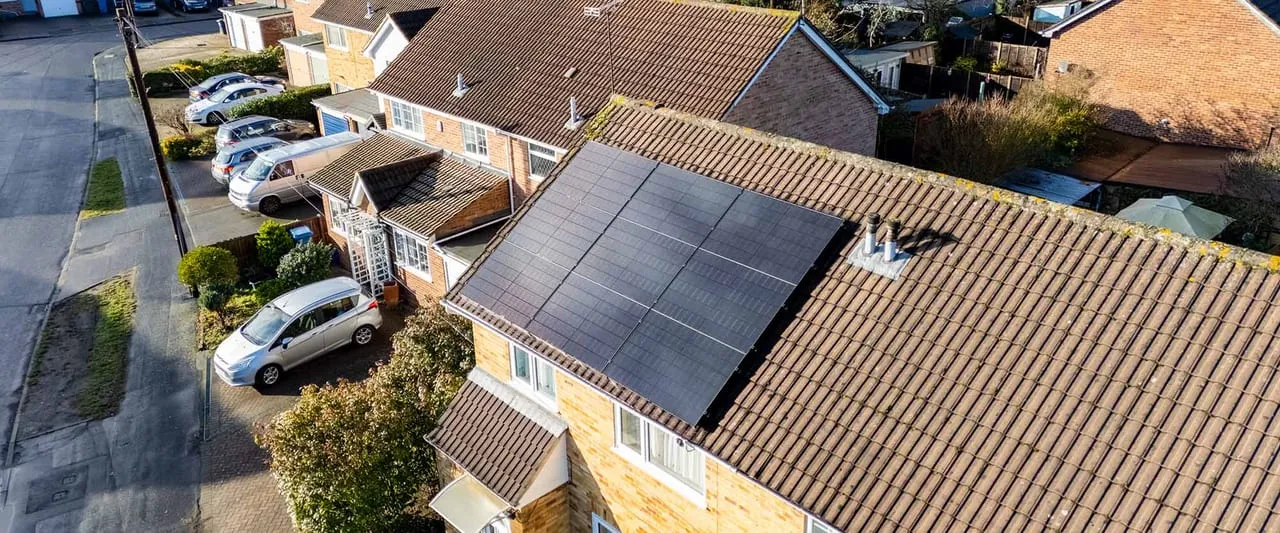
Hull doesn’t feature much in national solar coverage, but it’s a city built on big roofs and bigger energy bills. Between the Saltend chemical cluster on the eastern approach, the distribution sheds around Priory Park, and the mixed retail and leisure stock down at Hull Marina, the city has a genuinely large commercial roof stock — and with average commercial energy spend running to roughly £36,000 a year for a mid-sized user, the payback maths on solar is hard to ignore. Here’s what Hull businesses are actually paying per kWp, how it compares to national benchmarks, and where on the map the opportunity actually sits.
What commercial solar costs in Hull vs the national benchmark
There’s no separate “Hull price” for commercial solar — installers quote from the same supply chain, labour market and scaffolding costs as everywhere else in Yorkshire and the Humber. What changes locally is the roof stock and the electricity spend behind it. Nationally, commercial-scale solar (rooftop, ground-mount and canopy) lands in a band of roughly £900–£1,200 per kWp installed, with larger arrays pulling the unit cost down and complex industrial roofs (standing-seam metal, asbestos-cement, multiple plant obstructions) pushing it up. For a fuller breakdown of how that band is built up — panels, inverters, structural surveys, DNO connection costs — the national commercial solar cost benchmarks on commercialsolarcostuk.co.uk are the most useful independent reference point before you take a quote to a board.
Applied to Hull: a 50 kWp system — a realistic size for a mid-tier warehouse, office block or industrial unit rather than a full Saltend-scale process plant — sits somewhere between £45,000 and £60,000 installed, depending on roof condition and how far the array is from the existing switchgear. Put another way, that’s roughly a third to just under half of Hull’s average house price of around £145,000 — useful context for finance committees who are used to thinking in residential terms but are signing off a commercial capital project.
If you want a Hull-specific starting quote rather than a national average, the commercial solar installation in Hull page is built for exactly that: local roof types, typical system sizes and the site-survey questions worth asking before anyone climbs a ladder.
Two things move a Hull quote around more than most: scaffolding and grid connection. Waterfront and marina-facing buildings sometimes need marine-grade fixings and more complex access than a standard warehouse, which adds to labour cost rather than kit cost. And on the industrial estates — Saltend in particular, given the existing heavy electrical loads already on that network — a grid connection application (the DNO’s G99 process for anything above the small-scale threshold) can take longer to clear than on a standalone retail unit with spare capacity already available. Neither of these is a reason to avoid solar; they’re just the kind of site-specific variable a desk-based quote won’t catch, which is why a proper survey matters more on an industrial estate than on a single detached office roof.
The payback maths: energy spend vs solar output
Yorkshire and the Humber isn’t the sunniest region in the UK, but it’s not a bad one either — solar yield here runs at roughly 860 kWh per kWp per year, close to the UK average and well within the range where commercial solar pays for itself inside a normal capital-planning horizon.
Take that illustrative 50 kWp system. At 860 kWh/kWp/yr it generates around 43,000 kWh annually. Set against an average Hull commercial energy spend of £36,000 a year — which, at a typical non-domestic import rate in the low-to-mid twenties per kWh, implies annual consumption in the region of 130,000–150,000 kWh — a 50 kWp array is realistically offsetting somewhere around a quarter to a third of that business’s total electricity use, assuming a reasonable share of generation is consumed directly on site during working hours rather than exported.
Run the numbers through and a system in that £45,000–£60,000 bracket typically pays back in roughly five to seven years on energy savings alone, before any Smart Export Guarantee income on the surplus or capital allowances are factored in — and commercial systems routinely keep producing well beyond 25 years, so the back half of that lifespan is largely free electricity. Businesses that run more of their load during daylight hours — light manufacturing, food processing, distribution picking shifts — tend to land at the better end of that range because they’re using more of what the roof produces rather than exporting it at a lower rate. For the general mechanics of that calculation, thecostofsolar’s payback period guide and commercial solar panel cost breakdown both walk through the assumptions in more detail, and our solar panel calculator is a reasonable starting point for sense-checking a quote against your own meter data.
Hull’s industrial roof stock: Marina, Saltend and Priory Park
Hull’s 267,100 residents sit alongside a genuinely industrial economy, and that shows up in the roof types worth surveying.
Saltend is the obvious one. The chemical cluster on Hull’s eastern edge is one of the more significant industrial decarbonisation stories on the Humber, and while individual process-plant roofs at that scale need specialist engineering (structural loading, hazardous-area assessments, and often a PPA or asset-finance structure rather than outright purchase — see below), the wider Saltend corridor also includes smaller ancillary buildings, warehousing and office stock that suit a straightforward rooftop array without the complexity of the core process units.
Priory Park, on the western side of the city, is a different profile again — large, flat-roofed distribution and logistics sheds with fewer obstructions and generally simpler structural surveys. This is the kind of roof stock the industrial unit solar guidance on solarpanelsforindustrialunits.co.uk and the warehouse-specific cost and design notes on solarpanelsforwarehouses.co.uk are aimed at — big, unshaded, structurally straightforward, and often already carrying enough electrical load (refrigeration, conveyor systems, forklift charging) to consume most of what’s generated on site.
Hull Marina and the surrounding waterfront is the mixed-use end of the spectrum — retail, hospitality and leisure units with smaller, more varied roof shapes, and in some cases more usable car parking than usable roof, which points towards a canopy-mounted array rather than a rooftop one.
The Humber Freeport tax angle
The detail that makes Hull worth a specific mention, rather than treating it as generic Yorkshire commercial solar, is the Humber Freeport. Businesses investing in qualifying plant and machinery — solar included — within the freeport’s designated tax sites can access Enhanced Capital Allowances, which bring forward the tax relief on that capital spend compared with standard allowances. Saltend sits within that footprint, which matters given the scale of industrial decarbonisation activity already under way there.
This is genuinely useful, but it’s also site-specific and depends on exactly where a property sits relative to the designated tax site boundary, so it’s worth confirming with an accountant rather than assuming eligibility from a Hull postcode alone. It doesn’t replace ordinary due diligence on system size, roof survey and installer quality — it’s an additional reason the payback sums for a Saltend-adjacent site can look better than the national average once the tax position is factored in.
Hull City Council’s 2030 target and what it means for your roof
Hull City Council has set a net-zero target of 2030 for the city, set out in the Hull Carbon Neutral 2030 Plan. That’s an aggressive date by UK standards — most local authority frameworks target 2038–2050 — and it puts commercial energy use squarely in scope, given how much of Hull’s carbon footprint sits with the port, logistics and process-industry base rather than domestic housing.
None of that changes the underlying commercial case for solar, which stands on energy-cost grounds regardless of council policy. But it’s a reasonable signal of direction of travel for planning consultations, business rates conversations and any future procurement requirements tied to council contracts — the kind of thing a facilities or sustainability lead should have on file when a board asks “why now” rather than “why ever.”
It’s also worth noting the target sits at city level, covering everything from the port and the process industries at Saltend through to retail and housing — it isn’t a mandate on individual commercial roofs, and there’s no suggestion Hull businesses are being compelled to install solar by 2030. The practical takeaway is softer than that: a council publicly committed to an early net-zero date tends to be a more straightforward planning authority to deal with on rooftop and canopy solar applications than one with no stated position at all, which matters more than any grant scheme for most businesses actually trying to get a system consented and connected.
VAT, finance and choosing an installer
One point worth being precise about: the 0% VAT relief that applies to residential solar and battery storage installations in Great Britain (in place until 31 March 2027, after which it’s scheduled to revert to 5%) is a household measure. Commercial installations generally attract standard-rate VAT, which a VAT-registered business typically reclaims as input tax — it’s not the same relief, and it’s worth flagging to whoever’s building the capex case so nobody assumes a zero-VAT quote that isn’t coming.
On finance, larger energy users — particularly around Saltend, where system sizes and site complexity push costs up — increasingly avoid the upfront capital question altogether via a power purchase agreement, where a third party funds, owns and maintains the array and the host site simply buys the electricity it generates at a rate below grid import; solarpowerpurchaseagreements.co.uk sets out how that structure works against the more conventional lease, loan or outright-purchase routes. For sites with high import costs at peak times or shift patterns that don’t line up neatly with daylight hours, it’s also worth looking at batterystorageforbusiness.co.uk alongside any solar quote — pairing the two is often what pushes the offset percentage on a £36,000 annual bill from “a quarter” towards “half.”
On installers: get more than one quote, and get at least one from a firm that actually works the region rather than a national call-centre operation quoting off satellite imagery. YEERS across Yorkshire covers commercial and domestic solar, battery and heat pump installs and is a reasonable starting point for a Hull-side survey; just across the Humber, Greenlinc Renewables’ MCS-certified Lincolnshire installs are worth a call if a site sits on the south bank. For larger arrays that need ongoing servicing once they’re live — particularly anything near Saltend’s process environment — solarmaintenancesolutions.com specialises in exactly that O&M gap, and thebritishsolarblog.co.uk’s maintenance guide is a useful primer before you sign a maintenance contract on top of the install one. It’s also worth knowing the installer market is growing fast nationally — 2025 saw 257,397 MCS-certified installations across the UK, up 32% year on year — which means more choice, but also more variation in quality; MCS certification stays the minimum bar to insist on, not just for Smart Export Guarantee eligibility but for warranty and workmanship standards generally. solarweekly.co.uk’s 2026 industry data has the wider market context if it’s useful for a board paper.
The short version for Hull: national cost bands apply, Yorkshire yield is solid rather than exceptional, and the specific things that change the sums locally are the Humber Freeport tax position at Saltend, the size and simplicity of the Priory Park roof stock, and a council-level 2030 target that adds urgency without changing the underlying economics. Get a proper site survey, get more than one quote, and run the payback against your actual half-hourly meter data rather than the citywide average — £36,000 a year is a useful benchmark, not a substitute for your own bill.