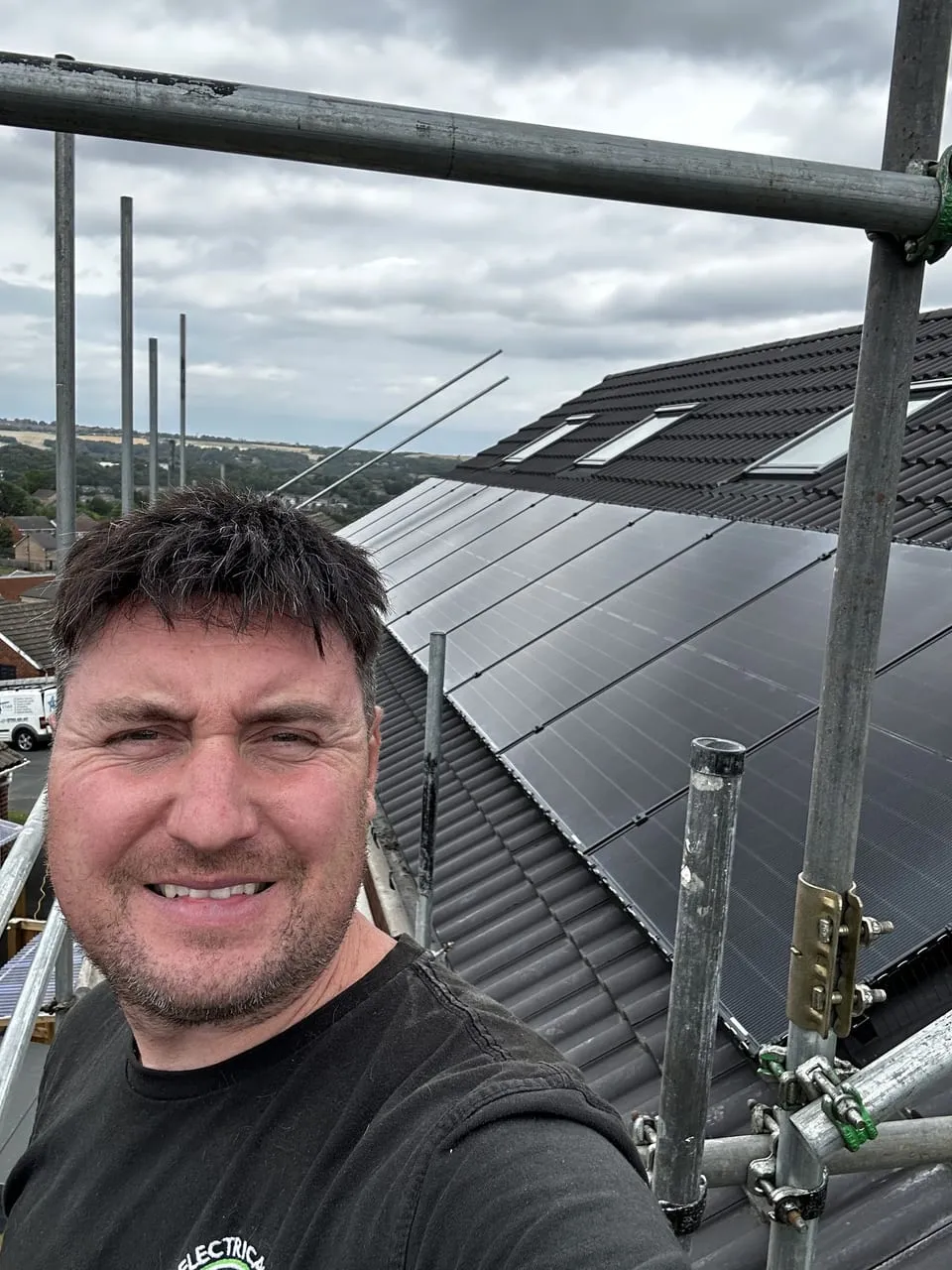
Leeds is the largest local economy in the UK outside London, and with a population of 793,139 spread across a city built on manufacturing, logistics and distribution, its commercial roof stock is enormous — and mostly bare. For a business currently spending somewhere around the local average of £42,000 a year on electricity, that’s not a rounding error. It’s the single biggest lever most Leeds firms have left to pull on their own operating costs, and unlike energy efficiency measures that shave a few percent off a bill, solar changes the shape of the bill entirely.
This isn’t a “should you go solar” piece. It’s a “what will it actually cost, and when does it pay for itself, if you run a business on an industrial estate in Leeds” piece — with real numbers, not marketing gloss.
The Leeds roof stock: where the opportunity actually sits
Drive around Cross Green Industrial Estate, out to Stourton, or through Hunslet and you’re looking at exactly the kind of building commercial solar was designed for: large flat or shallow-pitch roofs, high daytime electricity consumption from refrigeration, machinery, lighting and HVAC, and — critically — very little shading. These aren’t heritage buildings with planning constraints or awkward Victorian roof pitches. They’re steel-portal-frame sheds built in the last few decades with roof structures that, in most cases, can take a meaningful PV array without major reinforcement work.
That matters because roof condition and structural capacity, not just sunshine, are what actually determine whether a Leeds building is a good solar candidate. A unit on Cross Green with a 15-year-old roof membrane and a clear south-, east- or west-facing aspect is a far better prospect than a smaller, shaded city-centre unit — regardless of postcode.
Leeds City Council has been broadly supportive of this shift. The city’s rooftop PV planning position sits within the wider Leeds Climate Emergency Action Plan, and the council’s target of reaching net zero by 2030 puts real pressure — and real incentive — behind commercial decarbonisation. The West Yorkshire Combined Authority’s Net Zero Toolkit specifically backs SME solar installs across the region, and Leeds planning policy generally supports rooftop PV across the commercial estate, which removes one of the friction points that slows projects down elsewhere in the country.
What does commercial solar actually cost in Leeds?
Nationally, commercial solar in the UK runs at roughly £900–£1,200 per kWp installed, covering panels, mounting, inverters, labour, scaffolding or access, and grid connection work. There’s no credible reason a well-specified Leeds installation should sit meaningfully outside that band. West Yorkshire has a competitive base of commercial installers, good access to distribution networks for equipment, and none of the remote-site premiums you’d see quoting a similar job in the Highlands or on an island. If you’re being quoted well above £1,200/kWp for a straightforward flat-roof industrial unit with easy access, it’s worth asking what’s driving the difference — a genuinely complex roof structure, an undersized inverter setup, or simply a margin that’s too fat.
For a clear, independently maintained benchmark of what commercial solar should cost by system size and building type, commercialsolarcostuk.co.uk is a useful reference point before you take a quote at face value — it breaks the national £/kWp band down in a way that’s easy to sanity-check against whatever a Leeds installer puts in front of you.
Where local pricing does diverge slightly from a generic national quote is in the roof type itself. Distribution and logistics sheds around Stourton and Hunslet — the kind of buildings served by sites like solarpanelsforindustrialunits.co.uk — tend to have simpler, larger, more uniform roof areas than mixed-use commercial premises closer to the city centre, which usually brings the effective £/kWp down slightly through economies of scale on a single large array, even before you factor in Leeds’s competitive installer market.
One important caveat for anyone assuming the residential 0% VAT relief on solar and battery storage (in place in Great Britain until 31 March 2027) applies here: it doesn’t. That relief is specific to domestic installations. Commercial solar is subject to standard VAT, though VAT-registered businesses reclaim it as input tax in the normal way, and many companies can offset a large share of the capital cost through capital allowances — including full expensing for companies investing in qualifying plant and machinery, which solar panel systems generally fall under. It’s worth getting proper accountancy advice on this rather than relying on a supplier’s summary, but the tax treatment materially changes the real cash cost versus the headline invoice.
Running the payback numbers for a typical Leeds unit
Take a plausible example: a 100 kWp rooftop array on an industrial unit near Cross Green, installed at the upper end of the national band — say £1,100/kWp — for a total capital cost of £110,000.
Yorkshire and the Humber sees average solar yields of around 860 kWh per kWp per year, a little below the sunnier south of England but entirely workable for a commercial return. That gives this array roughly 86,000 kWh of annual generation.
Commercial premises with daytime-heavy consumption — refrigeration, production lines, warehouse lighting, forklift charging — typically self-consume a high proportion of what they generate, often 65–80%, because the panels are producing exactly when the building is drawing the most power. Assume 70% self-consumption here: that’s around 60,000 kWh displacing grid import at roughly 25p/kWh (in line with the current Ofgem price cap level for non-domestic consumption, though actual commercial tariffs vary by contract), worth about £15,000 a year in avoided electricity purchases.
The remaining 26,000 kWh gets exported. Smart Export Guarantee rates vary considerably by supplier — from a few pence up to around 12–20p/kWh at the top end — so at a conservative blended 12p, that’s roughly £3,120 a year in export income.
Put together, that’s close to £18,000 a year in combined savings and income against a £110,000 install — a simple payback of around six years, before accounting for any capital allowance relief, which for many businesses would pull that figure down further, and before accounting for the near-certainty that grid electricity prices will not get cheaper over a 25-year panel warranty period. Run your own numbers against your actual half-hourly consumption profile rather than a generic estimate — the free calculator at businesssolarcalculator.co.uk is built for exactly this and will give a far more accurate figure than any rule-of-thumb, and our own commercial solar payback breakdown walks through the underlying assumptions in more depth.
Businesses with genuinely high daytime baseload — cold storage, food processing, anything running shift patterns around the clock — will self-consume an even higher share of generation and see faster payback still. It’s also worth modelling a battery alongside the array if your consumption profile has evening or early-morning peaks; batterystorageforbusiness.co.uk sets out how storage changes the self-consumption maths for exactly that kind of load pattern.
Financing without the £110,000 upfront
Not every Leeds business wants to find six figures of capital for a rooftop array, and there are now enough structured routes into commercial solar that capital constraints shouldn’t be the reason a good roof stays empty.
A power purchase agreement lets a third party fund, install and own the system on your roof, with you simply buying the electricity it generates at a rate below your current grid price — no capital outlay, no ownership risk, and the panels are someone else’s maintenance problem. solarpowerpurchaseagreements.co.uk explains how PPA structures work for UK commercial buildings and what to check in the small print before signing a 15–20 year agreement.
Asset finance is the more conventional route — spreading the capital cost over a fixed term so the monthly repayment sits below the energy saving from day one, meaning the installation is cash-flow positive immediately rather than after a payback period. solarasse tfinance.co.uk and commercialsolarfinance.co.uk both cover the lending options available to UK businesses, from hire purchase to leasing structures.
Finding the right installer in West Yorkshire
Get quotes from MCS-certified installers only — MCS certification isn’t optional if you want access to the Smart Export Guarantee, and it’s the baseline signal that an installer meets recognised UK standards for design and workmanship. YEERS in Leeds covers solar, battery storage, heat pumps and EV charging for commercial sites across the city and wider Yorkshire region, which is useful if you’re weighing solar against a heat pump upgrade or planning EV charging for a fleet at the same time. For businesses with premises spanning West and South Yorkshire, AMP Pro Electrical operates out of Doncaster and covers renewables installation alongside general commercial electrical work, worth a call if your estate includes sites outside the Leeds boundary itself.
For a broader look at what “commercial solar installation in Leeds” actually involves end to end — survey, design, DNO application, installation and commissioning — commercialsolarpanelsinstallation.co.uk/commercial-solar-panels-leeds/ sets out the process specifically for the city rather than generic national copy.
Don’t skip the aftercare question when comparing quotes. String inverters typically need replacing once in a 25-year system life, at roughly £500–£1,000, and panel output degrades slowly — modern N-type panels lose around 0.4% of output a year, which is trivial, but only if the system is monitored and cleaned. A specialist O&M provider like Solar Maintenance Solutions is worth building into your budget from day one rather than treating maintenance as an afterthought once something stops generating.
The practical next step
If you own or lease a commercial roof in Leeds — particularly anything on Cross Green, Stourton or Hunslet with an unshaded, structurally sound flat or shallow-pitch roof — the economics here are not marginal. Against an average commercial energy spend of £42,000 a year, a correctly sized system at national-band pricing pays back inside roughly six years and then keeps generating free electricity for another two decades. Get two or three quotes from MCS-certified installers, benchmark them against an independent cost guide before you sign anything, and run your own consumption data through a proper payback calculator rather than accepting a supplier’s headline figure. For the wider industry context behind these numbers — installation volumes, pricing trends and where the UK commercial market is heading in 2026 — solarweekly.co.uk’s UK solar industry overview is a useful companion read, and our own guide to solar panel payback periods in the UK covers how to stress-test the assumptions behind any quote you’re given.