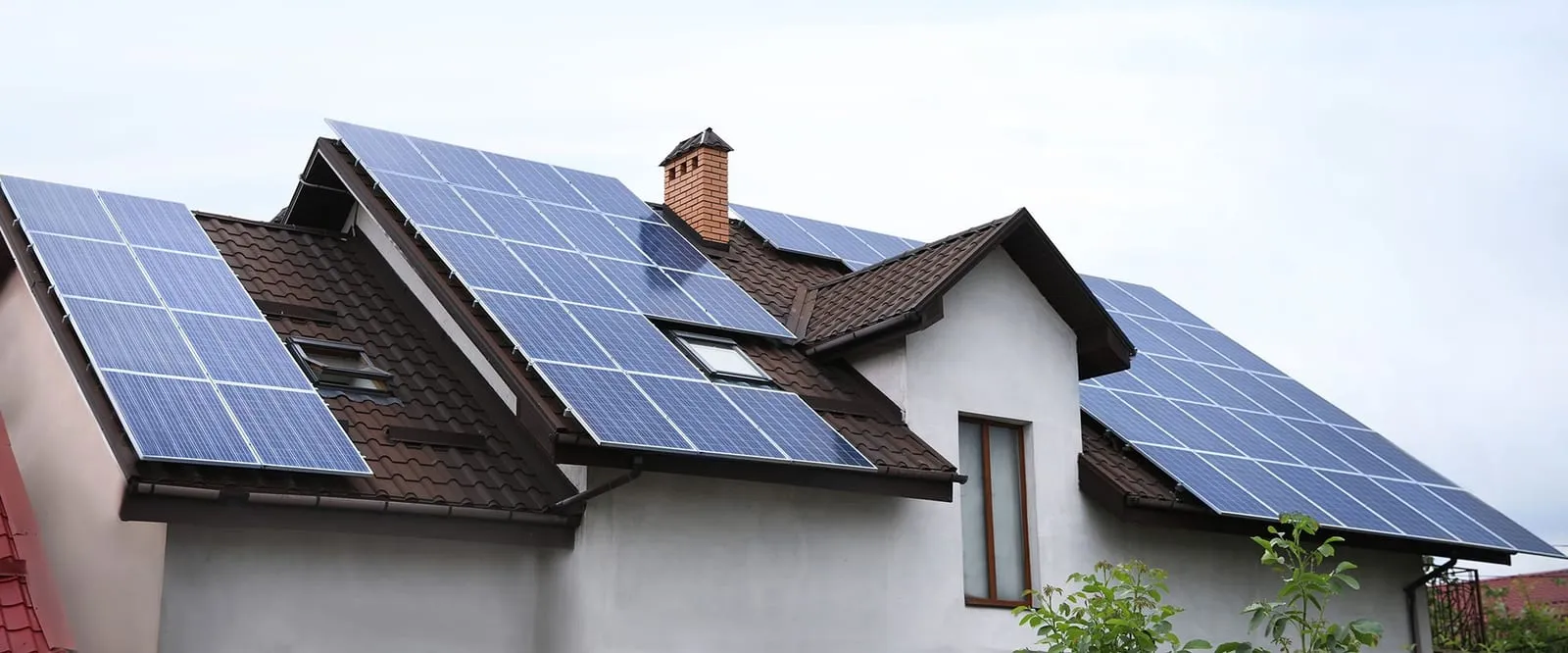
Plymouth’s commercial roofs are having a moment. Between a council net-zero deadline, a live Freeport tax designation and energy bills that haven’t gone anywhere near back down, the maths on putting panels over a warehouse or industrial unit in the city has shifted noticeably in the last two years. This piece works through what commercial solar actually costs in Plymouth right now, how that stacks against the national £900–£1,200 per kWp band, and where the payback lands for a typical local business.
Why Plymouth is a live commercial solar market
Plymouth City Council has committed the city to net zero by 2030 — one of the more ambitious municipal targets in the country — set out in the Plymouth Net Zero Action Plan. That target doesn’t hand businesses a grant cheque, but it does shape planning attitudes, procurement conversations and the general direction of travel for commercial landlords and occupiers who don’t want to be the last building on an industrial estate still running entirely off grid import.
More material for most business owners is Plymouth & South Devon Freeport status. Freeport tax sites unlock Enhanced Capital Allowances (ECAs) — a 100% first-year deduction against qualifying plant and machinery investment, which solar PV and battery storage assets typically qualify as, rather than spreading the write-down over years under standard capital allowances. For a business investing in a six-figure rooftop array, that’s a real difference to how quickly the cost comes back off the tax bill, on top of whatever the electricity savings deliver. It’s worth getting a specific ruling from your accountant on your site’s Freeport tax-site status before you bank on it — but it’s a genuine reason Plymouth businesses are further ahead in the conversation than equivalent firms in cities without Freeport designation.
Then there’s the roof stock. Plymouth’s industrial base sits across a handful of recognisable estates — Estover Industrial Estate to the north-east, Coypool near Marsh Mills, and the wider commercial-energy context set by Langage Energy Park, which already hosts grid-scale generation and gives the city a working precedent for commercial-scale power infrastructure sitting alongside industrial units. None of that is small print — it’s the difference between a city where “can we even do this here” is still an open question and one where the planning and grid conversations have largely already happened.
What commercial solar actually costs in Plymouth in 2026
Nationally, installed commercial solar runs roughly £900–£1,200 per kWp, according to the benchmark tracked at commercialsolarcostuk.co.uk, with the lower end typically reserved for larger, simpler flat-roof arrays (think 100kWp+) and the upper end covering smaller systems, complex roof structures, or sites needing significant electrical upgrade work to accept the new supply. Plymouth doesn’t have a published city-specific per-kWp rate that differs meaningfully from that national band — there’s no evidence local install costs are systematically cheaper or more expensive than the rest of the South West — so the sensible starting point for budgeting is that same £900–£1,200/kWp range, then adjusting for your specific roof.
What that looks like in practice for a few common Plymouth commercial roof sizes:
| System size | Typical installed cost (national band) |
|---|---|
| 50 kWp (small industrial unit) | £45,000 – £60,000 |
| 100 kWp (mid-size warehouse) | £90,000 – £120,000 |
| 250 kWp (larger distribution/logistics roof) | £225,000 – £300,000 |
These are gross figures before any Freeport ECA relief, and before factoring in the Smart Export Guarantee income a system earns on exported units. It’s also worth running your own numbers through the calculator at thecostofsolar.co.uk/solar-panel-calculator/ alongside a proper site survey — rooftop condition, orientation and existing electrical infrastructure move the number in both directions more than city location does.
The payback maths against a typical Plymouth energy bill
Plymouth sits in the South West, one of the better regions in the UK for solar yield — around 990 kWh per installed kWp per year, comfortably above the UK-wide average of roughly 850 kWh/kWp and not far off the sunniest parts of the south coast. That yield advantage is one of the genuine local factors that improves the payback case here versus, say, a similar-sized business in the Midlands or the north.
Take the average commercial energy spend for a Plymouth business, cited at roughly £36,000 a year. At a typical commercial import rate around 25p/kWh (varying by tariff and contract), that implies annual consumption in the region of 140,000–145,000 kWh. A 100kWp rooftop array in Plymouth would generate roughly 99,000 kWh a year at that 990 kWh/kWp yield. Commercial sites with daytime-heavy operating hours — warehousing, light manufacturing, distribution — typically self-consume 60–75% of what they generate, because that’s when the site is drawing power anyway. At 70% self-consumption, that’s around 69,300 kWh displacing grid import at 25p/kWh — roughly £17,300 a year in avoided purchase, before a penny of export income.
The remaining ~30% (around 29,700 kWh) exports to grid under the Smart Export Guarantee, where rates vary by supplier — typically 12–20p/kWh at the better end rather than a fixed national figure — adding perhaps another £4,000–£5,000 a year. Put together, a 100kWp system costing £90,000–£120,000 installed is plausibly saving a Plymouth business £21,000–£22,000 a year in year one, before Freeport ECA tax relief is even applied — a simple payback in the region of 4–5.5 years, tightening further once the tax treatment is factored in. That’s a genuinely strong commercial return, and it’s consistent with the wider payback ranges set out at thecostofsolar.co.uk/commercial-solar-panel-costs/ and /solar-panel-payback-period-uk/. Every one of those inputs — tariff, self-consumption ratio, roof orientation — is site-specific, so treat this as a worked illustration rather than a quote.
Financing it without draining working capital
Not every Plymouth business wants to write a six-figure capex cheque, however good the payback looks on paper. A few routes worth knowing about:
- Asset finance spreads the installed cost over a fixed term, often structured so the monthly repayment is lower than the energy saving from month one — worth exploring through a specialist like solarassetfinance.co.uk rather than a generic business loan.
- Power Purchase Agreements (PPAs) remove the capital outlay entirely: a third party owns and maintains the array on your roof, and you buy the power it generates at a rate below your grid tariff. solarpowerpurchaseagreements.co.uk sets out how the contract structures typically work for UK commercial sites.
- Dedicated commercial solar finance brokers, such as commercialsolarfinance.co.uk, can help structure a deal that sits alongside the Freeport ECA claim rather than against it — worth a conversation before you commit to any single financing route.
If battery storage is part of the plan — increasingly sensible for sites wanting to shift more of that 990 kWh/kWp yield into evening or weekend use rather than exporting it cheaply — batterystorageforbusiness.co.uk is a useful primer on the commercial-scale costs and sizing questions involved.
Estover, Coypool and the wider industrial estate roof stock
Estover Industrial Estate and Coypool represent exactly the kind of flat-roofed, single-storey industrial and warehouse stock that tends to deliver the best £/kWp economics — large uninterrupted roof areas, straightforward mounting, and daytime-heavy electricity demand that maximises self-consumption. If your unit sits on one of these estates, or on a comparable industrial park elsewhere in the city, that roof type is squarely the profile the national cost band and the payback example above are built around. Sites near Langage Energy Park benefit from being in a part of the city where grid capacity conversations for larger commercial generation have already been had at scale, which can smooth the connection process for a new array — though every site still needs its own District Network Operator (DNO) application checked individually; don’t assume proximity to existing generation guarantees capacity headroom on your specific supply.
For a broader look at industrial-specific roof stock economics beyond Plymouth, solarpanelsforindustrialunits.co.uk and solarpanelsforwarehouses.co.uk both cover the sizing and structural considerations that apply to this building type nationally.
Getting a proper local quote
The national cost bands above are a planning tool, not a substitute for a site survey. Roof condition, existing electrical infrastructure, DNO export capacity and shading all move the real number for your building. For a Plymouth-specific starting point, commercial solar installation in Plymouth is a useful first stop for scoping what a local project actually involves before you bring installers in.
On the installer side, the South West has genuine local capacity: CCS Heating & Renewables in the South West covers Cornwall and the wider region for solar and renewable heating installs, while D&R Energy in Bristol works commercial solar projects further up the peninsula — both worth a call alongside any Plymouth-based quotes, since a second and third quote against the same roof spec is the single best way to sanity-check a price against the national band. Southcoast Solar Solutions is another regional option worth including in that shortlist if your site sits closer to the coast.
Once a system is in, it’s only earning its payback if it stays clean, correctly monitored and free of underperforming strings — a national specialist like Solar Maintenance Solutions is worth budgeting for on the O&M side, and thebritishsolarblog.co.uk’s maintenance guide is a decent primer on what routine upkeep should actually involve. For the wider UK market context behind these numbers — installation volumes, pricing trends, where the industry is heading through 2026 — solarweekly.co.uk’s industry overview is worth a read.
The bottom line for Plymouth businesses
Plymouth doesn’t have a special local discount on solar hardware — the £900–£1,200/kWp national band applies here as much as anywhere. What it does have is an above-average South West solar yield, a live Freeport tax designation that can materially improve the after-tax return, a council net-zero deadline pushing the conversation along, and a stock of exactly the large flat-roofed industrial buildings — Estover, Coypool and the estates around Langage Energy Park — that make the commercial solar payback case work fastest. For a business already spending around £36,000 a year on electricity, a mid-sized rooftop array is a five-year-or-under payback proposition even before tax relief, which is a rare thing to be able to say with a straight face about any capital investment in 2026. Get two or three quotes against the same roof brief, ask each installer to model self-consumption against your actual half-hourly demand profile rather than a generic assumption, and check your Freeport tax-site status before you finalise the numbers.