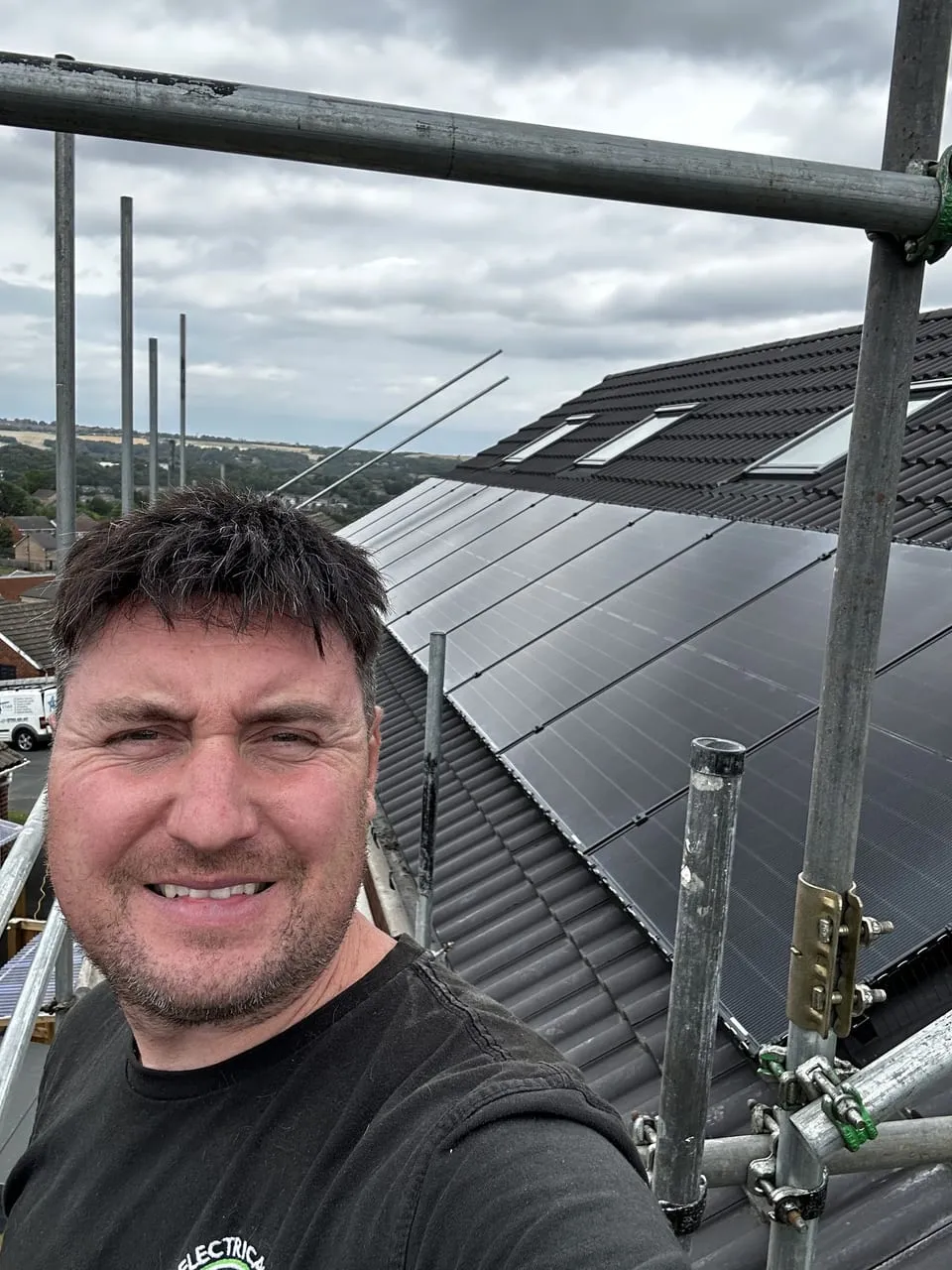
Southampton is a working port city of 269,781 people, and that changes the commercial solar sums in ways a generic national average can’t capture. This is a place built on freight, warehousing and marine logistics rather than office parks — which means flat industrial roofs, high daytime electricity loads, and a council with a hard 2030 net-zero deadline pushing business energy costs up the agenda. If you run a warehouse, distribution shed or manufacturing unit anywhere from the docks to Eastleigh, here’s what commercial solar actually costs locally, what it’s likely to save against a typical Southampton energy bill, and where the real financial lever sits.
What commercial solar actually costs in Southampton right now
The UK-wide commercial benchmark for 2026 sits at roughly £900–£1,200 per kWp installed, and Southampton isn’t an outlier from that band — it’s a useful case study of where within it a given business lands. The national commercial solar cost benchmark is the right starting point for budgeting, because per-kWp pricing falls as system size rises: a small 20–30 kWp array on a single-storey office roof sits nearer £1,100–£1,200/kWp, while a 100 kWp-plus array on a large flat warehouse roof — the norm across Southampton’s industrial estates — typically lands closer to £900–£1,000/kWp thanks to bulk panel pricing and simpler racking on unshaded, low-pitch roofs.
Here’s how that plays out at three common commercial scales, using the region’s solar yield of roughly 1,000 kWh per kWp per year (the South East runs ahead of the UK’s ~850 kWh/kWp national average):
| System size | Typical install cost (£900–£1,200/kWp) | Annual generation (~1,000 kWh/kWp/yr) | Illustrative annual saving* | Indicative payback |
|---|---|---|---|---|
| 50 kWp | £45,000–£60,000 | 50,000 kWh | ~£11,000 | ~4.5–5.5 years |
| 100 kWp | £90,000–£120,000 | 100,000 kWh | ~£22,000–£23,000 | ~4.5–5.5 years |
| 250 kWp | £225,000–£300,000 | 250,000 kWh | ~£56,000–£57,000 | ~4.5–5.5 years |
*Modelled on a mixed self-consumption/export profile: roughly 25p/kWh saved on self-consumed daytime power and 12–20p/kWh earned on exported surplus via the Smart Export Guarantee (rates vary by supplier — always check the specific tariff on offer). These are illustrative national-band figures, not verified individual Southampton installs, and actual paybacks depend heavily on how much of the generation a site actually uses on-site rather than exports.
One thing worth flagging for context: the average Southampton house price sits around £240,000 — a reminder that commercial roof economics run on an entirely different scale to a domestic rooftop, and shouldn’t be benchmarked against residential quotes. Residential systems also currently enjoy 0% VAT in Great Britain until 31 March 2027 (reverting to 5% after); that relief generally doesn’t extend to commercial installations, where standard-rate VAT usually applies (though it’s recoverable for VAT-registered businesses) — which is exactly why the tax lever for commercial buyers here is different, and covered below.
Why Southampton’s industrial roof stock is different
What makes Southampton worth its own analysis rather than a copy-paste of the national numbers is the roof stock itself. This is a port city, and port-related logistics — freight handling, distribution, cold storage, marine services — drives demand for commercial solar at a scale that pure office-based cities don’t see. Large, flat, structurally robust industrial roofs are exactly the asset class that makes solar economics work best: minimal shading, simple single-axis racking, and daytime operating hours that line up neatly with generation.
Three estates do the heavy lifting locally: Eastleigh Lakeside, Empress Road, and the Solent Industrial Estate. Between them they represent the kind of warehouse, workshop and light-industrial roof stock that a 100–250 kWp system is designed for — buildings where the roof is currently doing nothing but keeping the weather out, sitting above operations that run high daytime loads (refrigeration, machinery, lighting, forklifts on charge) that a solar array can offset directly rather than exporting at a lower rate. For businesses on these estates, the practical next step is usually a site-specific yield and load survey rather than relying on averages — a specialist covering commercial solar installation in Southampton can model actual roof orientation, structural loading and grid capacity rather than a generic per-kWp figure. Businesses running fleets or EV charging infrastructure on these same estates should also look at commercial solar EV charging integration, since solar-fed charging avoids paying grid rates twice over for the same kWh.
Given the amount of open yard and car park space typical of estates like these, it’s also worth a mention that solar canopies over parking areas are increasingly viable where roof space is constrained or shared with other tenants — solar car park canopies can add generation capacity without touching the roof at all, useful where a building is leased and roof access is a negotiation with the landlord.
The maths against a £42,000 energy bill
The number that actually matters for a Southampton business weighing this up isn’t the install cost in isolation — it’s how that cost compares to what the business is already spending. The average commercial energy spend locally sits around £42,000 a year. At a typical import rate near 25p/kWh, that implies annual consumption in the region of 160,000–170,000 kWh — comfortably within range of what a 150–250 kWp rooftop array could offset a meaningful share of, particularly for a business with daytime-heavy load profiles like warehousing, cold storage or light manufacturing.
The honest caveat: solar only saves money on the power it actually offsets. A business that’s largely shut at weekends and evenings, with a flat daytime load, will self-consume a high proportion of what it generates and see paybacks nearer the 4.5-year end of the range above. A business with a lower daytime load, or one exporting a larger share of generation onto the Smart Export Guarantee at 12–20p/kWh rather than saving the full 25p/kWh import cost, will see paybacks stretch closer to 6–7 years. Pairing solar with commercial battery storage can help capture more of the daytime generation for use outside peak hours and smooth out demand charges — worth investigating for battery storage for business applications on sites with high overnight or early-morning loads. Anyone wanting to run their own numbers against actual quoted costs rather than these illustrative bands should also try a business solar ROI calculator before committing to a specific system size.
For a wider grounding in how these figures are built — degradation rates, inverter lifespans, and the assumptions behind payback modelling — see our own guide to solar panel payback periods in the UK and the fuller breakdown of commercial solar panel costs.
Solent Freeport and Enhanced Capital Allowances: the real lever
The single biggest factor that separates Southampton’s commercial solar economics from a generic UK city isn’t the panels — it’s the tax treatment. Southampton sits within the Solent Freeport area, and businesses operating within its designated tax sites can access Enhanced Capital Allowances (ECA), which allow 100% of qualifying plant and machinery expenditure — including solar arrays and battery storage — to be written off against taxable profits in the year it’s incurred, rather than depreciated over many years. For a business investing £100,000–£300,000 in a rooftop system, that’s a materially different cash-flow picture to a standard capital allowance claim, and it’s worth raising with an accountant alongside any solar quote rather than treating it as a footnote. It’s the clearest reason a Southampton or wider Solent-area business should get a proper quote now rather than waiting: the tax relief is tied to Freeport tax-site status, and eligibility and site boundaries are worth confirming for your specific address before assuming it applies. Finance routes structured around commercial capital allowances — including commercial solar finance and asset-finance-led purchase structures via solar asset finance — are usually the fastest way to establish whether ECA changes the numbers for a specific site.
Southampton City Council’s 2030 target and the Green City Charter
The demand side of this isn’t purely commercial opportunism — it’s policy-driven too. Southampton City Council has set a 2030 net-zero target for the city, formalised through its Green City Charter, which puts business energy use squarely in scope alongside council operations and housing. That target doesn’t hand out universal grants for commercial solar (there isn’t one, nationally or locally — England’s solar support for businesses runs through capital allowances, business rates relief on eligible plant, and sector-specific grants like the Improving Farm Productivity grant for agricultural applicants, not a blanket subsidy), but it does mean planning, procurement and business-rates conversations in the city increasingly assume on-site generation is part of a credible net-zero plan. For businesses tendering for council or port-linked contracts, being able to point to on-site renewable generation is becoming a genuine differentiator, not just a cost-saving exercise.
Finding the right installer and getting a proper quote
The estates that matter here — Eastleigh Lakeside, Empress Road and Solent Industrial Estate — are close enough together that a local installer with genuine South Coast coverage, rather than a national call-centre operation, is usually the better fit for site surveys and ongoing maintenance. South Coast Solar Solutions covers the wider south-coast commercial market and is a sensible starting point for a Southampton-specific quote, while Solent Solar, based across Hampshire, is another regional option worth getting a second opinion from — always worth comparing at least two quotes given how much the per-kWp price moves with roof size, structural condition and grid connection capacity. For businesses closer to distribution and logistics use cases specifically, it’s also worth checking sector-specific guidance on solar for logistics operations and solar for industrial units, since load profiles and roof types in those categories differ from a standard office or retail install. Whoever you engage, confirm they’re MCS-certified — it’s a requirement for Smart Export Guarantee eligibility and the baseline standard for any commercial installer worth using. For a broader read on how commercial installers price and pitch this work nationally, UK solar industry data for 2026 is a useful trade-side companion to this cost breakdown.
The practical takeaway
For a Southampton business sitting on a flat industrial roof with a five-figure annual energy bill, the arithmetic is straightforward even before Enhanced Capital Allowances are factored in: national per-kWp costs, regional yield around 1,000 kWh/kWp, and a typical £42,000 commercial energy spend point to paybacks in the 4.5–7 year range depending on how much generation the business actually self-consumes. Get a site-specific quote against the roof and load profile rather than relying on averages, ask explicitly about Solent Freeport eligibility before assuming it applies, and compare at least two regional installers before signing anything.