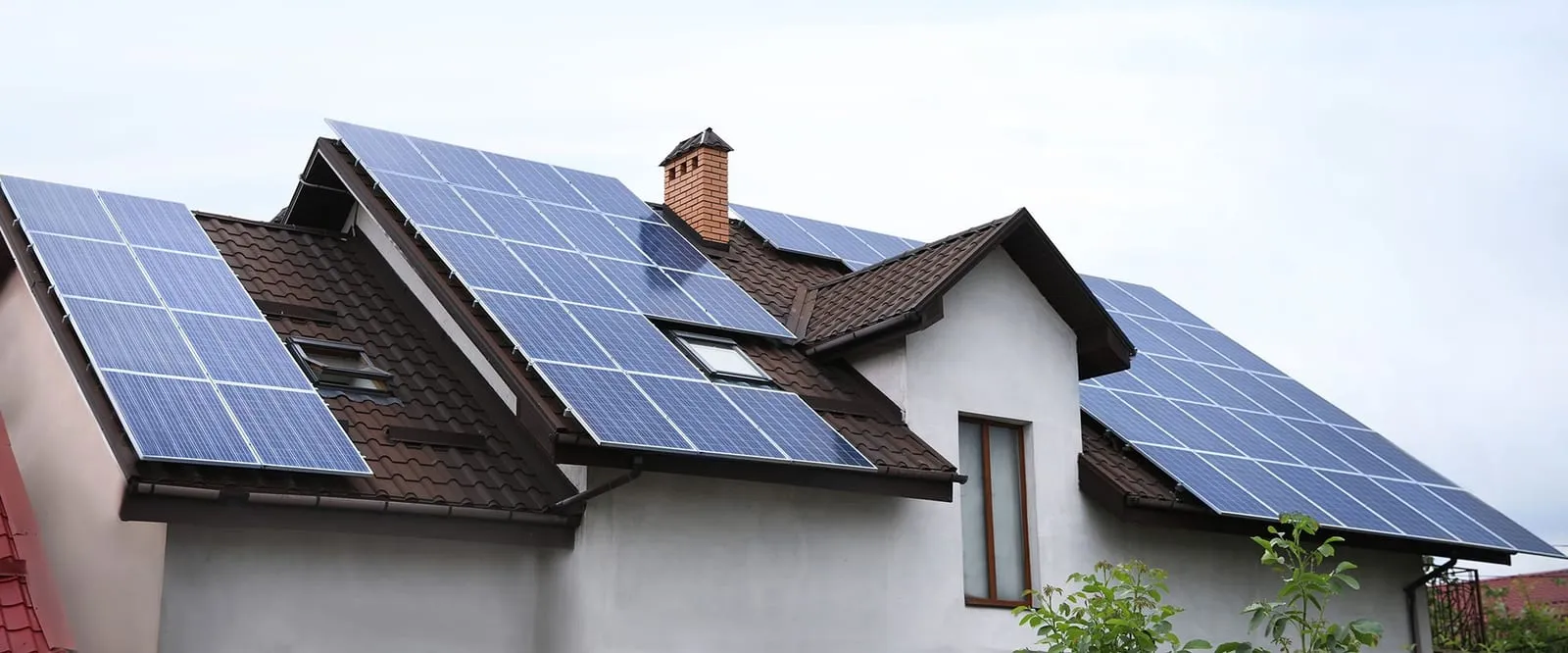
Wolverhampton has spent the last decade rebuilding its manufacturing base rather than mourning what left it, and that shows up on its roofs. With Jaguar Land Rover’s presence at the i54 advanced manufacturing site anchoring a wider industrial-decarbonisation cluster, plus older stock at Pendeford Business Park and Marston Road Industrial Estate, the city (population 263,700) has a lot of large, flat, structurally sound commercial roofs relative to its size. For a business owner asking what commercial solar cost in Wolverhampton actually looks like in 2026, the short version is: broadly in line with the national £900–£1,200 per kWp band, with local roof stock and the i54 cluster’s momentum making the sums unusually favourable.
What Wolverhampton businesses are actually paying per kWp
There’s no separate “Wolverhampton price” for commercial solar — panels, inverters, mounting and labour are priced nationally, and installers quoting in the West Midlands work to the same cost structure as everywhere else in England. The current UK commercial band sits at roughly £900–£1,200 per kWp installed, with the lower end reserved for larger arrays (150 kWp and up) on simple, unobstructed industrial roofs — exactly the profile you find at i54, Pendeford and Marston Road. Smaller commercial systems, under about 50 kWp, tend to land nearer £1,100–£1,400 per kWp because scaffolding, access plant and design work don’t scale down proportionally with the roof size.
For a rough sense of what that means in cash terms:
| System size | Typical roof type | Installed cost (est.) | Annual generation at 920 kWh/kWp/yr |
|---|---|---|---|
| 30 kWp | Small workshop unit, Marston Road | £33,000–£42,000 | ~27,600 kWh |
| 100 kWp | Mid-size industrial unit, Pendeford | £95,000–£120,000 | ~92,000 kWh |
| 250 kWp | Large distribution/manufacturing roof, i54 | £225,000–£280,000 | ~230,000 kWh |
These are illustrative figures based on the national per-kWp band, not quotes — actual pricing depends on roof condition, distribution board capacity, whether a grid export application is needed, and how many installers you get competing for the job. For a wider national reference point on how commercial pricing is currently trending, commercialsolarcostuk.co.uk’s benchmark data is a useful sanity check against any quote you’re given, before you commit.
One number worth banking early: West Midlands solar yield averages around 920 kWh per installed kWp per year — a little below the sunnier south coast (which can push past 1,050 kWh/kWp), but comfortably ahead of Scotland and the north. It’s a solid, unremarkable yield that makes the maths work without needing to assume best-case weather.
Real roof stock: i54, Pendeford and Marston Road
What makes Wolverhampton interesting isn’t the yield — it’s the roofs. The city’s three main industrial clusters each suit solar for slightly different reasons:
- i54 Wolverhampton is the newest and most consistent stock: purpose-built advanced manufacturing units around the Jaguar Land Rover engine plant, with large clear-span roofs and modern electrical infrastructure that’s usually straightforward to interconnect with a sizeable array. The site’s own decarbonisation direction — driven by JLR’s supply chain and its net-zero commitments — means solar on neighbouring units increasingly reads as table stakes for winning or keeping supply contracts, not a nice-to-have.
- Pendeford Business Park is a broader mix of light industrial, trade counter and office space. Roofs here vary more in age and orientation, so a proper structural and shading survey matters more than at i54 — but the site’s proximity to the M54 also makes it attractive for EV charging and battery storage add-ons alongside solar, since many occupiers run vans and light commercial fleets.
- Marston Road Industrial Estate is older, denser stock — smaller units, more roof clutter (HVAC plant, old skylights), but also lower per-unit energy demand in many cases, which changes the payback calculation in the other direction: smaller systems, but a bigger proportional dent in the bill.
If you occupy or own space in any of these three, the starting question isn’t “can I fit panels” — on this roof stock, almost everyone can — it’s “how much of my daytime load can I actually self-consume,” which is really a question about your operating hours and process electricity use, not your roof.
Doing the maths against a typical £40,000 energy bill
Average commercial energy spend for a Wolverhampton business sits around £40,000 a year — a figure that covers a wide range of unit sizes and usage patterns, from a single-shift light industrial unit to a two-shift manufacturing operation. Commercial electricity isn’t covered by Ofgem’s household price cap (that only applies to domestic supply); most businesses buy on fixed-term contracts negotiated directly with a supplier, so the effective unit rate varies by contract size, renewal timing and how exposed the deal was to the wholesale spikes of the past few years. Domestic rates sitting around 25p/kWh under the current cap are a useful rough anchor, since many smaller commercial contracts land in a similar band.
Take a business spending £40,000/yr and assume, conservatively, that a fair chunk of that load happens during daylight hours — typical for a business running standard day-shift operations. A 100 kWp array on a Pendeford or Marston Road roof, generating roughly 92,000 kWh a year at the regional 920 kWh/kWp yield, with a healthy share self-consumed rather than exported, can realistically offset a meaningful proportion of that annual spend. Commercial solar payback in the UK currently tends to fall in a broad 4–8 year range depending on self-consumption rate, system size and financing route — well inside the 25–30-year lifespan of modern N-type panels, which degrade at only around 0.4% a year. Whatever isn’t self-consumed can be sold under the Smart Export Guarantee, though it’s worth checking rates across suppliers rather than assuming a flat figure — SEG tariffs currently range from a few pence up to around 15–20p/kWh at the very top of the market, and they change often.
None of this replaces a proper site-specific quote. A shaded roof, an old distribution board needing an upgrade, or a landlord lease that complicates ownership can all move the numbers meaningfully. But as a starting filter for whether it’s worth getting three quotes, the arithmetic on a £40,000 bill in Wolverhampton is generally favourable.
VAT, grants and which schemes actually apply
It’s easy to get the tax and grant picture muddled between residential and commercial solar, so it’s worth being precise. The 0% VAT rate on solar panels and battery storage, in place across Great Britain until 31 March 2027 (scheduled to revert to 5% after), applies to residential installations. Commercial and industrial solar is generally standard-rated at 20% VAT, though VAT-registered businesses typically reclaim it in full, so most commercial quotes are compared net of VAT in practice anyway. Many businesses also use capital allowances (the Annual Investment Allowance, or the relevant plant-and-machinery rules) to offset some of the upfront cost against taxable profit — the detail depends on your company structure and current thresholds, so it’s worth a conversation with your accountant rather than assuming a blanket rate.
On grants: there’s no universal commercial solar grant in England, but Wolverhampton businesses sit inside the West Midlands Combined Authority footprint, and WMCA periodically runs business-support and decarbonisation grant windows that solar and battery projects can qualify for — these open and close on their own schedule rather than running continuously, so it’s worth checking current availability directly rather than assuming a fixed percentage. For a broader rundown of what’s typically on offer for UK businesses beyond the West Midlands, solarpanelgrantsforbusinesses.co.uk keeps track of live national and regional schemes.
Council direction: net zero by 2041
Wolverhampton City Council has set a net-zero target of 2041 for the city, set out in its Climate Action Plan, and the direction of travel around i54 in particular — an advanced manufacturing site built around a major JLR investment — reads as a genuine industrial-decarbonisation cluster rather than a token gesture. That matters commercially in a fairly direct way: JLR and its tier-one suppliers face their own supply-chain emissions targets, and a growing number of automotive and manufacturing buyers now ask questions about a supplier’s energy sourcing as part of procurement, not as an afterthought. A rooftop array at i54 or on nearby industrial stock isn’t just an energy-cost play any more; for firms in or adjacent to that supply chain, it’s increasingly part of staying commercially competitive for the contracts that matter.
Picking an installer and financing the build
For a commercial installation in this specific patch of the West Midlands, it’s worth getting quotes from installers who actually know the region’s roof stock and DNO (distribution network operator) processes rather than a national call-centre outfit working from a template. Midland Solar in the West Midlands is one option covering the Birmingham/West Midlands patch that Wolverhampton sits within, and it’s worth putting alongside quotes from regional specialists such as Premier Electrical Renewables, who cover solar, battery and EV charging installs — relevant if you’re weighing up adding storage or fleet charging at Pendeford alongside the panels. For larger arrays going onto multi-decade industrial roofs, it’s also worth asking any installer about their operations-and-maintenance offer, since a 250 kWp system is a long-term asset: national specialists like Solar Maintenance Solutions focus purely on the O&M side, which is a useful comparison point when you’re assessing whether an installer’s own aftercare package is actually adequate.
On the roof-specific side, larger units on the industrial estates named above often have the option of a car park canopy or carport structure rather than (or alongside) a rooftop array, particularly where roof condition or shading is marginal — solarcarparks.co.uk covers that route for sites with large surface car parks, which several Pendeford and Marston Road occupiers have. If cashflow is the constraint rather than the roof, it’s also worth understanding the finance and PPA options before ruling a project out: commercialsolarfinance.co.uk sets out the mechanics of spreading the capital cost, which changes the payback conversation from “can we find £120,000” to “does the monthly saving beat the monthly repayment” — often a much easier internal sell.
For the general national numbers behind all of this — average commercial per-kWp costs, payback assumptions and how 2026 pricing compares with previous years — thecostofsolar’s commercial solar panel cost guide and payback period breakdown go into more depth than a single-city post can. And for context on how the wider UK market has moved — 2025 was a record year for MCS-certified installs, up 32% on the year before — Solar Weekly’s rundown of the 2026 UK solar industry is a useful backdrop for why installer capacity and lead times in the West Midlands have been tightening.
The bottom line
Wolverhampton doesn’t have a special local discount on commercial solar, and it doesn’t need one. What it has is a genuinely good fit between national pricing (£900–£1,200/kWp), a decent-not-spectacular regional yield (~920 kWh/kWp/yr), a large stock of straightforward industrial roofs at i54, Pendeford and Marston Road, and a council target (net zero by 2041) and industrial cluster (i54’s JLR-anchored supply chain) that both point the same direction. For a business currently spending around £40,000 a year on electricity, that combination is usually enough to justify getting two or three proper site surveys done — the only way to turn a national per-kWp band into an actual number for your roof.