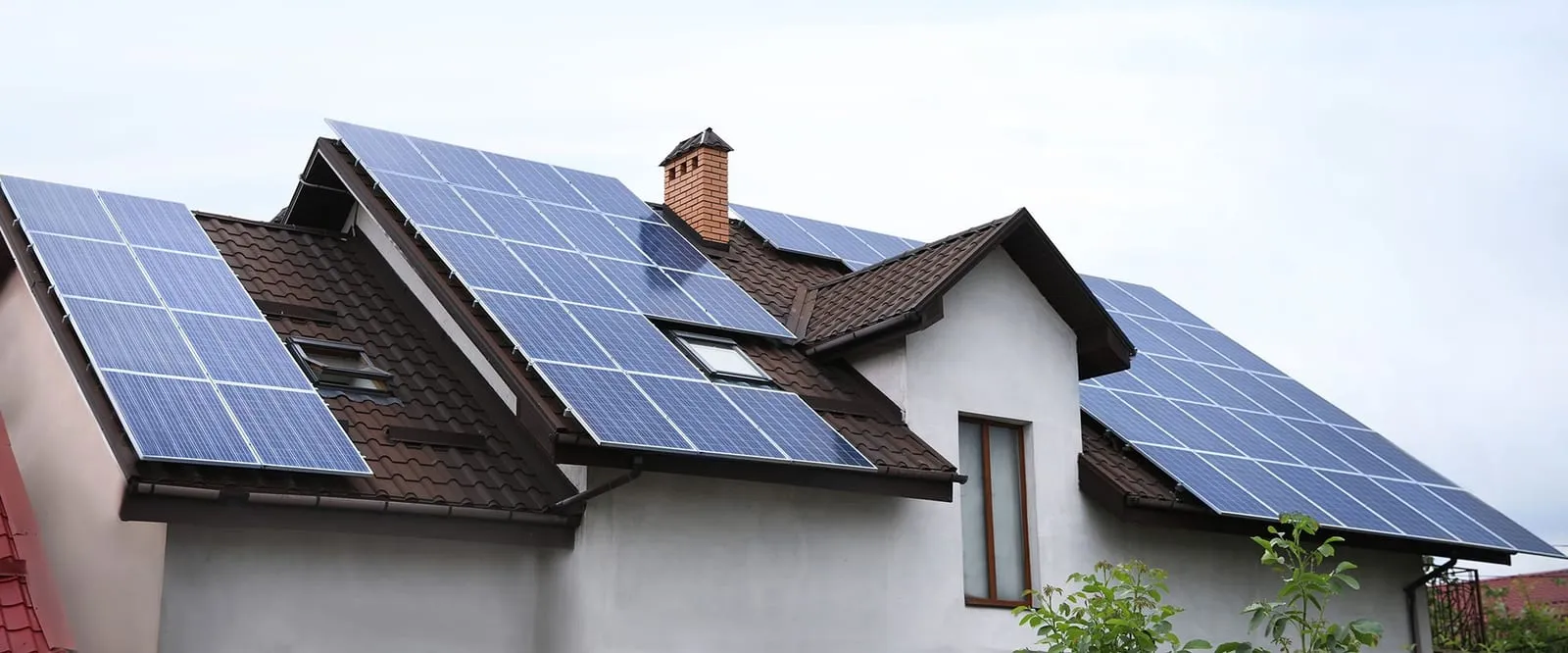
Hotels run two businesses under one roof: rooms and food. Both are relentless power users — and both operate demand patterns that suit solar unusually well. Laundry runs mid-morning, kitchens fire through lunch and dinner service, air conditioning peaks with occupancy in summer, and reception, corridors and leisure facilities draw a steady baseload from 6am to midnight. That’s a very different shape from a typical office, which sits mostly empty by 6pm and dead all weekend. For a hotel, more of the day looks like “someone’s using power right now” — which is exactly the condition that makes rooftop solar pay back fast rather than sitting half-wasted, exporting cheap surplus nobody wants.
This piece works through what a realistic hotel solar installation costs in the UK in 2026, what a 100kWp system actually saves once you account for how hotels really use electricity, and where the numbers can go wrong.
Why 100kWp is the sensible benchmark
Most independent UK hotels — 40 to 120 rooms, three or four storeys, a function suite and a commercial kitchen — draw somewhere between 150,000 and 400,000 kWh a year. A 100kWp array is the point where roof space, budget and demand tend to line up for that bracket: it needs roughly 450-550m² of usable roof (south-facing pitched or flat with east-west trays both work), fits on a mid-sized hotel roof without eating every plant-room and lift-shaft clearance, and produces enough to make a genuine dent in the electricity bill without massively overshooting what the building can absorb on-site.
At the UK’s typical yield of roughly 850 kWh per kWp per year (rising to 1,000+ in the sunny south coast counties), 100kWp generates in the region of 85,000-100,000 kWh annually. Larger properties — 150+ rooms, spa, multiple kitchens — will justify more; a boutique 20-room property will want a fraction of that. The commercial solar cost hub is a useful place to sanity-check where your building sits before committing to a specific kWp figure.
What it actually costs
Commercial-scale solar in the UK runs roughly £900-£1,200 per kWp installed in 2026, depending on roof type, scaffolding/access, distribution board and DNO connection work, and whether the mounting is ballasted flat-roof trays or in-roof/on-roof for pitched sections. For a 100kWp system that puts the all-in figure at approximately:
| Item | Typical range |
|---|---|
| 100kWp panels + inverters + mounting + install | £90,000 - £120,000 |
| DNO application / grid connection upgrade (if needed) | £2,000 - £15,000+ |
| Scaffolding / access (multi-storey hotel roof) | £3,000 - £10,000 |
| Optional: commercial battery storage (add-on) | £15,000 - £40,000+ |
| Total, panels-only | ~£95,000 - £135,000 |
Two things push hotel costs above a plain warehouse or office quote of similar size. First, access — hotels are rarely single-storey sheds, so scaffolding and roof logistics (often working around guests and a live kitchen extract) cost more than a flat industrial unit. Second, the DNO connection: hotels already run hefty single or three-phase supplies for kitchens and laundry, so a 100kWp array can sometimes trigger a grid reinforcement conversation with the local Distribution Network Operator that a smaller retail unit wouldn’t. Get the DNO application in early — it’s the single most common cause of installation delay on commercial jobs this size.
VAT is worth flagging precisely: the 0% VAT rate for residential solar and battery installations does not apply to a commercial hotel installation — that relief is for domestic dwellings. Standard commercial VAT rules apply, though as with any capital expenditure it’s usually recoverable if the hotel is VAT-registered, so get this confirmed with your accountant rather than budgeting on gross figures. For the deeper mechanics of commercial capital allowances and how solar is treated for tax purposes, commercialsolarfinance.co.uk walks through the options in more detail than we can here, and if outright purchase doesn’t suit cashflow, a solar power purchase agreement lets a hotel take the electricity at a discount to grid rates with no capital outlay at all.
The real driver of payback: demand alignment, not just kWp
This is where hotels genuinely differ from most commercial solar case studies. A typical office self-consumes maybe 30-40% of what its solar array generates, because so much of the roof’s output arrives at 11am on a Tuesday when half the building is on a Teams call and the other half is out. A hotel with a live kitchen, laundry and continuous occupancy can realistically self-consume 55-75% of solar generation on-site — which is the single biggest lever on payback speed, because self-consumed solar electricity displaces roughly 25p/kWh of grid import, while exported surplus only earns the Smart Export Guarantee rate, typically somewhere between 12p and 20p/kWh depending on supplier.
The demand pattern makes the case:
- Laundry — commercial washer-extractors and tumble dryers are among the most energy-intensive kit in a hotel, and turnover-day laundry runs are scheduled mid-morning to early afternoon, which is precisely when a south-facing array is at or near peak output.
- Kitchens — extraction, refrigeration, ovens and induction hobs draw hard through lunch service and again through dinner prep from mid-afternoon, overlapping generously with the solar curve on longer days.
- Air conditioning / comfort cooling — the load that correlates most directly with solar output, since AC demand and solar irradiance both peak on hot, bright afternoons. This is the textbook “demand-matched” case that makes hospitality and retail solar different from, say, a distribution warehouse that’s largely unmanned overnight.
- Baseload — reception, corridors, lifts, fridges/freezers and a leisure centre or pool (if present) run close to 24/7, soaking up whatever generation the kitchen and laundry don’t use.
Pool heating and spa facilities in particular are worth a specific mention: a heated pool is a near-constant, high-kWh load that’s very forgiving of solar’s variability, because heat storage in the water buffers short-term generation dips. If your hotel has a pool or spa, that alone can push self-consumption meaningfully higher than the hospitality average.
Running the payback numbers
Take a 100kWp system generating roughly 90,000 kWh/year, with 65% self-consumed on-site (a reasonable mid-point for a hotel with laundry, kitchen and continuous occupancy) and the remaining 35% exported:
- Self-consumed: 58,500 kWh ×
25p/kWh avoided import = **£14,625/year** - Exported: 31,500 kWh ×
15p/kWh SEG (mid-range) = **£4,725/year** - Total annual saving: roughly £19,000, though a more conservative self-consumption assumption (55%) brings that closer to the £12,000-£18,000/year range most hotels should budget on, which is the figure worth using in a board paper rather than the optimistic upper case.
Against an all-in cost of roughly £100,000-£120,000, that’s a simple payback of around 6-9 years — well inside the 25-30+ year lifespan of a modern N-type panel (which degrades a gentle ~0.4% a year), leaving 15-plus years of largely free electricity after payback, minus an inverter replacement or two along the way (string inverters typically last 10-15 years and cost £500-£1,000+ to replace at this scale, more for larger commercial inverters). Adding battery storage extends the payback period but pushes self-consumption higher still, which is worth modelling separately rather than assuming as a default — for a hotel with a predictable evening bar/restaurant load stretching past sunset, storage can make sense; for one that’s quiet after 9pm, it may not pay for itself as quickly.
For a sector-specific breakdown of how these numbers scale by property size, solarpanelsforhotels.co.uk has worked through the hospitality case in more depth, and if your hotel operates a restaurant as a separate commercial unit or leases kitchen space to a third-party operator, solarpanelsforrestaurants.co.uk covers the demand-matching angle from the food-service side specifically — kitchens are often the single highest-value load to target for self-consumption.
What tends to catch hotels out
A few things are worth flagging before you get quotes in:
- Roof condition and age. Hotels often have ageing flat roofs (felt or GRP) that need attention before panels go on. Get a roof survey done independently of the solar quote — a installer motivated to close the sale isn’t always the right person to tell you the roof needs re-covering first.
- Listed buildings and conservation areas. A meaningful share of UK hotels sit in town centres, seafronts or converted period buildings where planning permission (not just permitted development) is required, and visibility from the street can rule out street-facing pitches entirely.
- Kitchen extract and plant clearances. Extraction units, AC condensers and fire escape routes eat into usable roof area fast — get an accurate usable-area survey rather than working off gross roof dimensions.
- Grants: there is no general small-business solar grant in England; commercial hotels don’t qualify for domestic 0% VAT or ECO4 (both are residential/means-tested schemes). If your hotel also has an on-site farm shop, function barn or land-based diversification, note that agricultural-specific grant schemes are a different, narrower category and don’t extend to the main hotel building.
The bottom line
For a mid-sized independent UK hotel, a 100kWp system at roughly £95,000-£135,000 delivering £12,000-£18,000 a year in savings is a realistic, well-supported figure for 2026 — and the reason hospitality often outperforms the generic commercial solar case study is demand alignment: laundry, kitchen and AC loads land on the same part of the day as peak generation, pushing self-consumption well above the office-building average. Get the DNO application moving early, verify roof condition independently, and model self-consumption conservatively rather than optimistically before signing anything.
If you’re comparing this against a smaller guest-house scale or a much larger conference hotel, our commercial solar panel costs guide breaks down the per-kWp maths across sizes, and the solar panel payback period piece explains how self-consumption ratio changes payback faster than panel price does. For installers who work specifically with hospitality and commercial clients, electrifusionsolutions.com in South Yorkshire and ececoenergy.com in Essex/East Anglia both quote commercial jobs at this scale routinely and can walk through a site-specific DNO and roof assessment.