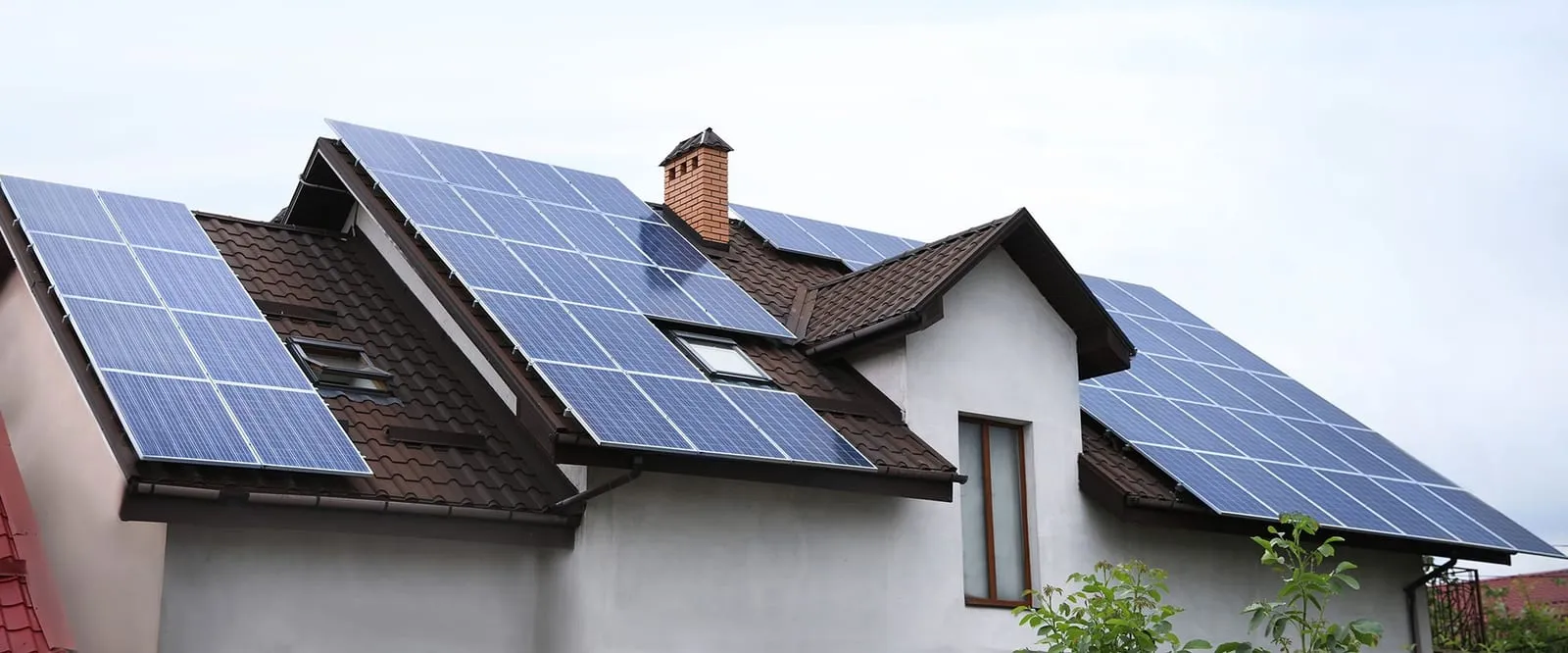
Solar carports look simple from the car park — panels on a frame over your parking bays — but price them up and the difference from a rooftop system is stark. Where a straightforward commercial roof-mount lands somewhere around £700–£1,000 per kWp installed, a solar carport typically comes in at £1,200–£1,800 per kWp. That’s not a pricing anomaly or an installer marking up a trendy product. It’s structural, literally.
Why a canopy costs 1.5–2x more than a roof
A roof-mounted array uses a building that already exists. The steelwork, the foundations, the weatherproofing — all sunk cost, already paid for by whoever built the warehouse or office block. The solar installer’s job is to fix rails to an existing surface and connect the wiring.
A carport has none of that. You’re building a structure from scratch whose sole purpose is to hold panels 2.5–3.5 metres above a car park. Every cost that a roof gets “for free” has to be engineered and paid for on a carport project:
- Steel frame and columns — engineered to hold the panel load, plus UK wind and snow loading, over open spans with no supporting walls.
- Foundations — deep concrete or piled footings, usually more substantial than people expect because there’s no building mass to help resist wind uplift.
- Site groundworks — cutting into an existing tarmac car park, running new cable ducting, sometimes local drainage changes.
- Structural engineering sign-off and building regulations — a carport is a new structure, not an addition to one, so it goes through a different (often stricter) approval path than bolting panels to a roof.
- Vehicle clearance and access design — columns have to sit where they won’t clip wing mirrors or delivery vehicles, which constrains the layout more than a flat roof does.
None of this is padding. It’s the genuine extra cost of engineering a building-grade structure purely to host solar, and it’s why solarcarparks.co.uk treats canopy and carport projects as a distinct discipline from standard commercial roof-mount rather than a variant of it.
The numbers in context
For a typical commercial-scale system, the gap plays out roughly like this:
| System type | Typical £/kWp installed | 100 kWp system (rough) |
|---|---|---|
| Rooftop, existing flat/pitched roof | £700–£1,000 | £70,000–£100,000 |
| Ground-mount, simple racking | £800–£1,100 | £80,000–£110,000 |
| Solar carport / canopy | £1,200–£1,800 | £120,000–£180,000 |
These are installed-cost bands, not fixed quotes — actual pricing depends on span width, ground conditions, cable run lengths, and how many EV chargers are integrated. For a wider view of what commercial solar costs across different building types, commercialsolarcostuk.co.uk is a useful cross-check, and our own commercial solar panel cost breakdown covers rooftop pricing in more depth if a roof is even an option for your site.
The per-kWp premium narrows a little at bigger scale — the engineering cost is partly fixed regardless of how many bays you cover, so a 50-bay canopy spreads that overhead further than a 10-bay one. But it never fully closes the gap with rooftop, because the steel and foundations scale roughly with the array size too.
So why build a carport at all?
If it costs so much more, the business case has to come from somewhere other than “cheapest kWh”. In practice it comes from four places:
1. No usable roof. Plenty of sites simply don’t have the roof to put panels on — a single-storey retail unit with a roof full of plant and HVAC, a listed building, a roof with too few structural years left to justify a 25-year array on top of it, or a site that’s leased with a landlord who won’t allow roof penetrations. A carport sidesteps all of that by using land you already control (the car park) instead of a roof you don’t.
2. You get the car park back, weatherproofed. A canopy shades and covers parking bays. For retail, hospitality, schools, and healthcare sites, that’s a genuine amenity — staff and visitors parking under cover, not just solar generation. Solarpanelsforcarparks.co.uk and solarpanelsforhospitals.co.uk both make this point for NHS and public-facing sites, where covered parking is a visible, tangible benefit to patients and staff that a rooftop array never delivers.
3. EV charging integration. This is where carports increasingly earn their premium back. Running EV chargers under a structure that’s already carrying DC cabling and inverters down to ground level is far cheaper than retrofitting chargers to a car park with panels on the roof above. The canopy structure carries conduit straight down the columns to charge points at ground level — no long cable runs back to a roof-mounted inverter, no separate trenching project. For fleet operators, retail parks, and workplaces adding EV charging, a solar carport can end up as the lower-total-cost option once you count a standalone EV infrastructure project as the alternative, not just “solar vs no solar”. Commercialsolarev.co.uk covers this combined solar-plus-EV case in more detail, and it’s worth pricing the two together rather than sequentially — solar first, then EV chargers later almost always costs more than a single integrated design.
4. Land you can’t otherwise develop. A car park is usually the one piece of commercial land that has no other planning use. Unlike a warehouse roof (which competes with plant, skylights, and future extension) or a field (which might have agricultural value), tarmac parking bays are dead space from a revenue perspective until you put panels over them. Commercialsolarpanelsinstallation.co.uk is a good starting point for weighing carport against rooftop and ground-mount options side by side if you’re not sure which suits your site.
What drives the price within that £1,200–£1,800/kWp band
Not all carports cost the same, and the spread inside that range is wide enough to matter:
- Span width. Single-row carports (one row of bays, columns down one side) are cheaper per kWp than double-row designs spanning two rows of parking with a central column line, because the steel has to work harder over a longer clear span.
- Ground conditions. Poor ground (soft clay, made-up ground, high water table) means deeper or piled foundations, which is where carport budgets most often overrun.
- Cable run to the point of connection. A car park at the far end of a site from the substation or DNO connection point adds cabling and, sometimes, groundworks cost that a roof array (already close to the building’s electrical intake) avoids.
- EV charger count and power rating. Rapid chargers (50 kW+) need far heavier cabling and often a separate grid connection upgrade compared with 7–22 kW workplace chargers.
- Structure height. HGV or delivery-vehicle clearance (4.5–5m+) costs more in steel than standard car clearance (2.5–3m), so a distribution centre carport for lorries costs meaningfully more per kWp than an office car park for cars. Solarpanelsfordistributioncentres.co.uk and solarpanelsforlogistics.co.uk both flag this as a design decision to get right early, since retrofitting extra clearance after foundations are poured isn’t an option.
Financing the premium
Because the upfront cost is higher, how you pay for a carport matters more than it does for a straightforward roof retrofit. The three routes commercial operators typically weigh are outright capital purchase, asset finance, and a Power Purchase Agreement (PPA) where a third party owns and maintains the array and you buy the electricity it generates at a rate below grid import price.
Solarassetfinance.co.uk and commercialsolarfinance.co.uk both cover the mechanics of spreading a commercial solar cost over a lease or loan term rather than paying it in one go, which is often the difference between a carport project going ahead and staying on the “nice to have” pile. If your organisation would rather not carry the capital cost or the maintenance liability of a structure with cabling running through it at ground level (a genuine consideration — a carport puts electrical infrastructure within reach of the public in a way a roof doesn’t), solarpowerpurchaseagreements.co.uk sets out how a PPA structure handles that instead.
Note that 0% VAT on residential solar and battery storage (in place in Great Britain until 31 March 2027) applies to domestic installations — commercial carports are VAT-rated as standard commercial supplies, so that relief isn’t a factor in the business case here. For sites weighing panels against a heavier structural investment more broadly, commercialsolarcanopy.co.uk is worth a look specifically for canopy-scale projects — it’s the closest thing to a dedicated resource on this exact structure type, distinct from general commercial rooftop guidance.
Getting quotes that are actually comparable
Because carport pricing has so many structural variables, a quote that just states ”£/kWp” without specifying span width, foundation type, ground clearance, and cable run length isn’t comparable to another quote with the same headline figure. Ask any installer quoting a carport to break the number down into structure/steel, foundations, electrical (panels, inverters, cabling), and EV infrastructure separately — the same discipline that matters when comparing rooftop solar quotes matters even more here, because the structural line item is the one most likely to hide a scope gap.
For sites weighing whether a carport, a ground-mount array on spare land, or a straightforward roof retrofit makes most sense, get more than one type of quote before committing — the right answer depends heavily on what your roof, land, and parking situation actually look like, and that’s a site-specific judgement, not a rule of thumb.
The bottom line
A solar carport costing 1.5–2x a rooftop system per kWp isn’t a premium for the panels — it’s the honest cost of building a structure that didn’t exist before. That premium buys you three things a roof can’t: a usable site when there’s no roof to use, weatherproofed parking as a real amenity, and a natural home for EV charging infrastructure that would cost more to retrofit separately. Whether that trade stacks up depends on your roof options, your parking use case, and whether EV charging is on your roadmap anyway — but it’s rarely as simple as “carports are expensive, so skip them.”