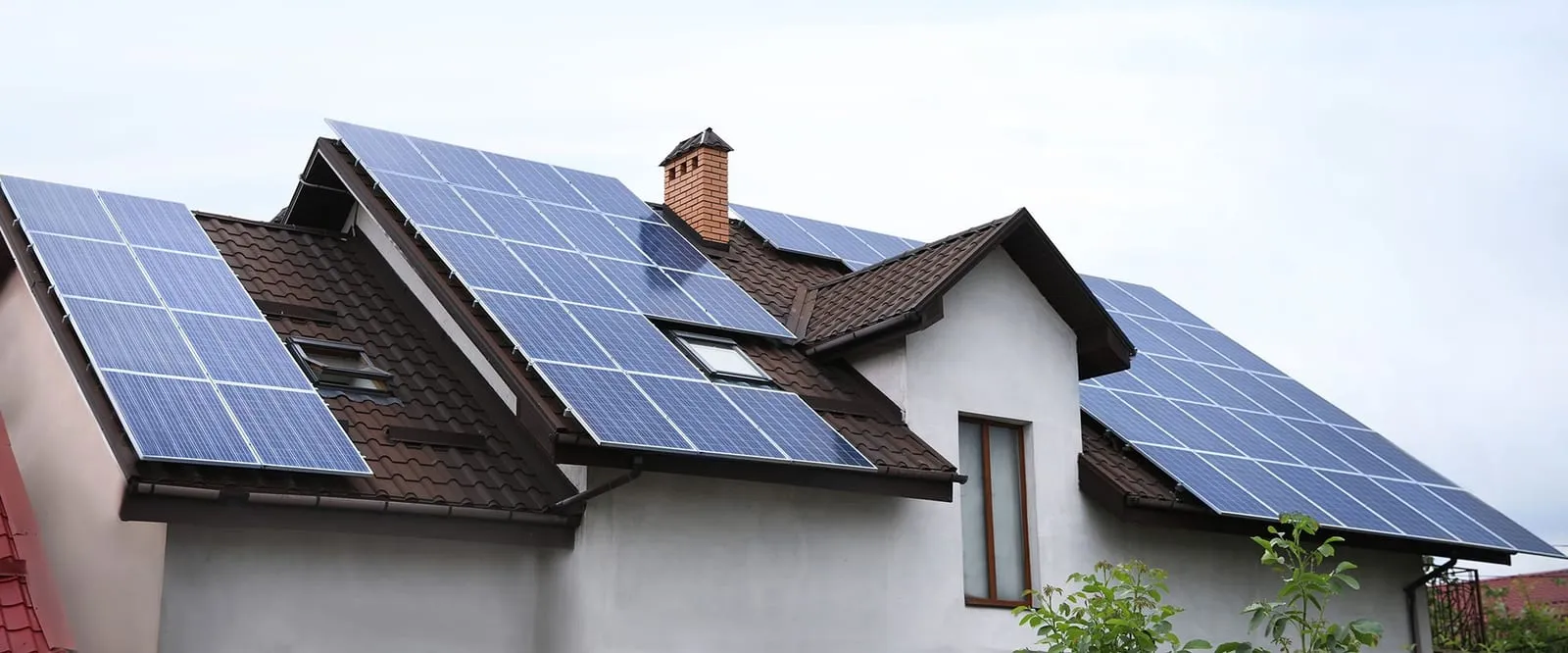
If you run a business and you’ve priced up a commercial solar system, you’ve probably had one moment of hesitation: the cash is tied up somewhere else. A 100kWp rooftop array can easily cost £90,000–£120,000 installed at UK commercial rates of roughly £900–£1,200 per kWp, and that’s before you add battery storage. The good news is that outright purchase is no longer the only route to owning (or benefiting from) a solar roof. Hire purchase, leasing, unsecured business loans and power purchase agreements (PPAs) all exist precisely because most businesses would rather fund solar from the savings it generates than from cash reserves. But each structure treats ownership, capital allowances, and the Smart Export Guarantee (SEG) differently — and that detail matters more than the headline interest rate.
This piece works through the mechanics of each finance route, who actually keeps the tax benefits and export income in each case, and where a PPA sits as a genuinely different animal to the other three.
Why finance solar at all when payback looks strong
Commercial solar typically pays back in 4–7 years depending on how much of the generation you self-consume, with panels warrantied for 25–30 years and degrading at roughly 0.4% a year on modern N-type cells. That’s a strong asset case. The catch is that most businesses don’t have £100,000+ of free capital sitting around waiting for a 6-year payback — and even those that do often have better internal uses for cash (stock, hiring, other capex) that beat a solar IRR on paper. Finance lets you convert a capital problem into an operating-cost problem: you pay a fixed monthly sum that’s smaller than the electricity bill saving from day one, and the difference is profit from month one rather than year one. The commercial solar finance sector exists specifically to solve this cash-flow mismatch, and it’s worth treating the finance decision with as much rigour as the technical design.
Hire purchase: you own it from day one, on paper
Hire purchase (HP) is the closest analogue to a car HP deal. You take the asset, use it immediately, and pay it off over a fixed term (commonly 3–7 years for solar) with a fixed interest rate. Crucially, you are the legal and beneficial owner from day one — the finance company holds the asset as security, not as owner.
That ownership status is what makes HP attractive for tax purposes. Because you own the system, you can claim capital allowances against it — potentially through the Annual Investment Allowance (AIA), which currently permits up to £1 million of qualifying plant and machinery expenditure to be deducted from taxable profits in the year of purchase, solar PV among it. That’s a meaningful cash benefit that arrives well before the HP agreement is paid off. You also keep 100% of any Smart Export Guarantee income, since SEG payments go to the party registered as the generator/owner, and that’s you under HP.
The downside is that HP sits on the balance sheet as debt, which affects gearing ratios and can matter for businesses with existing lending covenants or that are trying to keep their balance sheet light ahead of a sale or refinance. Deposit requirements also vary — some lenders will do zero-deposit commercial solar HP, others want 10–20% down.
Leasing: someone else owns it, you get the output
Leasing works differently. A finance company (or sometimes the installer’s finance partner) buys and owns the system, and you pay a rental to use it. There are two flavours worth distinguishing:
- Finance lease — you take on most of the risks and rewards of ownership (maintenance, insurance) even though legal title stays with the lessor, and at the end of the term you typically have an option to continue at a “peppercorn” rent, sell the asset and share proceeds, or return it.
- Operating lease — shorter term, the lessor retains more of the risk, and the asset comes back to them at the end.
The tax treatment flips relative to HP: because the finance company owns the asset, capital allowances generally sit with the lessor, not you — though the rental payments themselves are usually a fully deductible operating expense, spread across the term rather than front-loaded. Whether that’s better or worse than claiming AIA yourself depends on your tax position — a business without much taxable profit to shelter in year one may actually prefer the simpler expense treatment of a lease over an allowance it can’t fully use.
SEG income under a lease is a negotiation point, not a given. Some lease structures leave export income with the business (you’re still the meter-point generator using the electricity), others build export value into the rental pricing. Read the lease schedule specifically for who is named as the FIT/SEG generator — don’t assume.
Unsecured business loans: simplest, but least solar-specific
A standard unsecured business loan — from a bank or a specialist commercial lender — is the least complicated route conceptually. You borrow a lump sum, buy the system outright (you own it from day one, same tax and SEG position as HP), and repay the loan on its own schedule with no direct link between the loan agreement and the physical asset.
The advantage is flexibility: no asset-specific security, generally faster to arrange for smaller systems, and full ownership from the outset means capital allowances and SEG income are both unambiguously yours. The trade-off is usually rate — unsecured lending tends to price higher than asset-secured HP because the lender has no direct claim on the panels if you default, and loan terms are often shorter (3–5 years is common), which pushes monthly payments up relative to a longer HP term.
For businesses that already have banking relationships and available headroom, this can be the fastest way to get a system installed without touching a specialist green-finance product at all. Solar asset finance providers who specialise in renewable energy lending will typically quote against HP, lease and loan structures side by side so you can compare like for like rather than assuming one is automatically cheaper.
The PPA: a genuinely different structure, not just another loan
A power purchase agreement isn’t a finance product for buying a system — it’s a contract for buying electricity. A third-party developer designs, funds, installs, owns and maintains the solar array on your roof or land at no capital cost to you, and you agree to buy the power it generates at an agreed rate per kWh, usually set below your current grid import price and often with a modest annual escalator, over a term of 10–25 years.
The practical differences from all three finance routes above are significant:
- Ownership never transfers to you during the main term (some PPAs include a buy-out option at a later date, others don’t) — so you claim no capital allowances, because you never owned the plant.
- The developer keeps the SEG income, since they’re the registered generator — you only ever pay for the power you use on-site.
- There’s no debt on your balance sheet and no upfront cash requirement at all — the entire commercial logic is that your day-one electricity cost drops without any capital outlay or new liability.
- Maintenance, insurance and performance risk sit with the developer, not you — if a panel underperforms, that’s the PPA provider’s problem to fix, not yours.
PPAs suit larger commercial roofs (typically 250kWp+, though smaller PPAs do exist) where the developer’s economics stack up over a long enough contract, and suit businesses that specifically want zero capital exposure and zero balance-sheet impact — a common driver for occupiers on shorter leases who don’t want to fund a fixture they might not benefit from at renewal. If you’re weighing this route in detail, solarpowerpurchaseagreements.co.uk sets out how PPA rates typically compare with import prices and how contract length affects the numbers.
Side-by-side: who keeps what
| Structure | Who owns the asset | Who claims capital allowances | Who keeps SEG income | Balance sheet impact |
|---|---|---|---|---|
| Hire purchase | You, from day one | You (AIA up to £1m, where available) | You | Debt shown |
| Finance lease | Lessor (finance co.) | Generally the lessor | Negotiable — check the schedule | Lease liability shown |
| Unsecured loan | You, from day one | You | You | Debt shown |
| PPA | Third-party developer | Developer (you claim none) | Developer | None — no capex, no debt |
What actually decides which route fits
In practice the choice usually comes down to three questions, not the headline rate:
- Do you have taxable profit to shelter? If yes, HP or an unsecured loan lets you use the Annual Investment Allowance against a large chunk of the system cost in year one — a lease or PPA forfeits that entirely.
- Does your balance sheet need to stay light? Businesses mid-refinance, pre-sale, or under lending covenants often prefer a lease (smaller liability) or a PPA (no liability at all) over adding secured debt.
- How long will you occupy the site? A PPA or long lease only makes sense if your occupation outlasts (or roughly matches) the contract term — walking away from a 15-year PPA commitment early is far messier than paying off a 5-year HP agreement.
There’s no universally “best” answer — a 60kWp warehouse roof with strong taxable profits and a 25-year freehold is a different proposition to a 300kWp distribution centre on a 10-year lease. It’s worth running the numbers on at least two structures before committing, and getting a quote that separates the system cost from the finance cost so you can compare the underlying asset price independently of the repayment structure. For businesses specifically weighing warehouse or distribution-centre roof space, solarpanelsforwarehouses.co.uk and solarpanelsforfactories.co.uk both cover the sector-specific yield and roof-loading questions that feed into whichever finance model you land on, since system size and structure viability change the finance conversation as much as the tax treatment does.
Getting quotes that are actually comparable
Because HP, lease, loan and PPA quotes are structured so differently, it’s easy to compare numbers that aren’t actually comparable — a 7-year HP monthly figure against a 15-year PPA rate per kWh tells you very little on its own. Ask every provider for the same three things: total system cost before finance, the effective cost per kWh generated over the contract term, and — critically — who is named as the capital allowance claimant and SEG generator in the paperwork. A specialist like premierelectricalrenewables.co.uk or drenergyltd.co.uk, both of whom install commercial systems across finance and PPA routes, can usually model your specific roof against more than one structure so the comparison is like-for-like rather than marketing-rate-for-marketing-rate. If you want the pricing fundamentals first, our own commercial solar panel costs breakdown is a useful starting point before you take a finance quote at face value.
Whichever structure you choose, remember the 0% VAT relief on residential solar and battery installations (in place in Great Britain until 31 March 2027) does not apply to most commercial installations in the same way — commercial VAT treatment depends on the building type and use, so confirm this with your installer and accountant before finalising any finance agreement, since it can shift the real-terms cost comparison between structures.