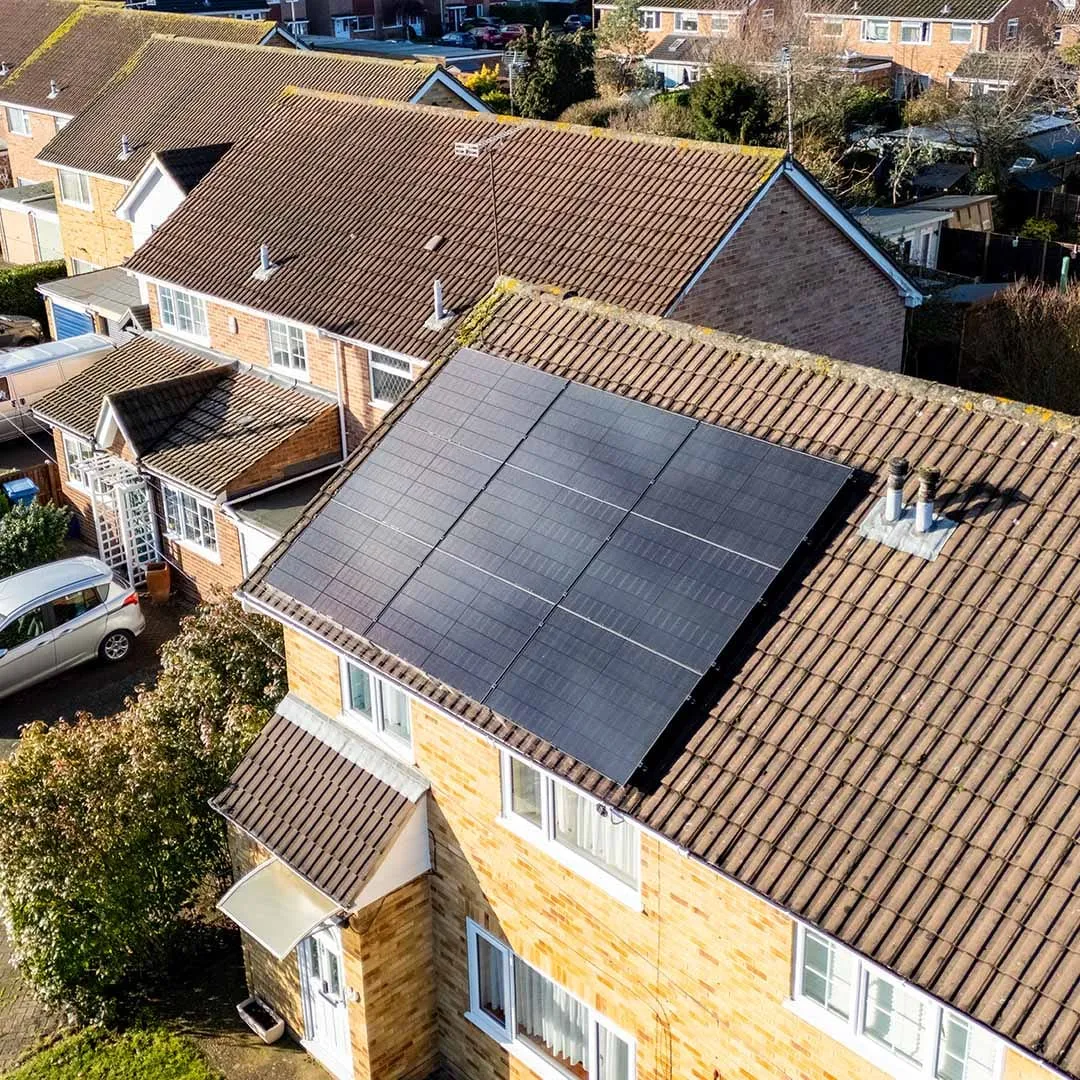
If you’ve searched “solar panel grants UK” hoping to find a straightforward cash grant to knock a few thousand pounds off a new system, the honest answer is that it doesn’t exist — not for the average homeowner, not in 2026. There is no universal government grant that pays towards residential solar panels anywhere in the UK. What there is instead is a patchwork of tax relief, means-tested support, low-interest loans, export payments and a couple of narrow sector-specific schemes — and knowing which of those actually applies to you is worth more than chasing a grant that was scrapped years ago.
This is the confusion we see most often at thecostofsolar.co.uk: people assume “grants” and “0% VAT” are the same thing, or that the old Feed-in Tariff is still running, or that a scheme aimed at farms also covers a semi-detached house in Surrey. Below is what’s genuinely on offer this year, what it’s worth, and who qualifies.
The single biggest saving: 0% VAT
The most valuable “grant-like” support for solar right now isn’t a grant at all — it’s a tax cut. Since 2022, residential solar panels and battery storage installed in Great Britain have qualified for 0% VAT, and this is confirmed to run until 31 March 2027, at which point it’s scheduled to revert to the standard reduced rate of 5% (still well below the 20% headline rate). On a typical £6,000–£8,000 4kW residential system, that 0% rate is worth £300–£400 compared with the 5% rate, and a full £1,200–£1,600 compared with standard VAT.
It applies automatically at the point of quote — you don’t apply for it, and any UK-based MCS-certified installer should be pricing it in already. If a quote still shows VAT added on top for a domestic system, query it. For a full breakdown of what 2026 installed prices actually look like once VAT, scaffolding and inverter costs are factored in, our cost of solar panels in the UK guide walks through real system sizes and price bands.
Why there’s no general home solar grant — and what fills the gap
England, Scotland and Wales all withdrew universal solar subsidies years ago (the Feed-in Tariff closed to new applicants in 2019, and nothing has replaced it as a blanket payment). What remains is means-tested, aimed at low-income households in poorly insulated homes rather than anyone who wants solar:
- ECO4 (Energy Company Obligation, phase 4) requires energy suppliers to fund efficiency measures — including some solar and battery installs — for households on qualifying benefits or in a low council tax band living in an EPC D–G rated home. It’s assessed case-by-case and isn’t guaranteed to include solar; it’s more reliably used for insulation and heating measures, with solar sometimes bundled in where a whole-house retrofit makes sense.
- Warm Homes: Local Grant / Warm Homes Plan (the successor schemes rolling out through 2026) extend similar low-income, low-EPC support, administered through local authorities rather than a single national portal.
- Home Energy Scotland offers something different and genuinely useful for Scottish homeowners regardless of income: an interest-free loan (with a small grant element in some cases) towards solar PV and battery storage, reducing the up-front cash outlay even if it isn’t a straight grant. If you’re in Central Scotland, ecoaim.co.uk can talk you through how that loan interacts with a Livingston-area install and typical payback once it’s repaid.
None of these are a “tick a box, get £X” scheme for the average mortgaged homeowner in England or Wales with a reasonable EPC rating. If that’s you, the realistic savings stack is 0% VAT plus the Smart Export Guarantee, not a grant.
The Smart Export Guarantee (SEG) — payment, not a grant
The SEG requires larger electricity suppliers to pay households for solar electricity exported back to the grid, but it is not a fixed national rate — tariffs are set by each supplier and vary considerably, from a few pence per kWh up to around 12–20p/kWh at the better end for a fixed-rate export tariff. Some suppliers also offer variable, half-hourly export rates that can beat the fixed ones on sunny days. To be eligible at all, the installation must be MCS-certified, which is one of several reasons MCS certification matters far beyond just paperwork — it’s your entry ticket to any export income at all.
Worth noting: SEG is income, not upfront help, and it depends on export volume, which depends on system size, orientation and how much you’re using versus feeding back. A well-sized battery can shift more self-consumption and reduce what you’re exporting (and therefore your SEG income) while cutting your import bill by more — it’s a trade-off worth modelling rather than assuming. Our solar battery storage costs guide covers typical UK battery pricing (roughly £4,000–£8,000 installed for a home battery, or £8,500–£10,500 for something like a Tesla Powerwall 3) against what you’d actually save.
Farms: the grant that does exist — and the one that doesn’t
This is where the most persistent myth lives. If you search “farm solar grant” you’ll find plenty of pages still quoting the old Farming Equipment and Technology Fund (FETF) at a headline 40% rate. That scheme has moved on, and quoting it now to a working farmer is a good way to waste their time on a bid that doesn’t match current rules.
For 2026, the live scheme in England is the Improving Farm Productivity grant, part of the Farming Investment Fund, which typically funds solar PV and related equipment (including battery storage in some rounds) at around 25% of eligible costs — not 40%. Funding rates and eligible items differ by UK nation and by funding round, so always check the current window before budgeting a project around a specific percentage. Scotland, Wales and Northern Ireland run separate agricultural support schemes with their own rates and application windows, so a Lincolnshire arable farm and a Welsh dairy farm should not assume identical numbers.
Because farm solar is usually a larger commercial-scale project — barn roofs, ground-mount arrays, three-phase supply — it’s worth getting quotes and grant-eligibility advice from installers who actually do agricultural work rather than treating it as a scaled-up domestic job. Greenlinc Renewables in Lincolnshire and FLD Electrical in South Wales both work across farm and rural commercial sites, and solarpanelsforfarms.uk is a useful sector-specific resource for understanding what “eligible cost” actually covers before you apply. There’s also a dedicated hub for solarpanelsforbarns.co.uk if the project is specifically about roof space on agricultural buildings rather than the wider farm business.
What about businesses more broadly?
Outside agriculture, there’s no dedicated “solar grant” for commercial premises either, but there are several routes that reduce the effective cost meaningfully:
- Full Expensing / capital allowances let companies write off qualifying plant and machinery — including solar and battery installations — against corporation tax in the year of spend, which is a much bigger lever for commercial ROI than any grant on the table. solarpanelgrantsforbusinesses.co.uk sets out how the current allowances interact with typical commercial payback periods.
- Power Purchase Agreements (PPAs) and asset finance let a business get solar with no capital outlay at all, paying instead for the electricity generated (PPA) or the equipment over time (asset finance). solarpowerpurchaseagreements.co.uk and solarasset finance.co.uk both cover how these structures compare with outright purchase for commercial-scale systems.
- Sector-specific guidance exists because the numbers genuinely differ by building type and roof profile: a flat-roofed warehouse (solarpanelsforwarehouses.co.uk), a school with holiday-period generation patterns (solarpanelsforschools.co.uk), or a care home running high daytime and overnight loads (solarpanelsforcarehomes.co.uk) all have different payback profiles even before any tax treatment is applied. Commercial installed costs typically run £900–£1,200 per kWp, well below residential per-kWp pricing thanks to scale — our commercial solar panel costs breakdown has the detail.
If you’re weighing a commercial-scale install and want a feel for genuine like-for-like installer pricing rather than a generic estimate, ececoenergy.com in Essex and D&R Energy in Bristol both quote commercial jobs regularly and can talk through how capital allowances or a PPA change the sums for your specific building.
Don’t confuse this with the Boiler Upgrade Scheme
One more mix-up worth killing off directly: the Boiler Upgrade Scheme, which pays a flat £7,500 towards an air source heat pump (or more for ground source), gets mentioned constantly in the same breath as solar grants because both fall under “renewable home upgrades.” It does not cover solar PV or battery storage — it’s specifically for heat pump installations. If you’re planning both a heat pump and solar, budget them separately: the £7,500 only offsets the heat pump side, and pairing the two still needs its own solar quote on top. Carbon Legacy does a reasonable job of separating these out for customers planning a combined heat pump and solar project, since the two funding pictures shouldn’t be blended in one number.
So what should you actually budget for?
For most homeowners in England and Wales without a qualifying low income or EPC rating, the realistic 2026 savings stack is: 0% VAT (worth up to roughly £1,200–£1,600 versus standard rate), ongoing SEG export income (variable, supplier-dependent, roughly 12–20p/kWh at the better end), and — in Scotland — an interest-free Home Energy Scotland loan on top. There is no separate cash grant sitting behind those. For farms, budget the Improving Farm Productivity grant at roughly 25%, not the old 40% figure, and check the current funding round before finalising a project cost. For commercial buildings, capital allowances and finance structures do more heavy lifting than any grant scheme.
None of this makes solar a bad investment in 2026 — with typical UK yields of around 850 kWh per kWp per year (higher in the south), import prices around 25p/kWh, and 25–30+ year panel lifespans on modern N-type panels, the maths generally still works on its own terms. It just works on payback and running costs, not on a grant cheque that doesn’t exist. Get a proper quote from an MCS-certified installer local to you, run the numbers using our solar panel payback period guide or the solar panel calculator, and treat every “grant” claim you read — including some on other sites — with the same scepticism you’d apply to a get-rich-quick headline.