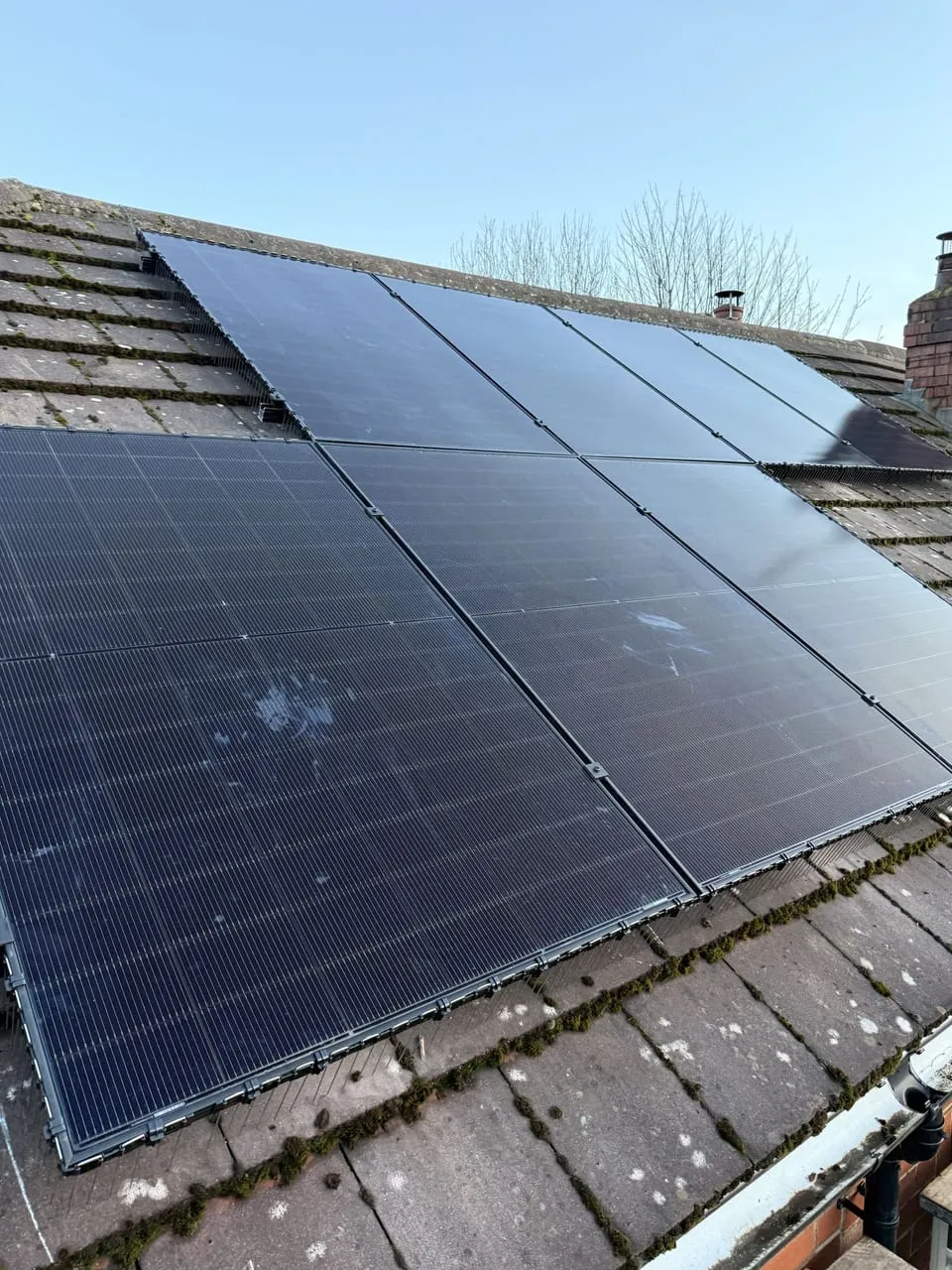
Search for "free solar panels" in 2026 and you will find no shortage of adverts promising a fully funded system, fitted next month, at no cost to you. Some of those offers are real. Most are not free in the way the wording suggests. Free solar in the UK now exists almost entirely inside government-funded schemes with strict eligibility rules, and nearly everything outside them is finance, a lead-generation form, or a scam. This guide separates the three, and puts a price tag on the alternative: paying for a system yourself.
The old "rent a roof" model, and why it mostly died
Between roughly 2010 and 2015, genuinely free solar was widespread. A company installed a system on your roof at no charge, you kept the electricity the panels produced during daylight hours, and the company kept the Feed-in Tariff payments. A straightforward trade: your roof space for their subsidy income.
That model depended entirely on the Feed-in Tariff being generous enough to fund an install and still turn a profit. The scheme closed to new applicants in 2019, and the commercial logic collapsed with it. Its replacement, the Smart Export Guarantee, pays for the units you export to the grid, but rates are set by individual suppliers and are nowhere near the level that would fund somebody else's install.
Rent-a-roof has not vanished entirely, but if you are offered it today, read the contract carefully. These agreements typically run 20 to 25 years, are registered against your property, and can complicate a sale or remortgage because the buyer inherits the lease.
ECO4: real funding, real rules, running to December 2026
The Energy Company Obligation, now in its fourth phase, is the largest genuinely free route available. It obliges larger energy suppliers to fund efficiency improvements in low-income and vulnerable households, and is scheduled to run until December 2026.
Two things catch people out. First, it is a whole-house scheme, not a solar scheme: the assessment looks at overall efficiency, and the priority is usually insulation and heating. Solar may be included in a package, but it is rarely the headline measure and is never guaranteed. Second, eligibility is narrow — it generally requires someone in the household to receive a qualifying means-tested benefit, though some councils operate flexible eligibility routes that widen this locally.
The deadline matters. With the scheme closing in December, installer capacity is tightening and assessment waiting lists are lengthening. If you think you qualify, check now rather than in the autumn.
The Warm Homes: Local Grant
Running from April 2025 to March 2028, the Warm Homes: Local Grant is delivered by local authorities rather than energy suppliers, and offers up to £30,000 of support. It is aimed at owner-occupiers in properties rated EPC D to G with household income below £36,000, and can cover a package of improvements including solar where appropriate.
Because it is administered locally, availability varies. Not every council is delivering it, delivery windows differ, and some areas prioritise particular property types or postcodes. Your first stop should be your own council's website, not a national comparison site.
Why most "free solar" adverts are neither free nor solar-specific
When an advert promises free panels with no eligibility questions attached, one of four things is usually happening.
- It is finance. "No upfront cost" means a loan, repaid monthly over 10 to 15 years, often at a rate above a straightforward personal loan.
- It is a lead form. Your details are captured and sold on to installers. "Free" is the hook, not the offer.
- It is grant funding described dishonestly. The scheme may be entirely real, but the advert hides the eligibility criteria until after you hand over your data.
- It is a scam. Requests for an upfront "administration fee", "survey deposit" or "grant registration payment" are the clearest red flag. No legitimate government scheme charges you to apply.
Checking eligibility without getting scammed
The safe sequence is boring and it works. Start with GOV.UK to confirm the scheme exists and is still open. Then contact your council directly, using a number or web address you found yourself rather than one supplied in a cold call or text. Then, and only then, approach installers, checking they are MCS certified.
Because eligibility for the local grant is assessed by your council, regional guides are genuinely useful for understanding what is being delivered near you: households in the far South West, for instance, can read up on what actually qualifies as free solar panels in Cornwall before responding to any advert, which makes it far easier to spot when a national campaign is overstating what is on offer in your area.
Two rules cover most of the risk. Never pay to apply for a grant. Never agree to anything on the doorstep or on a first phone call, however time-limited the offer is claimed to be.
What a self-funded system actually costs
If you do not qualify, and most households will not, it helps to know what you are comparing against. A typical 4kW domestic system costs roughly £6,000 to £8,000 installed, depending on roof complexity, scaffolding, panel choice and location. Adding a battery commonly pushes the total into the £9,000 to £13,000 range.
| Route | Upfront cost | Main catch |
|---|---|---|
| ECO4 package | £0 if eligible | Benefit-linked; whole-house, solar not guaranteed; ends December 2026 |
| Warm Homes: Local Grant | £0 up to £30,000 of works | EPC D–G, income under £36,000, council-dependent availability |
| Rent-a-roof lease | £0 | 20–25 year agreement attached to the property; you do not own the system |
| Finance / "no upfront cost" | £0 upfront | Interest costs; you own it, but pay more overall |
| Self-funded | ~£6,000–£8,000 for 4kW | Capital required, but you keep every saving and export payment |
Two things improve the self-funded maths. Domestic solar and battery installations carry 0% VAT until 31 March 2027, taking a meaningful slice off the quoted price. And under the Smart Export Guarantee your supplier pays you for the units you export, with rates varying by tariff — so compare SEG offers rather than defaulting to whoever supplies your electricity.
The honest summary
Free solar in 2026 is real, but it is a targeted welfare measure rather than a consumer offer. If you receive qualifying benefits, or own a poorly insulated home on a modest income, check ECO4 and your council's Warm Homes Local Grant delivery — that funding exists precisely for you, and one of those routes closes at the end of this year.
If you do not qualify, treat "free" as marketing language and read straight past it. Get three MCS-certified quotes, compare them against the £6,000 to £8,000 benchmark, and decide whether buying outright, borrowing or waiting suits you. An honest quote for a system you own will almost always beat a free one you do not.