If you already have solar panels but no battery, you’re leaving a lot of self-generated electricity on the table — most UK homes export 40-60% of what they produce because nobody’s home to use it at 1pm on a Tuesday. Adding storage afterwards, known as a retrofit battery install, is now one of the most common jobs UK installers do, and the pricing question is more nuanced than a single number. It depends heavily on what inverter you already have.
Why retrofitting is different from a day-one install
When solar and battery go in together, the installer usually fits a hybrid inverter that handles both DC solar input and DC battery charging through one box, plus a single set of AC output cabling. When you’re bolting a battery on to an existing system years later, you generally have two routes, and they price very differently.
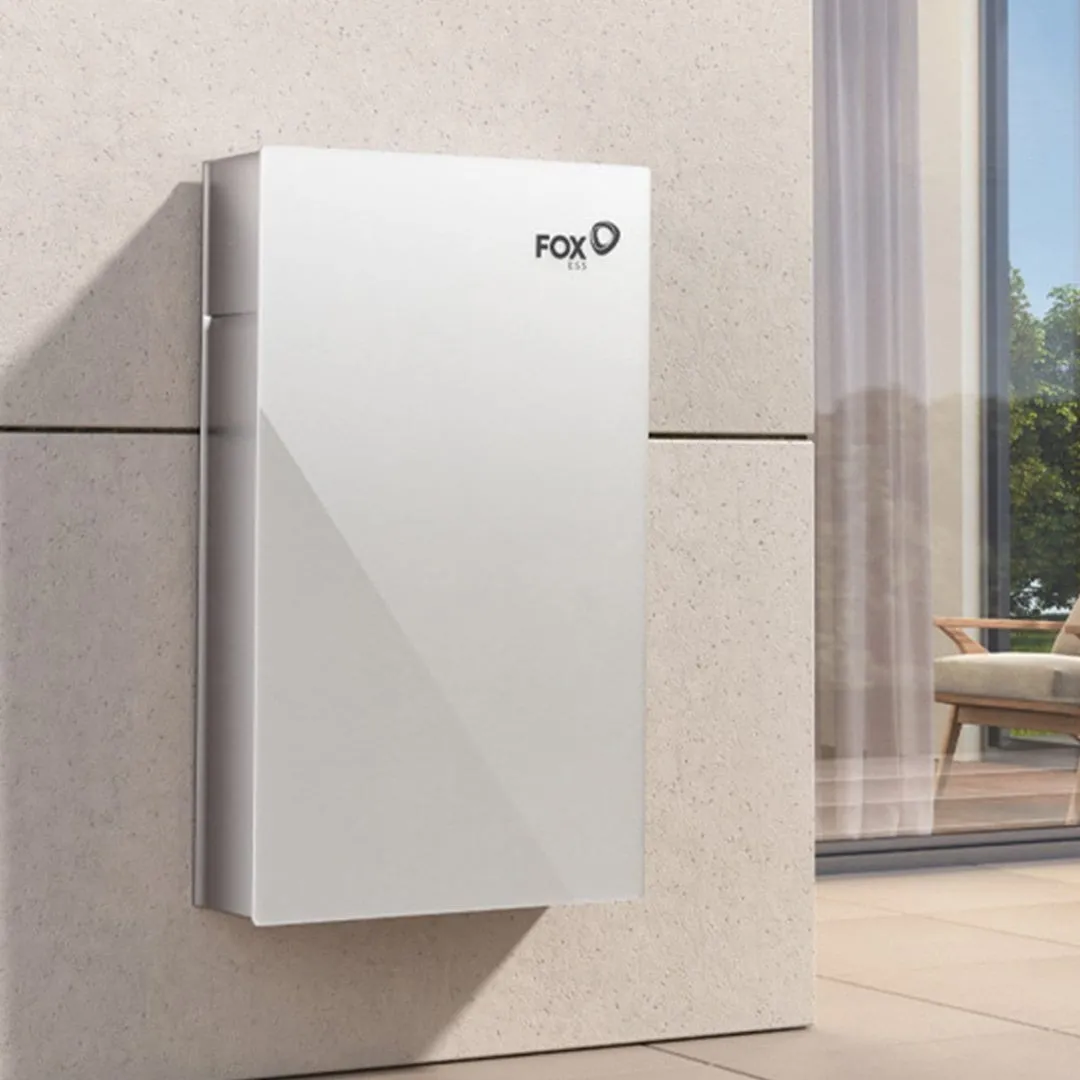
Route 1: AC-coupled battery. This is the simpler and far more common retrofit path. An AC-coupled battery (Tesla Powerwall, GivEnergy AC, Growatt AC battery, and most Puredrive/Solax AC kits work this way) has its own inverter built in and connects to your existing consumer unit on the AC side, completely independent of your original solar inverter. Your existing solar setup doesn’t need to be touched, reconfigured, or even understood in detail by the new installer — it just keeps doing what it’s doing, and the battery charges from any spare AC electricity on the property, whether that’s solar export or, on some systems, cheap overnight grid electricity too.
Route 2: Hybrid inverter swap. This means removing your existing solar (string) inverter entirely and replacing it with a hybrid inverter that has a DC battery port built in. It’s more invasive — an electrician has to isolate and rewire the DC solar strings into the new unit — but it usually means slightly better round-trip efficiency (you avoid one extra AC-DC-AC conversion stage) and it can unlock backup-power functionality that some AC-coupled systems don’t offer as standard.
For most homeowners with a working inverter under 8-10 years old, AC-coupled is the sensible, lower-cost, lower-disruption choice. It only tips towards a hybrid swap when the existing inverter is old, faulty, or you specifically want whole-home or partial-home backup during a power cut.
Realistic 2026 retrofit battery pricing
Based on current UK installer quoting, expect these ranges, all installed, VAT included:
| Battery capacity | AC-coupled retrofit (installed) | Hybrid inverter swap + battery |
|---|---|---|
| 5 kWh | £4,000 - £5,000 | £5,500 - £7,000 |
| 10 kWh | £5,500 - £7,000 | £7,500 - £9,500 |
| 13.5 kWh (e.g. Powerwall 3) | £8,500 - £10,500 | £9,500 - £12,000 |
As a rule of thumb, budget £4,000-£7,000 for a typical mid-size domestic retrofit (5-10kWh) done the AC-coupled way — the figure specified in the brief for this piece, and it holds up against what installers are actually quoting across the country in mid-2026. Per-kWh, that works out at roughly £400-£700/kWh installed, in line with wider UK market data.
Two pricing details catch people out:
- 0% VAT applies to the retrofit too. The 0% VAT rate on residential solar and battery storage (in Great Britain) currently runs until 31 March 2027, after which it’s scheduled to revert to 5%. Crucially, this 0% rate applies to a standalone battery retrofit even when there’s no new solar panel being installed alongside it — HMRC’s energy-saving materials relief covers battery storage added to an existing microgeneration system. If a quote has 20% VAT on it, ask why.
- A hybrid swap isn’t just “battery cost + labour.” You’re also disposing of a perfectly good string inverter, which stings if it’s only a few years old. Most installers will only recommend this route if your existing inverter is past 8 years old, undersized for the battery you want, or already showing signs of failure.
When to combine it with an inverter replacement anyway
There’s a genuine crossover point where combining the two makes financial sense rather than being wasteful. Ask an installer to check these before you commit to AC-coupled:
- Your inverter is 10+ years old. String inverters typically last 10-15 years before efficiency drops or they fail outright, and replacement alone costs £500-£1,000. If yours is approaching that age, paying a bit more now to combine the inverter swap with the battery avoids paying for two separate callouts within a few years of each other.
- Your existing inverter has no export limitation or battery-ready features. Some early solar-only inverters (pre-2016 installs especially) have no provision for smart export management, which can complicate SEG (Smart Export Guarantee) metering once a battery changes your export profile.
- You want power-cut backup. Most AC-coupled battery installs are NOT configured for backup power out of the box — that needs a separate changeover switch and sometimes an isolation panel, adding £500-£1,500 regardless of route. If backup is the priority, a hybrid inverter with built-in EPS (emergency power supply) can be the tidier way to get there, and it’s worth pricing both routes side by side.
- MCS re-certification. Any battery addition, AC-coupled or hybrid, needs an MCS-certified installer and updated MCS paperwork to protect your Smart Export Guarantee eligibility — don’t let anyone tell you SEG registration is unaffected by adding storage; the installation has to be re-flagged on the MCS database either way.
What determines your actual payback
A retrofit battery’s payback depends far more on your usage pattern than the battery spec sheet. With import electricity around 25p/kWh under the Ofgem price cap and typical export rates sitting anywhere from a few pence up to 15-20p/kWh at the better end of the Smart Export Guarantee market (rates vary supplier to supplier — there’s no fixed national figure), the maths usually favours using stored solar over exporting it, provided you’re actually shifting daytime surplus into evening use rather than paying for a battery that mostly sits half-empty.
For a household that currently exports 50% of its solar generation, a well-sized retrofit battery can realistically cut a further £250-£450 a year off the electricity bill, alongside whatever benefit you get from time-of-use tariff arbitrage (charging cheap overnight, if your battery and tariff support it). On a £5,500 AC-coupled install that’s a 12-22 year simple payback on the battery alone — reasonable but not spectacular, which is why it’s worth running the numbers on your own consumption data rather than a generic estimate before committing. The Cost of Solar’s battery storage cost breakdown goes through the per-kWh economics in more detail, and our solar panel payback period guide is worth reading alongside this if you’re weighing a battery against other upgrades.
Getting quotes that are actually comparable
Because AC-coupled and hybrid-swap quotes can look wildly different for what’s nominally “the same battery,” ask every installer for a like-for-like breakdown: battery hardware cost, inverter/hybrid cost (if any), labour, scaffolding (rarely needed for a battery-only job, but check), electrical certification, and MCS registration, listed separately. A single lump-sum figure makes it impossible to tell whether you’re comparing an AC-coupled quote against a hybrid-swap quote.
It’s also worth getting at least one quote from an installer who fits both routes rather than someone who only offers one product line — a specialist that only sells hybrid inverters, for instance, has an obvious incentive to recommend the more expensive swap even when AC-coupled would do the job. Installers such as ecoaim.co.uk in Central Scotland and YEERS in Yorkshire both quote solar, battery and heat pump work, so they’re used to laying out AC-coupled versus hybrid options side by side rather than pushing a single product. In the South East, SOLA and Hazell Electrical in West Kent take the same multi-brand approach, which is useful when you want a genuinely independent recommendation rather than a single manufacturer’s battery pushed regardless of fit.
If your existing solar was installed by a larger commercial-facing installer rather than a small local firm, it’s still worth a second opinion — retrofit battery work is different enough from a fresh solar-and-battery install that “who fitted your panels” isn’t automatically “who should fit your battery.”
Retrofit batteries on commercial and larger domestic systems
Everything above is aimed at the standard 5-13.5kWh domestic retrofit, but the same AC-coupled-versus-hybrid decision scales up for larger systems. Commercial sites adding storage to an existing rooftop array face a similar choice, just with bigger numbers and a stronger case for combining it with a wider energy strategy — demand charge reduction, backup for critical loads, or pairing with a PPA. Battery Storage for Business covers the commercial-scale version of this decision in more depth, and if the original solar was fitted under a power purchase agreement rather than owned outright, Solar Power Purchase Agreements is worth a look before assuming a battery retrofit is even contractually straightforward — PPA agreements sometimes restrict what can be added to the system without the funder’s sign-off.
For farms and larger rural properties that added solar under an agricultural scheme and are now looking at storage, Solar Panels for Farms has coverage of how the Improving Farm Productivity grant (roughly 25% of eligible cost in England, with different rates in the devolved nations) interacts with subsequent storage additions — worth checking before assuming a battery retrofit qualifies for the same support as the original panels, because in most cases it doesn’t; the grant was aimed at the generation asset, not storage bolted on later.
The bottom line
A retrofit battery is not a single-price product — it’s two different jobs wearing the same marketing name. AC-coupled, at roughly £4,000-£7,000 for a typical 5-10kWh domestic system, is the right call for most people with a solar inverter under a decade old and no urgent need for power-cut backup. A hybrid inverter swap costs more but earns its keep when your existing inverter is ageing out anyway, or when whole-home backup is the actual goal. Either way, insist on 0% VAT while it lasts (to March 2027), get separate line items for hardware and labour, and don’t let backup power get bundled into the quote as an assumed feature — it almost always costs extra, on both routes.
For anyone still at the “is it even worth it” stage rather than pricing an actual install, The British Solar Blog’s guide to whether solar works in the UK and Solar Weekly’s look at the 2026 UK solar market both give useful wider context on where storage fits into the bigger picture.