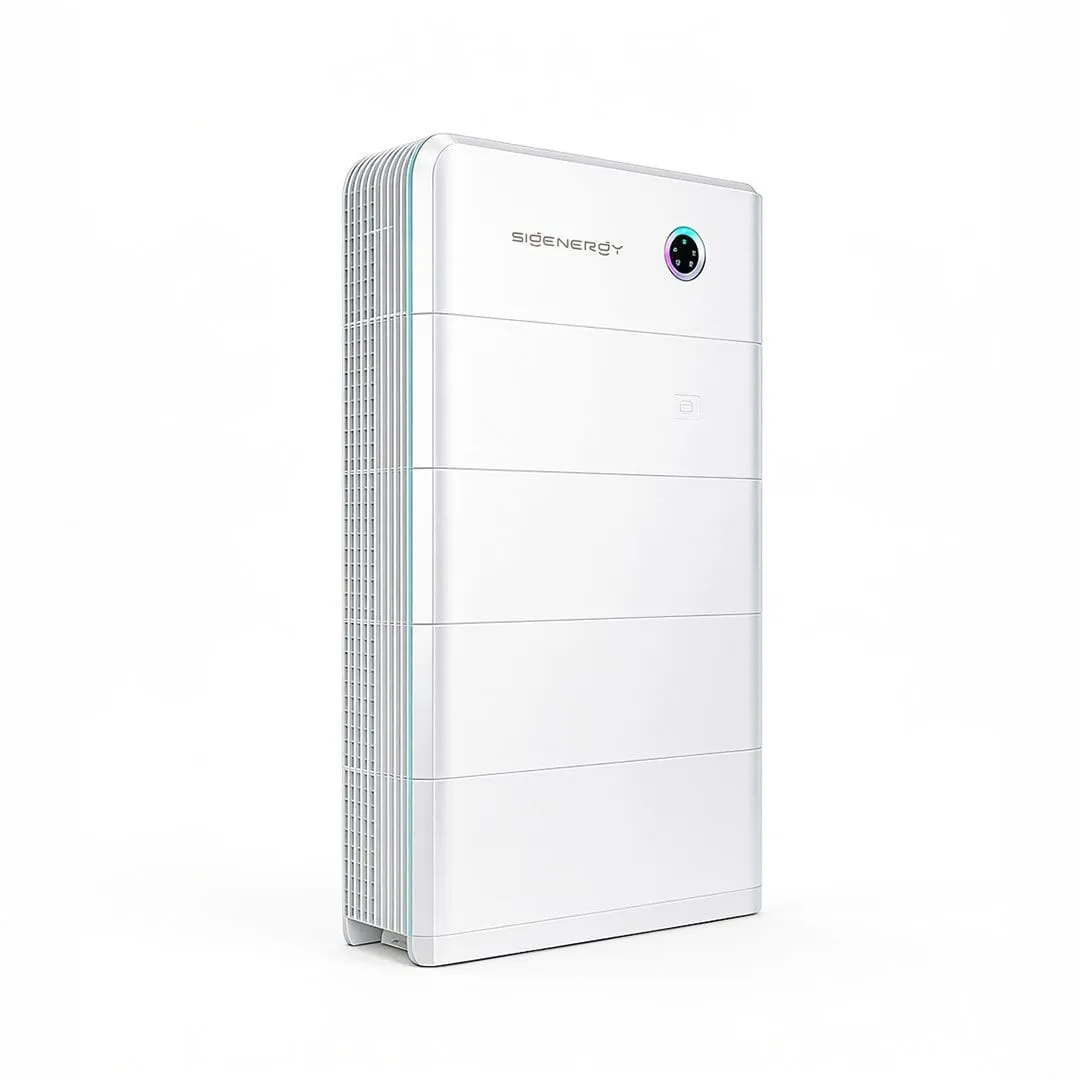
A home battery is the single biggest-ticket add-on in UK solar right now, and the honest answer to “does it pay for itself” is: sometimes, and it depends far more on your electricity tariff than your solar panels do. This piece works through the real numbers — self-consumption uplift, time-of-use arbitrage, and the scenarios where a battery is either a clear win or a slow-burn mistake.
Why a battery changes the maths at all
A typical UK home with unshaded roof and a well-sized array gets somewhere in the region of 850 kWh of generation per kWp per year, rising toward 1,050+ kWh/kWp in the sunniest parts of the south. The problem isn’t generation — it’s timing. Most solar generation happens between 10am and 4pm, and most household electricity demand happens before 8am and after 5pm. Without storage, a typical home only manages to use somewhere around 35-40% of what its panels produce directly; the rest gets exported, usually for far less than you’d pay to buy it back that evening.
A battery lets you shift that surplus into the hours you actually need it. Properly sized against a home’s daily consumption pattern, self-consumption commonly rises from that ~35-40% baseline to somewhere in the 60-70% range — the exact figure depends on battery size relative to array size, household usage pattern, and how disciplined the system’s control software is about holding charge back for the evening peak rather than dumping it to export too early. That uplift is where the payback case lives, and it’s worth stress-testing before you commit, not after.
The battery bill: what you’re actually paying
Installed costs for a retrofit home battery in the UK in 2026 typically run around £400-£700 per kWh of usable capacity, which puts a modest 5kWh unit at roughly £4,000-£5,000 and a larger 10kWh system nearer £7,000-£8,000 all-in. At the premium end, a Tesla Powerwall 3 (13.5kWh usable) typically installs for around £8,500-£10,500 depending on region and installer. Residential battery storage — whether bought alongside solar or retrofitted afterwards — currently qualifies for 0% VAT in Great Britain, a relief scheduled to run until 31 March 2027 before reverting to 5%, so timing a purchase inside that window is worth roughly 5% off the invoice on its own.
For a proper breakdown of installed pricing by capacity and brand, The Cost of Solar’s dedicated battery storage cost guide goes deeper than this article can on unit economics; if you haven’t sized your solar array yet, our solar panel calculator is the starting point before you even think about storage.
Scenario one: flat-rate tariff, self-consumption only
If you’re on a standard flat import tariff (call it ~25p/kWh, broadly where the Ofgem price cap sits) and your only reason for adding a battery is to store your own solar surplus rather than export it, the payback calculation is straightforward but often disappointing on its own. You’re comparing:
- What you’d have earned exporting that surplus kWh via the Smart Export Guarantee — typically 12-20p/kWh at the better end of the market, though SEG rates are set independently by each supplier and vary widely, so check your actual tariff rather than assuming the top rate
- What you’d otherwise pay to import that same kWh back in the evening — roughly 25p/kWh on a flat tariff
That’s a spread of perhaps 5-13p per kWh shifted. Over a year, even a well-utilised 5kWh battery might shift somewhere in the region of 1,000-1,500 kWh that would otherwise have been exported, which at a 10p/kWh average spread is £100-£150 a year of benefit. Against a £4,500 installed cost, that’s a 25-40+ year simple payback — longer than the battery’s useful life. On a flat tariff with self-consumption as the only driver, a battery on its own economics rarely pays back within a normal ownership horizon; it can still be worth having for backup power or to maximise use of a larger array, but don’t buy it expecting the numbers to add up quickly.
Scenario two: time-of-use tariffs and Agile arbitrage
This is where the picture changes substantially. Octopus Agile and similar half-hourly dynamic tariffs, and cheaper “Go”-style overnight tariffs, let a battery earn money in two additional ways beyond storing your own solar:
- Cheap overnight charging, expensive evening use — charging the battery from the grid at 2-4am when rates can be a fraction of daytime rates (sometimes near-zero or even negative on Agile), then using that stored charge to avoid peak-rate import in the evening.
- Export arbitrage — on Agile Export or similar, exporting stored charge back to the grid during evening price spikes, when rates can briefly exceed 30-50p/kWh, having bought or generated that same electricity for a fraction of the price.
Households running a battery hard on a well-matched time-of-use tariff, combining solar self-consumption with active overnight charging and peak-time export, have reported total annual savings meaningfully higher than the flat-tariff-only case — the exact figure is highly dependent on how much of the daily cycle you can capture and how aggressively the tariff prices spread through the day, so treat any specific pound figure quoted online with scepticism until you’ve modelled your own usage pattern against your actual tariff’s historical rates. What’s consistent across the data, though, is that arbitrage roughly doubles the addressable saving compared with self-consumption alone, because you’re now monetising the battery’s full daily charge-discharge cycle rather than just the solar surplus on sunny days.
This is also why battery payback improves for households that can shift discretionary load (EV charging, immersion heating, washing machines) into the same cheap overnight window the battery is charging in — the battery and the tariff work together, not separately.
When a battery genuinely pays back
Based on the ranges above, a battery is most likely to earn its keep within a reasonable payback window (broadly 6-10 years, inside a 25-30+ year panel lifespan) when most of the following apply:
- You’re on, or willing to switch to, a time-of-use import tariff and ideally an export tariff that rewards evening discharge
- Your daily electricity consumption is high enough and evening-weighted enough to actually use a full battery cycle most days (a battery that sits half-full because your household barely uses 4kWh after dark won’t pay back regardless of tariff)
- Your solar array is oversized relative to daytime demand, so there’s meaningful surplus to capture rather than export at low SEG rates
- You value backup/resilience during outages as a secondary benefit, which doesn’t show up in the pure financial payback but is real value for some households
- You buy inside the 0% VAT window before 31 March 2027
Conversely, a battery is a weak financial case for a small array, a flat tariff, low evening consumption, or a household unwilling to actively manage tariff switching and charging schedules.
What actually degrades the payback case
A few things quietly erode battery economics that are easy to overlook when comparing quotes: usable capacity is always lower than nameplate capacity (most lithium batteries reserve some depth-of-charge headroom); round-trip efficiency losses (typically 85-95%) mean you never get back 100% of what you put in; and battery degradation — typically a few percent of usable capacity lost per year — means the arbitrage value in year 10 is smaller than in year one. None of this makes storage a bad idea, but it does mean quoted “average annual saving” figures from a single good year shouldn’t be extrapolated flat across a 10-year payback model without a decay curve applied.
It’s also worth getting the underlying installation right before the battery maths matters at all. An MCS-certified installer is a requirement for SEG eligibility regardless of whether you add storage, so that box needs ticking either way. Installers with real commercial and time-of-use experience — for instance ecoaim.co.uk in Livingston, which designs battery systems specifically around Scottish tariff and export patterns, or Energy Concerns in Leicester, who pair battery sizing with EV charging load — are generally better placed to model your actual usage pattern than a generic solar-only quote. For homes in the Doncaster and South Yorkshire area, ElectriFusion Solutions run through both flat-tariff and Agile-style scenarios before recommending a capacity, which is the right order to do it in — size the battery to the tariff and usage, not the other way round.
The commercial version of this question
Everything above scales up, with a sharper case, for businesses on half-hourly metering and demand charges. Commercial batteries can arbitrage wholesale-linked tariffs and peak demand charges simultaneously, and the capital costs per kWh are usually more favourable at scale. If you’re weighing this for a warehouse, office or industrial site rather than a house, Battery Storage for Business covers the commercial arbitrage and demand-charge case in more depth than the residential numbers here support, and Commercial Solar Finance is worth a look if the capital outlay for combined solar-plus-storage needs spreading rather than paid upfront. For a farm diversifying into solar and storage together, Solar Panels for Farms covers how the Improving Farm Productivity grant (around 25% of eligible cost in England, rates vary by nation) interacts with a storage-inclusive build.
The honest summary
A battery bought purely to mop up solar self-consumption on a flat tariff is, on the numbers most households will actually see, a slow payback — often slower than the battery’s realistic service life once degradation is accounted for. A battery bought and actively managed against a time-of-use import/export tariff, sized to a household’s real evening demand, is a materially better case and can realistically pay back within a normal ownership horizon. The gap between those two outcomes isn’t really about the battery hardware at all — it’s about the tariff, the sizing, and whether anyone is actually managing the charge/discharge schedule day to day. Get a quote that models your specific consumption data against a real tariff, not a generic “average household” saving figure, and be sceptical of anyone quoting a single payback number without showing the underlying assumptions.
For the panel-only cost side of this decision, our payback period guide covers how panel payback compares once you strip storage out of the equation, and The British Solar Blog’s maintenance guide is a useful companion read on keeping both panels and battery performing at their rated output over a 25-year system life.