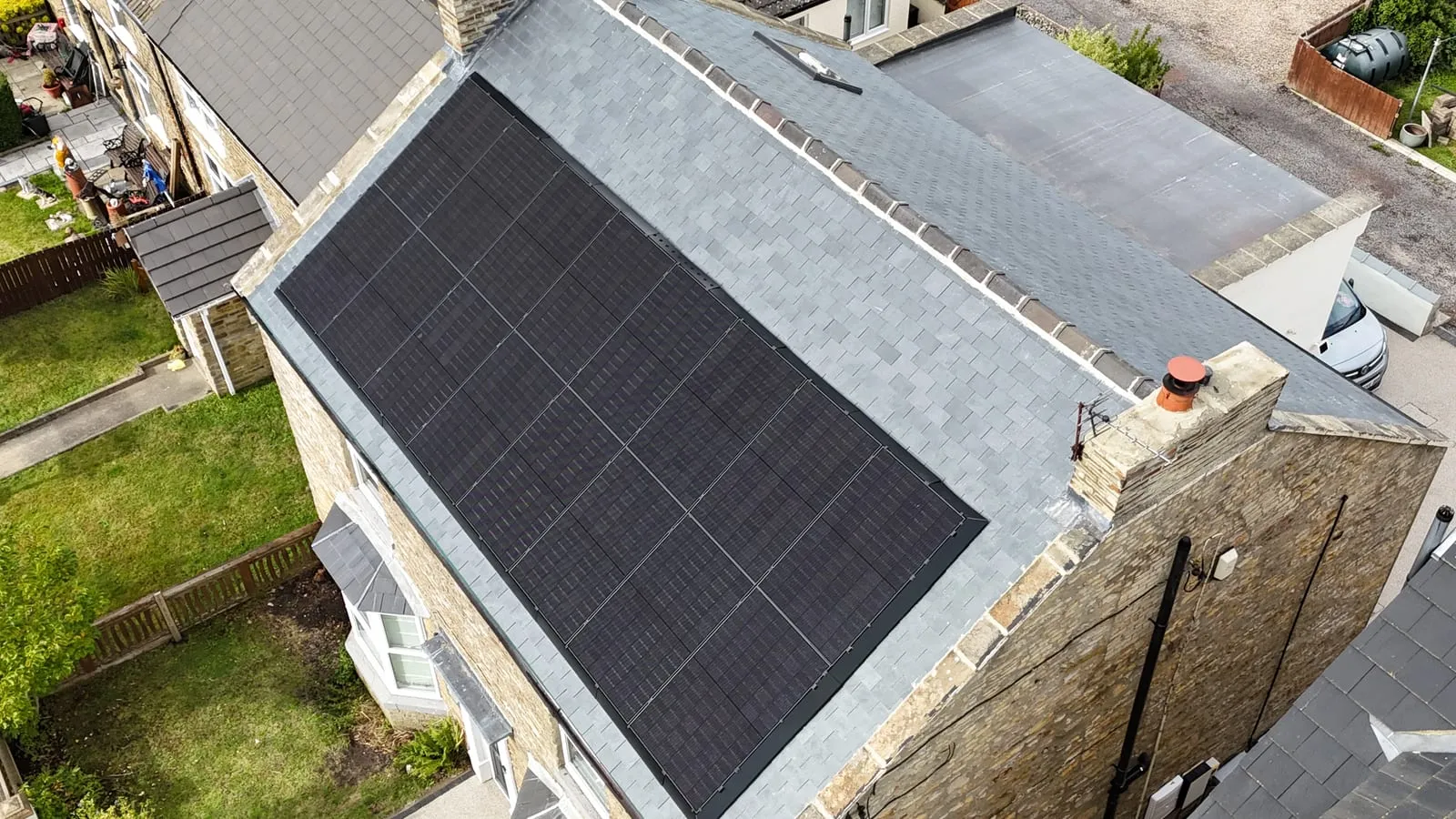
If you’ve got the outdoor space, ground-mounted solar can outperform a roof array on generation and last a lot longer without anyone touching the ladder — but it’s a different costing exercise entirely, from the mounting frame up. Roof systems piggyback on a structure you’ve already paid for; ground mounts need their own frame, their own footings, and in some cases their own planning application. This piece breaks down what that actually costs in the UK in 2026, where garden installs and field-scale farm arrays diverge, and when the extra spend is worth it.
Why go ground-mounted at all
Roof-mount is the default because it’s cheaper — you’re not paying for a structural frame to hold the array up, just the mounting rails that clip to existing rafters or trusses. But roofs come with constraints ground arrays don’t: fixed pitch and orientation, shading from chimneys and neighbouring trees, limited usable area, and — on older or slate roofs — load and penetration concerns that can add cost before a single panel goes up.
Ground mounts remove nearly all of that. You choose the tilt angle (typically 30-40° for UK latitudes, versus whatever pitch your roof happens to have), you choose orientation (true south, not “whatever way the house faces”), and you’re not limited by roof size. For a household with a south-facing roof already, ground mount rarely makes sense. For a bungalow with a north-facing roof, a shaded terrace, or a smallholding with several acres going spare, it often makes far more sense than fighting the roof.
The frame is where the money goes
On a roof, the panels sit maybe 100mm above the tiles on aluminium rails bolted through to rafters. On the ground, the panels need a full structural frame lifting them 0.6-1.2m off the ground, resisting UK wind loads (a serious structural calculation, not a guess), and anchored into the earth.
Two frame types dominate the UK residential and small-commercial market:
Galvanised steel frames are the standard choice — driven or bolted steel posts, steel rails, ground screws or concrete footings depending on soil type. Steel is strong, proven, and the cheapest per-kW frame option, but it’s heavy to install and, over 25+ years, needs decent galvanising or a repaint to avoid corrosion at the base.
GRP (glass-reinforced plastic) and aluminium frames cost more upfront — typically 15-30% more than steel for the same array — but they don’t rust, weigh less (lower transport and installation cost on remote farm sites), and need essentially no maintenance over the panel’s 25-30 year life. On coastal or high-humidity sites, or where footings are hard to inspect once buried, that maintenance saving can pay the premium back.
Ground screws versus concrete footings is the other frame decision. Ground screws (helical steel piles driven into the soil) are faster to install, fully removable if you ever need to relocate the array, and avoid a concrete pour — but they need the right soil (heavy clay or rock can rule them out, and a trial screw is worth doing before quoting). Concrete footings work on almost any ground but are permanent, slower, and add cost.
What it actually costs: garden scale vs field scale
The cost-per-kWp story for ground mount is roughly this: materials and mounting typically add £200-£400/kWp on top of the panel and inverter cost you’d pay for the same system on a roof, before installation labour, cabling runs, and any groundworks (trenching for the DC/AC cable back to the property, which on a large field array can be 100m+).
| System | Rooftop equivalent | Ground-mount estimate | Why the gap |
|---|---|---|---|
| Small garden array, 4kW | £6,000-£8,000 | £7,500-£10,000 | Frame + footings + cable run |
| Mid-size garden/smallholding, 10kW | £13,000-£17,000 | £16,000-£21,000 | Larger frame run, more footings |
| Field-scale farm array, 50kW+ | N/A (roof rarely fits) | ~£900-£1,200/kWp (commercial rates apply) | Bulk frame + groundworks offset by commercial per-kWp pricing |
At small garden scale, the frame is a genuinely bigger proportion of the bill because there’s no economy of scale — a 10-panel ground frame costs nearly as much per panel to engineer and install as a 40-panel one. At field scale, commercial installers price by the kWp and the frame cost per panel drops sharing groundworks, cable runs and site mobilisation across a much bigger array, which is why a large farm system can land close to rooftop commercial rates despite needing full groundworks. For a full breakdown of what’s driving 2026 commercial per-kWp pricing, see our commercial solar panel cost guide.
The 0% VAT relief on residential solar and battery storage (in place in Great Britain until 31 March 2027, scheduled to revert to 5% after) applies to ground-mounted domestic installs exactly as it does to roof — that’s a genuine saving worth locking in before the deadline, and it doesn’t discriminate by mounting type.
Planning permission: the real dividing line
This is where ground mount and roof genuinely part ways, and it’s the bit most cost guides skim over.
Roof-mounted solar on a house is almost always permitted development in England and Wales — no planning application, provided panels don’t protrude more than 200mm from the roof slope and don’t exceed the highest part of the roof (excluding chimney). Ground-mounted domestic arrays have their own permitted development rules but with tighter limits: the array must sit outside a certain distance of the property boundary, the total footprint of ground-mounted panels is capped as a proportion of the curtilage, and height limits apply. Listed buildings and conservation areas add restrictions on both.
Garden-scale ground mounts for a single dwelling usually clear permitted development if they’re modest and set back from boundaries — but check with your local planning authority before ordering steel, because the rules are more fiddly than the “no application needed” reputation roof solar enjoys. A local installer who’s done ground-mount jobs in your council area is worth more here than a national calculator. If you’re weighing garden space against roof space, Solar Panels For Gardens covers the domestic ground-mount planning position in more detail, and Sola UK in Hertfordshire and the Home Counties has fielded plenty of these permitted-development queries first-hand for clients with awkward roofs.
Field-scale farm and agricultural arrays are a different planning regime entirely. Anything beyond a fairly small domestic footprint on agricultural land typically needs full planning permission, and depending on scale can trigger additional considerations — agricultural land classification (best and most versatile land faces more scrutiny), grid connection capacity, and in some cases environmental impact assessment for the largest sites. This is not a DIY planning exercise; a farm-experienced solar installer or planning consultant earns their fee here. Solar Panels For Farms and Solar Panels For Agriculture both walk through the planning and grid-connection steps specific to agricultural ground mount, and it’s worth reading before you commission any design work, not after.
On funding: England’s farm solar support runs through the Improving Farm Productivity grant, worth roughly 25% of eligible costs (rates and eligibility differ by UK nation, and you should always check the current window before budgeting on a specific percentage) — not the old FETF 40% figure that still circulates online. Combine that with a properly costed frame comparison and the payback maths on a field array can still undercut buying grid electricity at current rates comfortably within the panels’ working life.
Garden vs field: which one are you actually planning?
Garden/domestic ground mount suits: a house with a poor roof (wrong orientation, heavy shading, weak structure) but decent open ground; households who want the array tilted at the optimal angle rather than whatever the roof gives them; or anyone adding a second array once the roof is full. Expect a modest premium over roof-mount, a lighter-touch planning check, and — if soil allows — ground screws to keep installation quick and reversible.
Field-scale farm/commercial ground mount suits: agricultural landowners with high daytime electricity use (irrigation, cold storage, dairy parlours, grain drying) who can size the array to genuinely offset consumption rather than just export; or landowners considering a larger array under a power purchase agreement structure. At this scale the frame cost per kWp falls, but the planning, grid connection, and land-use questions get bigger. Solar Panels For Dairy Farms and Commercial Solar Finance are useful starting points for sizing a field array against actual farm load and financing it without a large upfront capital outlay — and if a PPA structure is on the table rather than outright ownership, Solar Power Purchase Agreements sets out how those deals are typically structured in the UK.
The maintenance angle nobody costs in upfront
Ground-mounted arrays are easier and cheaper to maintain than roof arrays over their lifetime — no scaffolding or roof access needed for panel cleaning, inverter checks, or the eventual string inverter replacement (typically needed once in a 25-30 year system life, at roughly £500-£1,000). That access saving rarely makes it into the initial quote comparison but adds up over two and a half decades of ownership. Solar Maintenance Solutions covers what routine ground-mount servicing actually involves UK-wide, and it’s a shorter, cheaper job than the equivalent roof visit.
The bottom line
Ground mount costs more upfront — budget an extra £200-£400/kWp for the frame and footings at domestic scale, narrowing at field scale where commercial per-kWp pricing takes over — but you’re buying optimal tilt and orientation, zero roof risk, and a genuinely lower-maintenance system over 25-30 years. The number that decides it isn’t the frame cost, though; it’s whether your site clears permitted development (garden scale) or needs a full planning application (field scale), because that timeline and cost can dwarf the difference between steel and GRP. Get a soil check and a planning pre-application enquiry done before you get quotes on frames — it’s the cheapest hour you’ll spend on the whole project. For the wider cost picture across system sizes, our solar panel calculator and payback period guide are worth running your numbers through before committing to either route.