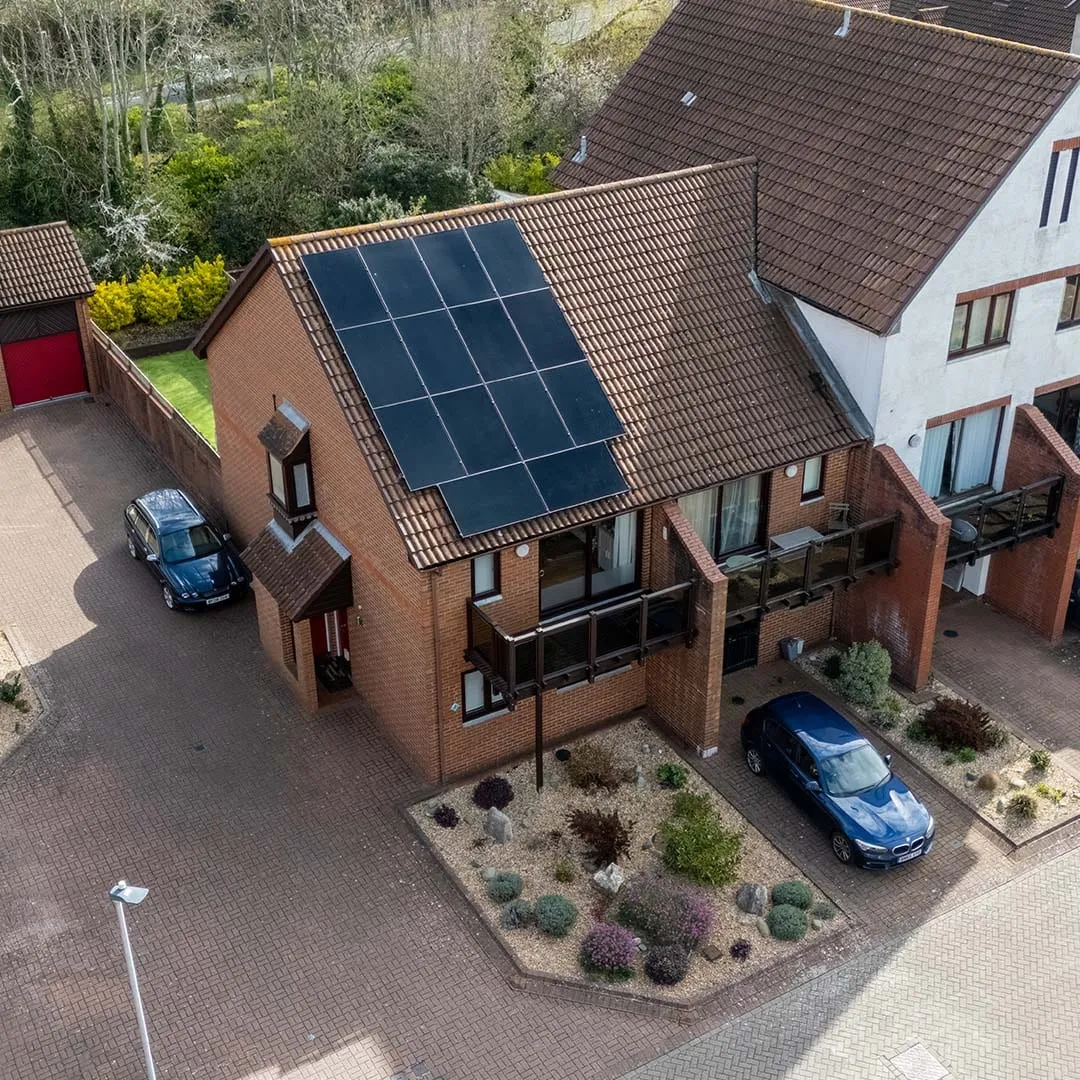
If you’ve got solar panels and no battery, the chances are your immersion heater is quietly wasting one of your best assets: free daytime electricity that’s flowing back to the grid for pennies. A solar diverter fixes that for less than the price of a decent washing machine. It’s one of the cheapest, least glamorous, and most consistently underrated upgrades in the whole solar toolkit — and it deserves a proper, numbers-first look rather than the vague “great for hot water!” treatment it usually gets.
This is a cost breakdown, not a sales pitch. We’ll cover what a diverter actually does, what it costs fitted, how the economics stack up against a battery or just taking the Smart Export Guarantee (SEG) payment, and — most importantly — which households actually benefit and which ones are wasting their money.
What a solar diverter actually does
A solar diverter (the best-known brand is MyEnergi’s Eddi, hence “Eddi-class” devices — others include the Solic 200, immerSUN, and SolarEdge/GivEnergy’s own hot water modules) is a small box that sits between your solar inverter and your immersion heater. It constantly monitors how much electricity your panels are generating versus how much your house is using in real time.
The moment there’s a surplus — say your 4kW array is producing 3kW but the house is only drawing 500W — the diverter redirects that spare power into your immersion heater instead of letting it flow out to the grid. It does this smoothly, in fractions of a kilowatt, so it doesn’t just dump the whole surplus in one go; it modulates the load to match exactly what’s spare. Some units, including the Eddi, can also route surplus to a compatible EV charger or a second heating zone.
The point is simple: instead of selling your surplus electricity to your supplier for roughly 12-20p/kWh under the Smart Export Guarantee, you use it yourself to heat water you’d otherwise have paid ~25p/kWh (at the current Ofgem price cap level) to heat from the grid, or burn gas for. It’s a straightforward case of “use it, don’t sell it cheap.”
What it costs, fitted
For a domestic install, budget:
| Item | Typical cost |
|---|---|
| Diverter unit only (Eddi, Solic 200, immerSUN, etc.) | £250-£350 |
| Professional installation (qualified electrician) | £100-£200 |
| Total fitted, standard install | £300-£500 |
| Fitted alongside a new solar install (marginal cost) | Often £250-£400, as some wiring is shared |
| App/monitoring add-ons (e.g. MyEnergi hub, harvi sensors) | £50-£150 extra, optional |
That £300-£500 fitted range is the number to remember, and it holds broadly true whether you’re in Yorkshire or Cornwall — labour is the main variable, not the hardware. Because it’s classed as energy-saving equipment fitted alongside a solar installation, most reputable installers will quote it inclusive of VAT at the current 0% residential rate for solar and battery storage in Great Britain, which runs until 31 March 2027 — worth confirming with your installer, since a standalone diverter retrofit on an existing system may be treated differently depending on scope of works.
Compare that to the cost of the appliance it’s protecting: a decent domestic hot water cylinder and immersion element you already own. The diverter isn’t creating new capability, it’s making better use of kit that’s already sat in your airing cupboard.
The economics: what does it actually save?
This is where people either overstate or understate the case, so let’s do it properly with a worked example.
Assume a typical 4kW solar array generating around 3,400 kWh a year (UK average yield is roughly 850 kWh per kWp, higher in the sunny south, lower in Scotland and the north). A household without a battery or diverter that’s out at work during the day will typically only self-consume 15-30% of that generation directly through normal daytime loads (fridge, standby devices, the odd load of washing). The rest — call it 2,400-2,800 kWh a year for a fairly typical case — goes to export.
A diverter can’t capture all of that surplus, because your hot water tank has a finite capacity and your immersion element (usually 3kW) can only absorb so much power at once, and only until the tank reaches temperature (typically once, sometimes twice a day). In practice, most installers and manufacturers report a household can realistically divert somewhere in the range of 1,000-2,000 kWh a year into hot water, depending on system size, household hot water demand, and how much surplus is actually available on sunny days when the tank isn’t already hot.
Take a mid-range estimate of 1,500 kWh diverted per year:
- Value if exported via SEG at, say, 15p/kWh average = £225/year
- Value if used to heat water instead of importing at ~25p/kWh = £375/year
- Net gain from diverting rather than exporting: roughly £150/year
Against a £400 fitted cost, that’s a payback of around 2.5-3 years purely on the export-versus-self-use differential — genuinely one of the fastest-paying-back pieces of solar kit available. After payback, it’s free money for the next 20+ years of the panels’ working life (modern panels degrade only around 0.4% a year and are commonly warrantied for 25-30 years).
If your household would otherwise be heating water with an oil boiler, LPG, or an inefficient electric immersion running on standard grid rates with no solar at all, the numbers get even better, because you’re not just avoiding a low SEG rate — you’re avoiding a much higher heating cost altogether.
Diverter vs battery: different jobs, not really rivals
This is the comparison people most often get confused about, so it’s worth being blunt: a diverter and a battery solve different problems, and for most households the honest answer is “diverter first, battery later if budget allows.”
A home battery (roughly £4,000-£8,000 installed, or around £8,500-£10,500 for something like a Tesla Powerwall 3 at 13.5kWh) stores your surplus electricity so you can use it for anything, any time — lighting, appliances, EV charging overnight, even backup power in some configurations. That flexibility is genuinely valuable, but it costs ten to twenty times what a diverter does, and the payback period is correspondingly longer, typically 6-10 years depending on how much you’re able to shift consumption around it.
A diverter only ever does one thing: turns surplus electricity into hot water. It can’t power your lights, it can’t charge your EV overnight, and once the tank is up to temperature the opportunity is gone until you draw hot water down again. But at roughly a tenth of the cost, it captures a meaningful chunk of the value a battery would capture from your hot water load specifically — for a fraction of the outlay.
For a lot of households, especially those without an EV and without huge evening electricity demand, a diverter genuinely gets you 60-80% of the practical daytime-surplus benefit for 10% of the capital cost. If you’re weighing up the full cost picture for either route, thecostofsolar’s battery storage cost breakdown and our solar panel payback period guide are worth reading alongside this one before you commit either way.
Who actually benefits — and who doesn’t
The honest answer is that a diverter is a great fit for some households and a poor one for others. It’s worth being clear-eyed about this rather than pretending it suits everyone.
Diverters work well for:
- Households with an electric immersion heater already fitted (even as backup to a gas boiler) — no need for a new cylinder
- Homes with high hot water demand — families, or anyone running baths regularly
- Anyone currently exporting most of their surplus for a modest SEG rate rather than using it
- Retired households or anyone home during the day, since more surplus coincides with hot water demand
- Households on a supplier with a low or no SEG offer, where self-use is clearly better than export regardless of rate
Diverters make less sense for:
- Homes with no immersion heater at all and a combi boiler with no cylinder (there’s nothing to divert into without adding one, which changes the cost picture significantly)
- Very small solar arrays with little genuine daytime surplus to capture
- Households who already have a battery covering the same surplus, where the battery will usually take priority for the diverter logic to work around, and the marginal value of also diverting to hot water is smaller
- Anyone on a supplier SEG tariff currently paying well above 20p/kWh, where the export-versus-divert maths narrows considerably
If you’re not sure which camp you fall into, get an MCS-certified installer to look at your actual consumption data (most modern inverters/apps show your export and self-use split) before spending the money — it’s a two-minute check that avoids buying kit that won’t pay back.
Fitting one, and who to ask
Diverters need installing by a competent electrician, ideally one familiar with solar retrofit wiring, and MCS certification of your overall solar installation remains what actually matters for SEG eligibility (the diverter itself isn’t an MCS product in the way panels or batteries are, but a diverter shouldn’t compromise your system’s MCS compliance if fitted correctly). It’s a sensible add-on to raise with your installer at the point of a new solar quote, or as a retrofit call-out to an existing one.
Regional installers who cover this kind of retrofit work as a matter of course include ecoaim in Livingston for Central Scotland households looking to add a diverter to an existing array, FLD Electrical for South Wales homes wanting the work done alongside a wider electrical check, and Hazell Electrical covering West Kent for households near the Home Counties. If you’re weighing a diverter against a fuller battery retrofit, it’s worth getting quotes for both from the same installer so you’re comparing like-for-like labour costs — Premier Electrical Renewables and YEERS in Yorkshire both quote solar, battery and diverter work as a single visit, which tends to be more cost-effective than three separate call-outs.
For businesses rather than households, the diverter logic mostly doesn’t apply in the same way — commercial hot water demand and load profiles are different, and it’s usually more effective to look at battery storage for business or a wider commercial solar cost review instead. Landlords with multiple let properties weighing up whether a diverter is worth fitting across a portfolio should also check solarpanelsforcommercialproperty.co.uk for the wider capital allowance and payback picture before committing property-wide.
The bottom line
At £300-£500 fitted, a solar diverter is one of the shortest-payback upgrades available to any UK home with solar and an immersion heater — typically 2.5-3 years, sometimes faster if your SEG rate is low or your hot water demand is high. It won’t replace a battery’s flexibility, and it’s not for everyone — no immersion heater, minimal daytime surplus, or an existing battery already doing the same job all weaken the case. But for the ordinary household exporting cheap surplus electricity to the grid every sunny afternoon while paying full price to heat water separately, it’s about as close to a no-brainer as solar add-ons get.