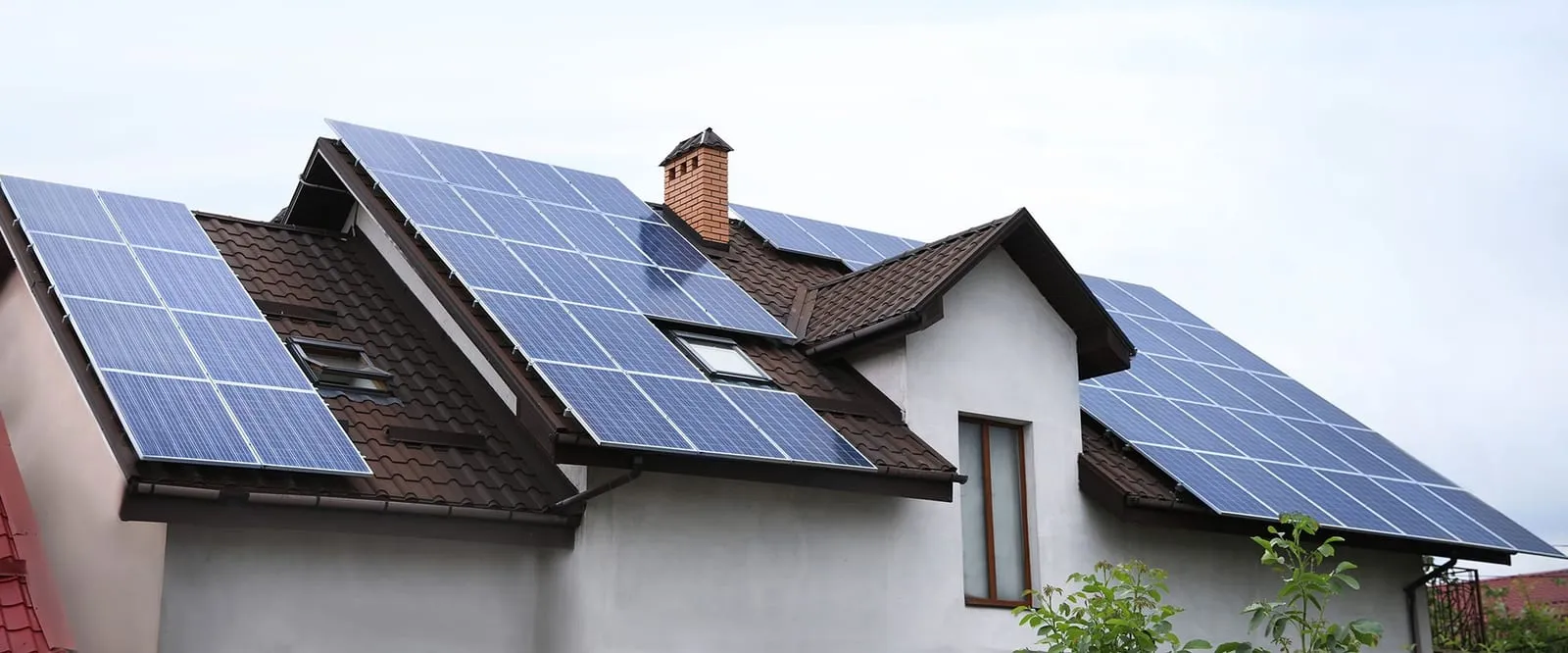
Flats and apartments make up around a fifth of UK homes, yet almost none of the solar advice online is written for anyone who doesn’t own a pitched roof outright. If you live in a flat, the barriers to going solar are structural and legal, not technical — the panels work exactly the same way, but getting permission to fit them is a different job entirely. Here’s what actually determines whether solar is possible for your flat, what a communal system costs and who pays for what, and what to do if the roof is simply never going to happen.
Why flats are the hard case for solar
A detached house has one roof, one owner, and one decision-maker. A flat has a shared roof, multiple leaseholders (or a mix of leaseholders and a freeholder), and — critically — no automatic right for any individual flat owner to alter the building’s structure. That’s the whole problem in a sentence.
Three separate obstacles usually stack up:
1. You probably don’t own the roof. In most leasehold blocks, the roof is a “common part” owned by the freeholder (or held collectively via a Right to Manage company or resident-owned freehold). Your lease gives you the right to occupy your flat, not to drill into, fix panels to, or run cabling across a structure that belongs to someone else.
2. Planning and building control still apply. Permitted development rights for solar PV exist, but they’re written around houses. On blocks of flats, and in particular anything above a certain height or in a conservation area, panels are more likely to need full planning permission. Party wall and building regulations considerations (structural loading, fire safety routes, cable runs through communal risers) also come into play in a way they simply don’t for a bungalow.
3. Wiring one system into many meters is awkward. Even if you get consent, a single rooftop array generates one stream of electricity. Splitting that fairly across ten or twenty separate flats, each with their own meter and supplier, needs either a communal private wire network, a “solar for all” allocation agreement, or export-only arrangements where the building sells the power and passes savings back via the service charge. None of this is insurmountable, but it’s a project management problem before it’s a solar problem.
None of this means solar is off the table for flat-dwellers — it means the project starts with a conversation, not a quote.
Freeholder and leaseholder consent: what you actually need
If you own a flat and want solar, the practical route is:
- Check your lease first. Some leases have specific clauses about roof alterations or “alienation” of common parts that make the freeholder’s consent an absolute requirement, not just good manners.
- Approach the freeholder or managing agent formally, ideally with a short proposal: what’s being fitted, by whom, expected benefit (reduced service charge for communal electricity, reduced heating costs if solar feeds communal systems), and confirmation that a qualified MCS-certified installer will carry out the work with appropriate insurance and building-warranty-safe fixings.
- If you’re on a Right to Manage or resident-owned freehold, the decision usually goes to a vote among directors or shareholders — get it on the agenda early, because AGMs are typically annual and a “no” this year often means waiting twelve months to ask again.
- Get quotes and consent in the right order. Freeholders are far more likely to say yes to a costed, insured, named-installer proposal than an open-ended “can we put solar on the roof” question. A firm like Sola UK in the Home Counties or ALPS Electrical will typically put together a structural and electrical proposal you can actually present to a freeholder or managing agent, rather than a vague estimate.
Even where consent is granted, expect conditions: proof of installer accreditation, adequate liability insurance, an agreement covering who’s responsible for maintenance and eventual removal, and often a requirement that any income or savings are shared fairly rather than captured by whichever flat happened to push the project through.
Communal solar systems: how the numbers actually split
Where a block does go ahead, there are broadly three models in use across the UK:
Communal supply for shared services. The array feeds the building’s communal electricity supply — stairwell and corridor lighting, lifts, entry systems, communal heating pumps — which is billed to leaseholders through the service charge anyway. This is the simplest wiring (one system, one meter, no allocation dispute) and reduces everyone’s service charge a little, but individual flats see no direct bill reduction because their own supply isn’t touched.
Private wire / allocation model. More complex: the array’s output is metered and split across participating flats according to an agreed formula (often floor area or a fixed percentage), each getting a credit against their own bill. This needs sub-metering infrastructure and a formal agreement, which pushes up both the cost and the admin, but it’s the only model that gives individual flats a visible saving on their own electricity bill.
Export-only, income to the building. The building exports everything it generates to the grid via a Smart Export Guarantee tariff and the income goes into the service charge pot, offsetting costs for everyone rather than reducing anyone’s own consumption. This sidesteps the metering complexity entirely but generally earns less than self-consumption would, since export rates from suppliers currently run in the region of 12–20p/kWh at the better end of the market, well below the roughly 25p/kWh most households pay to import.
Cost-wise, a communal system doesn’t scale down linearly from a domestic one — you’re often dealing with a bigger roof, more complex scaffolding access, three-phase electrical work, and fire-safety-compliant cable routing through communal areas, so specify and quote it as a small commercial project rather than a big domestic one. For comparison points as you gather quotes, our own guide to commercial solar panel costs and solar battery storage costs are worth reading alongside any freeholder proposal, since a communal battery to store daytime generation for evening lift and lighting use is often the better economic case than export alone. Note that the current 0% VAT relief on residential solar and battery installations in Great Britain (in place until 31 March 2027, after which it’s scheduled to revert to 5%) does apply to qualifying residential installations, but the position on mixed-use or wholly communal-services installations should be confirmed with your installer and accountant, since VAT treatment depends on exactly how the supply is structured.
If your block includes any commercial ground-floor units — a management company office, retail, or communal gym — it’s also worth getting a proposal from a specialist in mixed-use buildings; Commercial Solar Panels Installation and Solar Panels for Office Buildings both deal with exactly this kind of split-use roof regularly and can advise on whether the array should be metered as commercial, residential, or both.
When the roof genuinely isn’t happening
Sometimes the honest answer is no — a listed building, a freeholder who won’t engage, a roof already let to a mobile phone mast, or a leasehold structure too fragmented to get consensus. In that case there are still routes to lower your electricity costs and your carbon footprint without a panel in sight:
Green energy tariffs. Most major suppliers now offer tariffs backed by renewable-certified generation (REGO-backed). You won’t generate your own power or claim an export payment, but you can move your consumption onto a supply that’s matched to renewable generation, and some tariffs offer time-of-use pricing that rewards shifting consumption to cheaper, greener hours.
Community and shared ownership solar. A small but growing number of community energy schemes let residents buy a stake in a solar installation elsewhere (a local school roof, a community hall, a solar farm) and receive a return or bill credit rather than hosting panels themselves. Availability is patchy and very location-dependent — it’s worth checking whether a community energy group operates near you.
Improve what you can control. Even without solar, a flat’s electricity use is worth tightening up: LED lighting, a smart thermostat if you have your own heating circuit, and, where you have an EPC-eligible reason, checking whether ECO4 or GBIS insulation support applies to your situation — these are means-tested schemes aimed at low-income, low-EPC-rated homes rather than a universal grant, so eligibility is genuinely worth checking rather than assuming.
Battery-only or EV-ready wiring, fitted in anticipation of solar arriving later if the freeholder situation changes, can be a sensible interim step if you have off-street parking allocated to the flat — worth discussing with an installer covering your area, such as Yorkshire’s YEERS or Hazell Electrical in West Kent, both of whom handle battery and EV charging installs independently of a rooftop array.
If you manage the block rather than live in one flat
Freeholders, managing agents and Right to Manage directors reading this from the other side: the calculus for you is different again. A communal array is a capital project with a payback measured against service charge savings and, increasingly, against the building’s own EPC and net-zero obligations if it contains any commercial floor space. Solar Panels for Care Homes and Solar Panels for Charities both cover a comparable multi-occupancy, shared-services ownership structure if your block also functions as supported or charitable housing, and their approach to consent, shared-benefit allocation and phased funding translates well to a standard residential block. It’s also worth getting a structural survey done before soliciting quotes — a flat roof rated for foot traffic isn’t automatically rated for ballasted panel mounts plus wind loading, and that survey cost is far cheaper to absorb early than after three quotes have already been drawn up around a roof that turns out not to be viable.
The practical starting point
If you live in a flat and want solar, don’t start by getting quotes — start by reading your lease and finding out who legally controls the roof. Once you know that, a costed, installer-backed proposal to the freeholder or the building’s management structure is far more persuasive than an open question, and it’s worth having a real installer help you build that proposal rather than presenting a DIY estimate. Firms working across shared and commercial-adjacent buildings, including ElectriFusion Solutions in South Yorkshire and Ecoaim in Central Scotland, deal with exactly this kind of consent-first project regularly and can tell you within a site visit whether your building’s roof, wiring and freeholder situation make a communal system realistic. If it doesn’t, a green tariff and a tightened-up electricity setup is still a legitimate, achievable step — and for the wider cost picture across both routes, our solar panel calculator and payback period guide are a useful sense-check before any proposal goes to a vote.