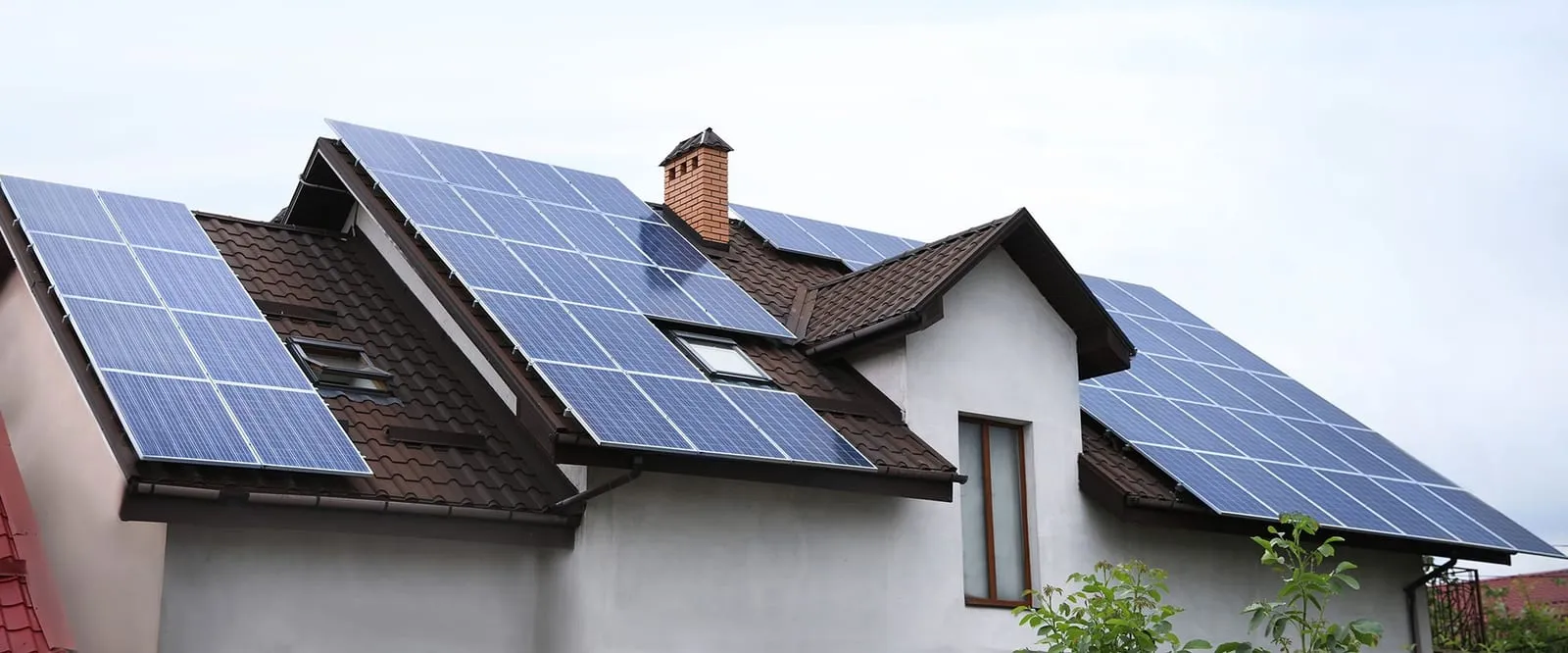
Scaffolding is the line item that catches most homeowners off guard on a solar quote. You’ve budgeted for the panels, the inverter, maybe a battery — and then a separate line appears for access equipment that has nothing to do with generating electricity. It isn’t a hidden fee. It’s a genuine health and safety requirement for almost any pitched-roof installation. But almost nobody explains it upfront, so it lands as a surprise. Here’s what it actually costs, why, and how to avoid overpaying for it.
What scaffolding for solar actually costs
For a typical UK domestic installation, scaffolding runs £500–£1,200, and that range covers the vast majority of straightforward semi-detached and terraced houses with a standard two-storey pitched roof and reasonable access from the street. It’s usually quoted as a separate line on your installer’s proposal — sometimes bundled into the headline “installed” price, sometimes broken out. Always ask which, because it changes how you compare quotes against each other.
At the low end (£500–£700) you’re typically looking at a single-storey extension roof, a simple front elevation with clear ground access, or a smaller independent scaffolder working a quiet residential road. At the top of the range (£900–£1,200) you’re usually dealing with a three-storey property, a rear roof that needs scaffolding built over a conservatory or extension, restricted access requiring hand-carried poles, or a job in a city where scaffolders’ day rates and public liability premiums run higher.
| Roof scenario | Typical scaffolding cost |
|---|---|
| Bungalow / single-storey extension, clear access | £300–£600 |
| Standard two-storey semi/terrace, easy access | £500–£800 |
| Two-storey, restricted side access | £700–£950 |
| Three-storey, or scaffold over conservatory/extension | £900–£1,200 |
For context on the wider installed cost of a system — panels, inverter, mounting, labour and scaffolding together — a 4kW residential system typically lands at £6,000–£8,000 fully installed in 2026, with a 3kW system nearer £5,000 and a 10kW system in the £13,000–£17,000 bracket (see our full breakdown of solar panel installation costs for how every component adds up). Scaffolding is usually somewhere between 6% and 15% of the total job cost on a domestic install — a smaller percentage on bigger systems, a bigger one on small single-array jobs where the fixed scaffolding cost doesn’t scale down with the roof.
Good news for anyone booking now: the 0% VAT rate on residential solar and battery installations applies to the whole job, scaffolding included, until 31 March 2027, after which it’s scheduled to revert to 5%. That’s a real saving on a cost that otherwise feels like pure overhead.
Why solar needs scaffolding at all
Ladders are fine for a five-minute job like clearing a gutter. They’re not adequate — legally or practically — for a full day (or several days) of installers carrying panels, tools and cabling up and down a roof. Under the Work at Height Regulations 2005, employers have to eliminate or minimise the risk of a fall wherever reasonably practicable, and for a domestic roof that means proper edge protection: scaffolding, not a ladder and a prayer.
Reputable MCS-certified installers won’t skip it, because their insurance and accreditation depend on working to the regulations, and MCS certification is itself the gateway to Smart Export Guarantee payments — so cutting corners on access equipment isn’t just risky, it can jeopardise the paperwork that makes the whole system pay for itself. If a quote looks suspiciously cheap and has no scaffolding line at all, that’s worth asking about directly rather than assuming you’ve found a bargain.
What drives the price up or down
Height and number of storeys. A single-storey bungalow roof needs the least scaffolding and the least labour to erect it. Add a second storey and you’re adding lifts (the horizontal platforms) and more tube and board. A third storey, or a roof with a particularly steep pitch, pushes costs towards the top of the range because more materials and more time are needed to build a compliant structure.
Access to the property. Scaffolders need to get materials to the base of the wall. A driveway with vehicle access is straightforward. A terraced house with only a narrow side passage, steps, or a walled front garden means poles and boards have to be hand-carried, which adds labour time and therefore cost. Shared or restricted parking in city centres has the same effect — if a scaffolder’s van can’t get close, everything takes longer.
Conservatories, extensions and outbuildings. This is the one that catches people out most often. If your ideal south-facing array is on a rear roof that sits above a conservatory or single-storey extension, scaffolding often has to be built up and over that structure rather than simply against the wall beneath it — sometimes using freestanding towers that don’t rely on the conservatory frame for support at all, since glazed structures generally can’t bear scaffolding loads. That’s more materials, more design thought, and typically £150–£400 extra versus a clear wall.
How long it’s needed for. Scaffolding is usually hired by the week, and a straightforward domestic install (one to two days of actual work) might only need it up for a week including the ancillary electrical connection and DNO notification. Multi-day jobs, weather delays, or installers who batch several properties’ worth of work through one scaffolding hire can extend this and add cost.
Party wall and neighbour access. If scaffolding needs to stand on or lean against next door’s property, or extend over a boundary, you may need the neighbour’s written consent and, in some cases, a party wall agreement. This rarely adds direct cost but can add time to the schedule if it isn’t sorted before the install date.
Regional pricing: why the same job costs different amounts in different places
Scaffolding is one of the more geographically variable line items in a solar quote, because it’s essentially a local labour and hire-equipment cost, not a manufactured product with a national price list. A scaffolder’s day rate in London and the South East typically runs higher than the same job in the North East, Yorkshire, Wales or the East Midlands, partly because of higher wages and van/storage overheads, and partly because of tighter, more congested access in dense urban terraces.
This is where using a regional installer rather than a national chain can genuinely save money — not because the panels or labour are cheaper, but because a local firm often has an existing relationship with a local scaffolding contractor and isn’t marking up a national subcontractor’s day rate. Installers who work a tight geographic patch, like ALPS Electrical or Hazell Electrical in West Kent, tend to reuse the same two or three scaffolders repeatedly, which keeps quotes consistent and avoids the premium that comes from a scaffolder having to travel or quote cold for a one-off job.
The same logic holds across the country. In South Yorkshire, ElectriFusion Solutions and AMP Pro Electrical both draw on Doncaster-area scaffolding contacts rather than pricing in a London day rate. In Central Scotland, Ecoaim works Livingston and the surrounding towns with local access equipment suppliers, and in South Wales, FLD Electrical does the same around Swansea. If you’re getting quotes from both a national installer and a genuinely local one, it’s worth asking each of them directly where their scaffolding is subcontracted from — a national installer using a regional partner for the scaffolding portion specifically may still land at a competitive price, but it’s rarely automatic.
Can you avoid scaffolding altogether?
Sometimes, but treat any “no scaffolding needed” quote with a healthy amount of scrutiny. A few genuine scenarios where it can be reduced or avoided:
- Ground floor or bungalow roofs with safe, unobstructed access sometimes only need a tower scaffold or podium steps rather than full elevation scaffolding, which can bring the cost down towards £300–£500.
- Flat roofs with a secure parapet or existing safe access (more common on commercial and some new-build properties) may need only edge protection rather than full scaffold — though this is far more relevant to commercial installations than a typical semi.
- Mobile elevated work platforms (MEWPs / cherry pickers) are occasionally used instead of scaffolding on jobs with good ground access and a short install window, and can be cheaper for very quick jobs, though hire rates vary and they’re less common for routine domestic work.
What you shouldn’t accept is an installer skipping proper access equipment purely to shave the quote. If the roof is a standard two-storey pitch and there’s no scaffolding line at all, ask exactly how the crew plans to work safely at height — the answer should be a specific, insured method, not “we’ve always done it this way.”
Commercial and larger properties: a different scale entirely
Everything above applies to a domestic semi or terrace. Commercial roofs — warehouses, factories, schools, offices — are a different proposition, because they’re usually flat or low-pitch, much larger in area, and often use permanent or semi-permanent access solutions (guardrails, walkways) rather than scaffolding erected specifically for the solar job. Costs there are typically folded into the overall per-kWp commercial installation price, which for context runs roughly £900–£1,200 per kWp in 2026 according to typical UK commercial quotes. If you’re scoping a larger site, the access-equipment maths is genuinely different to a house roof, and it’s worth reading a dedicated commercial resource such as Solar Panels for Warehouses, Solar Panels for Factories, or Solar Panels for Office Buildings rather than trying to scale a domestic quote up. Businesses looking specifically at the numbers side of a larger project may also find it useful to run figures through a business solar ROI calculator once access costs are known, since scaffolding or MEWP hire on a big commercial roof can be a five-figure sum in its own right.
How to make sure you’re not overpaying
A few practical checks before you sign anything:
- Ask for the scaffolding cost as a separate, itemised line, even if the headline quote is “all in.” It’s much easier to compare two quotes fairly when you can see the access-equipment cost in isolation rather than guessing what’s baked into a single number.
- Ask who supplies the scaffolding — an in-house team, or a subcontractor. Neither is automatically better, but a subcontracted quote from a firm with no local relationship to your installer is more likely to carry a markup.
- Get at least two full quotes, ideally from installers of different sizes — a national brand and a genuinely regional one such as Premier Electrical Renewables or Yorkshire Energy & Electrical Renewable Solutions — since local relationships with scaffolders are one of the more reliable ways smaller firms shave real money off a quote without cutting corners elsewhere.
- Factor scaffolding into your total payback calculation, not just the panel cost. Our solar panel payback period guide walks through how every up-front cost, access equipment included, affects the number of years before the system pays for itself — typically still within a reasonable window even with scaffolding included, given current electricity prices around 25p/kWh and export rates topping out in the 12–20p/kWh range with the best suppliers.
- Check the quote covers takedown as well as erection. Occasionally a quote covers putting scaffolding up but the removal/collection fee is billed separately after the job — a small thing, but worth confirming so there’s no surprise invoice once the panels are already on the roof.
The bottom line
£500–£1,200 is a genuinely reasonable range for domestic solar scaffolding in the UK in 2026, and it scales mainly with height, access difficulty and whether the crew has to build over a conservatory or extension rather than a clear wall. It’s not a fee to negotiate away — a compliant installer needs it — but it is a fee worth interrogating, itemising, and comparing across quotes, because the difference between a national installer’s subcontracted scaffolding markup and a regional firm’s established local rate can easily be £200–£300 on an otherwise identical job. If your quotes don’t break it out, ask. If one quote has no scaffolding at all, ask harder.
For the full picture on what else typically appears on a solar quote — mounting systems, inverter choice, battery add-ons and labour — see our guide to solar battery storage costs, or run your own roof through our solar panel calculator to see how the numbers stack up once every line item, scaffolding included, is accounted for.